


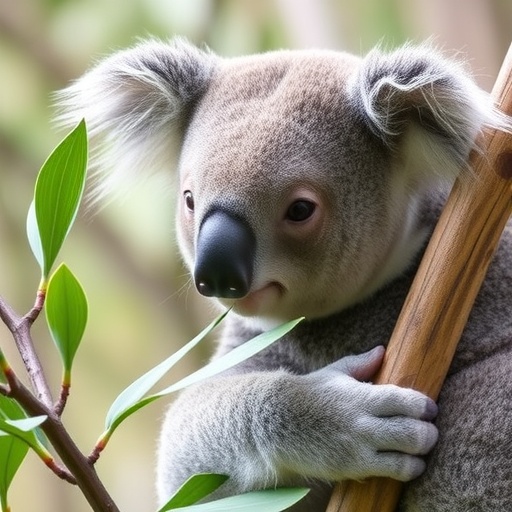
Nestled off the southern coast of Australia, Kangaroo Island is renowned for its seemingly thriving koala population, an emblem of conservation achievement amid a continent-wide decline in native species. At first glance, this island’s koalas represent hope, boasting a substantial, disease-resistant community that survived catastrophic bushfires in 2019 and 2020. However, groundbreaking genomic research from Flinders University reveals a more nuanced and precarious reality. Despite impressive numbers, the population harbors a genetic legacy marked by inbreeding and reduced diversity, a genetic bottleneck that threatens the long-term viability of these marsupial icons.
The Flinders University team employed whole-genome sequencing, a cutting-edge technique that deciphers the complete DNA blueprint of an organism, to compare the genetic health of Kangaroo Island’s koalas with their mainland counterparts in Victoria and Queensland. Such comprehensive genomic analyses allow scientists to detect subtle yet significant signs of genetic erosion. The results were startling: Kangaroo Island koalas exhibited extensive runs of homozygosity—long stretches of identical DNA inherited from both parents—a clear genetic hallmark of inbreeding, indicating a depleted gene pool with potentially harmful repercussions.
This genetic homogeneity stems from the population’s foundation history. In the 1920s, fewer than twenty koalas were relocated from Victoria to Kangaroo Island to rescue the species from near extinction after decades of hunting and habitat destruction. Unfortunately, these founding individuals came from already genetically constrained mainland groups, setting the stage for the current population’s reduced heterogeneity. Over nearly a century of isolation, inbreeding increased, and beneficial genetic variation waned, compromising the population’s future adaptability.
Genetic diversity acts as a biological reservoir of resilience, enabling animals to cope with environmental stressors such as emerging diseases, climatic shifts, and habitat changes. Conversely, inbred populations face heightened risks of expressing deleterious mutations. The Flinders researchers detected an increased frequency of harmful genetic variants in homozygous states within Kangaroo Island koalas. This genetic burden raises the likelihood of fertility issues, developmental abnormalities, and susceptibility to diseases, phenomena that have been sporadically observed in captured and studied individuals from the island population.
The team’s findings hold profound implications for conservation policy. While Kangaroo Island koalas have so far resisted epidemics like chlamydia and retrovirus infections devastating mainland populations, their compromised genetic toolkit could leave them vulnerable to unforeseen challenges. Genetic impoverishment reduces the ability to mount effective immune responses or adapt to novel environmental pressures, suggesting that sheer population size alone cannot ensure species survival without underlying genomic health.
To counteract this looming threat, researchers advocate for proactive genomic management strategies, notably genetic rescue—a practice involving the introduction of genetically diverse individuals from mainland populations to infuse new alleles into the restricted gene pool. Such interventions aim to reduce the frequency of harmful homozygous variants, improve fertility, and bolster disease resistance. However, genetic rescue entails careful planning and monitoring to avoid unintended ecological or genetic consequences, underscoring the critical role of ongoing genomic surveillance.
Senior author Professor Luciano Beheregaray eloquently warns that Kangaroo Island’s koalas, once hailed as a conservation ark, risk becoming a genetic trap without intervention. This precarious balance underscores a broader conservation lesson: isolated populations, whether island-bound or fenced, require management strategies that prioritize not only demographic stability but also genetic integrity. Long-term viability hinges on preserving genomic diversity, a vital component often overshadowed by immediate population recovery metrics.
The study also emphasizes the power of genomic technologies in wildlife conservation. Whole-genome sequencing provides unprecedented insight into the complexities of inbreeding and adaptive potential that traditional genetic markers cannot detect. Such detailed genetic portraits enable targeted, science-informed decisions that can rescue endangered populations before genetic deterioration becomes irreversible, transforming conservation from reactive to proactive practice.
Kangaroo Island’s koalas thus symbolize a paradox within conservation biology—a population that thrives numerically yet teeters genetically on the edge. It serves as a stark reminder that conservation success stories must be examined through multifaceted lenses, integrating ecological, demographic, and genetic data to craft sustainable futures. Without embracing genomic tools and interventions, iconic species like the koala may not endure the accelerating environmental pressures of the 21st century.
The revelations from this comprehensive genomic assessment stress that conservation strategies need to evolve beyond simple population counts to encompass the complex genetic underpinnings of health and adaptability. As anthropogenic impacts intensify globally, such integrative approaches will be essential for safeguarding biodiversity, ensuring that protected refuges remain vibrant and resilient for generations to come.
In summary, Kangaroo Island’s koalas embody both hope and caution for wildlife conservation. Their large population size and current disease resistance are remarkable, yet their genetic makeup reveals an urgent need for management to prevent future vulnerability. Applying genomic monitoring and genetic rescue techniques offers a promising pathway to secure the species’ future, transforming conservation arks into genuine havens rather than genetic cul-de-sacs. This study stands as a clarion call for integrating genomics into conservation frameworks worldwide.
News Publication Date: 14-Sep-2025
Web References:
https://onlinelibrary.wiley.com/doi/10.1111/mec.70097
References:
Gates, K., Sandoval-Castillo, J., Beaman, J.E., Burke da Silva, K., Saltré, R., Belov, K., Hogg, C.J., Bradshaw, C.J.A., Beheregaray, L.B. (2025). Conservation arks: genomic erosion and inbreeding in an abundant island population of koalas. Molecular Ecology. DOI: 10.1111/mec.70097
Cite Scienmag News
Juliet Wilcox. (September 15, 2025). Genetic ‘Trap’ Threatens Koalas on Island Haven Without Intervention. Scienmag. https://scienmag.com/genetic-trap-threatens-koalas-on-island-haven-without-intervention/
Juliet Wilcox. "Genetic ‘Trap’ Threatens Koalas on Island Haven Without Intervention." Scienmag, 15 September 2025, https://scienmag.com/genetic-trap-threatens-koalas-on-island-haven-without-intervention/. Accessed 4 September 2026.
Juliet Wilcox. "Genetic ‘Trap’ Threatens Koalas on Island Haven Without Intervention." Scienmag. September 15, 2025. https://scienmag.com/genetic-trap-threatens-koalas-on-island-haven-without-intervention/


