


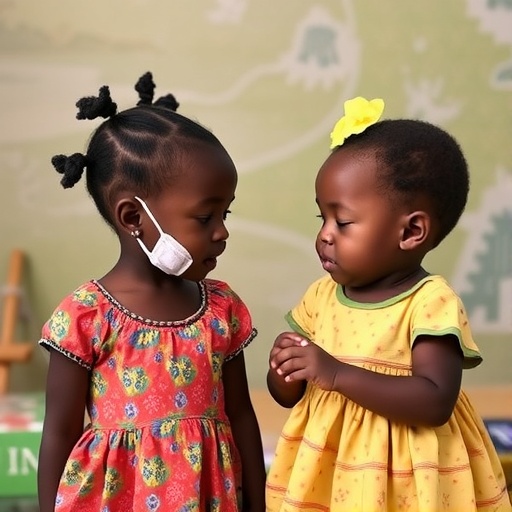
In recent years, the recognition and understanding of neurodevelopmental disorders (NDDs) have gained notable momentum worldwide. Despite affecting roughly 10% of children globally, significant gaps persist in identifying and managing these disorders among young populations in sub-Saharan Africa. A newly published scoping review in BMC Psychiatry sheds light on the current landscape of screening practices for neurodevelopmental differences in children aged 2 to 9 years within this diverse and often underserved region. This comprehensive review critically evaluates existing studies, highlighting severe limitations while pointing to future avenues for research and policy development.
Neurodevelopmental disorders encompass a range of conditions characterized by impairments in cognitive, motor, social, and emotional functioning that emerge early in life. These may include autism spectrum disorders, intellectual disabilities, attention deficit hyperactivity disorder, and communication disorders, among others. Globally, early detection and intervention have proven pivotal in improving long-term outcomes. However, in sub-Saharan Africa, awareness around NDDs remains relatively low, and accurate data on prevalence are scarce. The reviewed article addresses this knowledge gap by systematically collating available literature on screening initiatives across the region.
The research team employed rigorous PRISMA-ScR standards to ensure the review’s methodological integrity. They searched multiple academic databases—PubMed, Web of Science, SCOPUS, and PsycInfo—targeting studies published between 2012 and 2023. Inclusion criteria mandated that subjects be children at least two years of age but younger than nine, residing in sub-Saharan Africa, and assessed for any form of neurodevelopmental difference. Importantly, the researchers did not restrict inclusion based on study design, reflecting the exploratory nature of the review and the relative paucity of research in this area.
Out of an initial pool of 546 abstracts reviewed in detail, only twelve studies met the stringent inclusion criteria. These were geographically concentrated in just four countries: South Africa, Kenya, Uganda, and Malawi. South Africa accounted for half of these publications, signaling a regional disparity in research output and potentially in available screening infrastructure. This limited representation underscores a broad deficiency in knowledge about neurodevelopmental screening across much of sub-Saharan Africa.
A significant finding from the review is the predominance of studies focused on a single neurodevelopmental disorder rather than multiple conditions. Only two of the twelve studies explicitly screened for several NDD types concurrently, revealing a fragmented approach to diagnosis and care. Such compartmentalization potentially overlooks the complexities of comorbidities and the nuanced manifestations of developmental differences in young children. This presents a considerable challenge when attempting to design inclusive and effective screening programs suitable for resource-limited settings.
The review also highlights substantial heterogeneity across studies, both in conceptualizing what constitutes an NDD and in the methodologies employed to detect them. Screening tools varied widely, as did the training and professional background of the individuals administering these assessments. Some relied on caregivers or community health workers, while others utilized specialists or clinicians. This inconsistency casts doubt on the comparability of findings and the generalizability of conclusions drawn from existing data.
Equally concerning is the varied quality of methodologies employed in these studies. Applying the Newcastle-Ottawa Scale revealed a spectrum of research quality, with some cross-sectional studies deemed “Very good” and others rated “Unsatisfactory.” Cohort and case-control designs similarly spanned “Good” to “Fair.” This variance illuminates the need for standardized protocols and validated instruments tailored to the cultural and linguistic contexts of sub-Saharan Africa. Without such standards, screening results may be unreliable, limiting effective identification and subsequent intervention.
Notably, cultural interpretation and stigma around neurodevelopmental disorders contribute to underdiagnosis and underreporting. In many communities within sub-Saharan Africa, developmental delays or behavioral differences may be attributed to non-medical causes, such as spiritual beliefs or social circumstances. This cultural lens influences both caregiver recognition and willingness to seek help, emphasizing the critical need for contextually appropriate screening that respects local norms while advocating for awareness and acceptance.
The scarcity of research and the evident inconsistencies underscore an urgent need for investment in developing simple, scalable, and culturally sensitive screening tools. Such tools would enable early detection at community health levels and foster timely access to interventions. Effective screening programs could inform not only healthcare delivery but also policy frameworks and resource allocation within governments and international aid organizations.
Furthermore, the review implicitly calls for capacity-building initiatives targeting healthcare professionals and community workers in the region. Training these key actors to identify signs of neurodevelopmental differences accurately, using validated instruments, could substantially improve case finding and data reliability. Integrating screening into routine child health services holds promise to normalize assessment and reduce stigma associated with NDDs.
The implications of enhancing neurodevelopmental screening extend beyond individual health outcomes. Early identification and management of NDDs have profound effects on educational attainment, social inclusion, and economic productivity over a lifetime. For sub-Saharan Africa, where youth populations are rapidly growing, addressing these needs is crucial to supporting human capital and sustainable development goals.
In conclusion, this scoping review paints a sobering picture of the current state of screening for neurodevelopmental disorders among young children in sub-Saharan Africa. Despite advancements elsewhere, the region remains underserved, facing significant research gaps, methodological challenges, and cultural barriers. Addressing these issues requires concerted multidisciplinary efforts spanning research, clinical practice, community engagement, and policy reform.
The path forward must encompass research to develop and validate neurodevelopmental screening tools suited to the region’s diverse languages and cultures, alongside shaping public health policies that embed early childhood neurodevelopmental monitoring into primary care. Only through such comprehensive strategies can the promise of improving diagnostic accuracy and intervention reach for millions of children with neurodevelopmental differences in sub-Saharan Africa become a reality.
Cite Scienmag News
Glenn Wilkins. (September 15, 2025). Screening Neurodevelopment in Sub-Saharan Kids. Scienmag. https://scienmag.com/screening-neurodevelopment-in-sub-saharan-kids/
Glenn Wilkins. "Screening Neurodevelopment in Sub-Saharan Kids." Scienmag, 15 September 2025, https://scienmag.com/screening-neurodevelopment-in-sub-saharan-kids/. Accessed 4 September 2026.
Glenn Wilkins. "Screening Neurodevelopment in Sub-Saharan Kids." Scienmag. September 15, 2025. https://scienmag.com/screening-neurodevelopment-in-sub-saharan-kids/


