


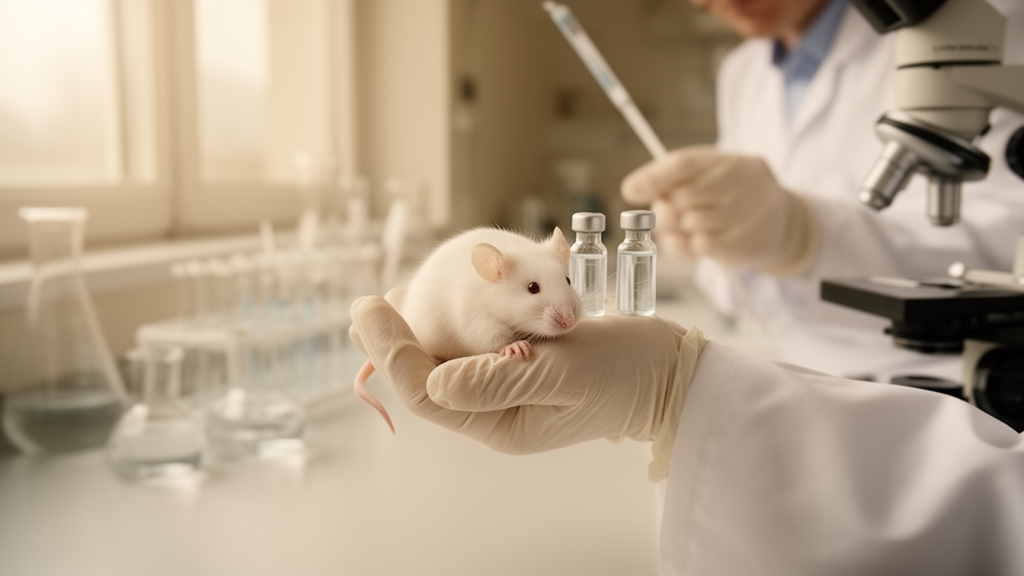
Psoriasis affects millions of people worldwide, and while modern biologic drugs can clear skin plaques remarkably well, they come with a steep price tag, a risk of infections, and a frustrating paradox: some patients develop new psoriasis-like reactions precisely because of the drugs meant to treat them. Even more striking, unrelieved itch remains one of the most common complaints even among patients whose skin looks better on paper. Now, a research team working with female BALB/c mice has reported that two unexpected candidates — celecoxib, the well-known arthritis painkiller, and diallyl trisulfide, a sulfur compound extracted from garlic — applied to the skin as topical gels, significantly eased psoriasis-like disease in mice. The work, published in Pharmacia, suggests that a cheap, accessible combination therapy could one day offer a safer alternative to steroids and systemic immunosuppressants.
The researchers used the classic imiquimod model of psoriasis, in which daily application of an immune-stimulating cream to shaved mouse skin triggers scaly, red, thickened lesions that closely mirror human disease. Imiquimod works by activating toll-like receptors 7 and 8, unleashing a cascade of inflammatory cytokines, and it also acts directly on itch-sensing nerve channels. Fifty-six mice were divided into seven groups: a healthy control, an untreated disease model, a plain gel base, the corticosteroid clobetasol propionate as a benchmark, and three experimental groups receiving celecoxib emulgel, diallyl trisulfide emulgel, or a combination of both. Treatment began on day eight and continued for a week, with all assessments performed by blinded observers in line with ARRIVE guidelines.
The results were striking. Mice treated with imiquimod alone developed severe lesions, with cumulative Psoriasis Area and Severity Index scores climbing to 4.6 while controls stayed at zero. The plain gel base helped somewhat — an expected emollient effect — but the active treatments cut scores far more deeply: celecoxib brought the score down to 1.75, diallyl trisulfide to 1.4, and the combination to 1.9, all statistically indistinguishable from the gold-standard corticosteroid. Histological examination told the same story. Where imiquimod-treated skin showed thickened epidermis, parakeratosis, Munro microabscesses, and dense lymphocytic infiltration, treated skin retained near-normal architecture, with epidermal thickness reduced by more than half in all three active groups.
Perhaps the most patient-relevant finding concerned itch. Scratching is not merely a nuisance in psoriasis — it can trigger the Koebner phenomenon, in which new lesions appear at sites of skin trauma, creating a vicious cycle. Imiquimod-treated mice scratched nearly four times more often than controls over a thirty-minute observation window. Celecoxib cut scratch bouts by 66 percent, diallyl trisulfide by 77 percent, and the combination by 70 percent, matching the corticosteroid. Skin serotonin, a key itch mediator that also drives keratinocyte proliferation and lymphocyte activation, fell by up to 56 percent — and the combination actually outperformed the steroid on this measure, reducing serotonin 23 percent more than clobetasol did.
Underneath these visible improvements, the team mapped a coherent molecular mechanism. Imiquimod inflated the interleukin-23/interleukin-22/interleukin-19/interleukin-17 axis — the canonical psoriasis pathway — raising skin IL-23 nearly twofold, IL-22 more than threefold, and serum IL-17 almost fourfold. Both compounds, alone and together, suppressed every node of this axis, with the combination reducing IL-17 by 68 percent. A Bliss independence analysis revealed that the combination acted synergistically on IL-23, the master cytokine that sustains Th17 cells, the immune population widely blamed for driving psoriatic inflammation.
The drugs also converged on the interleukin-6/JAK2/STAT3 signaling cascade, a pathway targeted by several approved psoriasis drugs. Imiquimod raised serum IL-6 nearly fivefold and ear JAK2 and STAT3 protein levels five- to sevenfold. The combination therapy knocked these back by 68, 64, and 71 percent respectively — beating the corticosteroid by 26 to 40 percent on each measure. This matters because JAK/STAT signaling has been directly linked to cytokine-induced itch, and JAK inhibitors relieve pruritus in psoriasis patients. The authors note a limitation: they measured total protein rather than the phosphorylated, active forms of JAK2 and STAT3, so follow-up work with phospho-specific assays is planned.
Inflammation beyond the cytokine axis also subsided. Interferon-gamma and tumor necrosis factor-alpha, both elevated by imiquimod, fell by up to 51 and 64 percent respectively under combination treatment, and myeloperoxidase — an enzyme marker of neutrophil infiltration that correlates with disease severity — dropped by half. Immunohistochemistry confirmed that CD4-positive and CD8-positive T-cell infiltration into skin, which surged after imiquimod exposure, was significantly reduced by all three treatments. Pearson correlation analysis strengthened the biological story: every inflammatory marker measured correlated strongly and positively with both PASI scores and scratch counts, reinforcing their potential as biomarkers of disease activity.
One of the more intriguing findings concerned the spleen. Imiquimod increased absolute spleen weight by 88 percent, reflecting extramedullary hematopoiesis and systemic immune activation — evidence that even a skin-limited trigger reverberates through the whole body. Celecoxib, diallyl trisulfide, and their combination all reduced spleen weight by roughly a third, and histology showed the combination preserved near-normal splenic architecture, with only minimal expansion of lymphoid follicles. Notably, the corticosteroid group showed the least splenic recovery, alongside the well-documented skin-thinning and hair-follicle atrophy that steroids cause — adverse effects the experimental emulgels did not produce.
The rationale for pairing these two particular molecules is elegant. Celecoxib, a selective COX-2 inhibitor, suppresses prostaglandin E2, a mediator elevated in psoriatic blister fluid that fuels both inflammation and itch; it also independently dampens IL-6-driven STAT3 activation. Diallyl trisulfide is a slow-releasing hydrogen sulfide donor derived from garlic, and serum hydrogen sulfide is known to be depleted in psoriasis patients in proportion to disease severity. Slow-release donors mimic the body’s natural sustained hydrogen sulfide production better than inorganic salts, and related donors have already eased psoriasis-like disease in mice by curbing neutrophil recruitment and pruritus. Hydrogen sulfide–NSAID hybrid molecules are an active research frontier precisely because pairing the two mechanisms lowers toxicity while boosting anti-inflammatory effect.
The authors are careful about scope. This was a single-dose screening study in an animal model, with no pharmacokinetic, skin-deposition, or long-term safety data yet, and no solvent-matched vehicle control for the dimethylformamide carrier. Equivalence to corticosteroid therapy cannot be claimed from this design. But the convergence of evidence — PASI relief, itch suppression, histological normalization, spleen protection, and coordinated damping of the IL-23/IL-17 and IL-6/JAK2/STAT3 cascades, all achieved with topically applied, inexpensive, orally familiar compounds — makes a compelling case for the next step: head-to-head clinical comparison against clobetasol in patients with early psoriasis. If the mouse results translate, relief for the 60 to 90 percent of patients who itch might come not from a new biologic, but from a garlic extract and an old painkiller rubbed into the skin.
Subject of Research: Topical celecoxib and diallyl trisulfide emulgels against imiquimod-induced psoriasis in BALB/c mice
Article Title: Celecoxib or diallyl trisulfide topical emulgels, alone or in combination, reduce pruritus and inflammatory cascades in a BALB/c mouse model of imiquimod-induced psoriasis
Article References: Kamel, M. M., Zaki, H. F., Saleh, R. A., Henry, S. R., Ibrahim, M. K., Mofreh Bakr, M., Abouhussein, D. M. N., & Rabie, M. A. (2026). Celecoxib or diallyl trisulfide topical emulgels, alone or in combination, reduce pruritus and inflammatory cascades in a BALB/c mouse model of imiquimod-induced psoriasis. Pharmacia, 73, Article e205623. https://doi.org/10.3897/pharmacia.73.e205623
Image Credits: AI Generated
DOI: 10.3897/pharmacia.73.e205623
Keywords: psoriasis, celecoxib, diallyl trisulfide, imiquimod mouse model, IL-23/IL-17 axis, JAK2/STAT3, pruritus, hydrogen sulfide donor, emulgel, BALB/c mice, inflammation, clobetasol
Cite Scienmag News
Ophelia Keating. (October 19, 2026). Garlic Compound and Arthritis Drug Team Up Against Psoriasis in Mice. Scienmag. https://scienmag.com/garlic-compound-and-arthritis-drug-team-up-against-psoriasis-in-mice/
Ophelia Keating. "Garlic Compound and Arthritis Drug Team Up Against Psoriasis in Mice." Scienmag, 19 October 2026, https://scienmag.com/garlic-compound-and-arthritis-drug-team-up-against-psoriasis-in-mice/. Accessed 19 October 2026.
Ophelia Keating. "Garlic Compound and Arthritis Drug Team Up Against Psoriasis in Mice." Scienmag. October 19, 2026. https://scienmag.com/garlic-compound-and-arthritis-drug-team-up-against-psoriasis-in-mice/


