A 2023 field study of container-grown garden plants imported into northeastern Hungary found that their growing-media substrates frequently contained seeds of non-native plants. The samples produced 2,181 germinating seeds representing 80 taxa, including seven species not yet included in Hungary’s alien-plant checklist and one species not previously reported from the country. Researchers collected 60 one-litre substrate samples from six garden centres in North-Eastern Hungary.
The samples came from perennial plants imported from Italy (42), the Netherlands (16) and Spain (2). Garden-centre staff selected batches that had arrived earlier that spring, minimizing exposure to local seed rain. Each sample pooled material from multiple containers of the same plant species and batch, generally covering approximately the upper 5 centimetres of substrate; wood shavings and bark mulch were excluded.
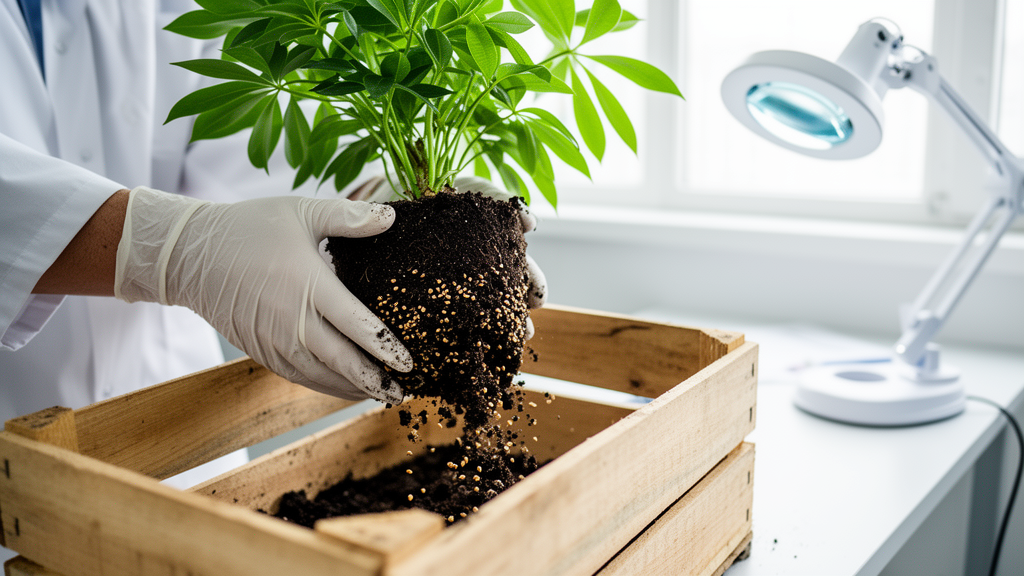
The samples were washed through sieves to remove fine material and reduce their volume. Each litre was then spread over steam-sterilised potting soil in balcony planters in an unheated greenhouse. Five planters containing only sterilised soil served as contamination controls.
The plants were watered daily from 17 April to 16 November 2023, and emerging seedlings were regularly counted, identified and removed. Plants that could not yet be identified were transplanted and grown until identification was possible, with some retained until November 2024. The 60 samples yielded 2,181 germinating seeds.
After 14 seedlings died before identification, the remaining 2,167 seedlings belonged to 80 taxa, 74 of which were identified to species level. Individual samples ranged from zero to 783 seedlings and from zero to 22 taxa, with means of 36.35 seedlings and 5.38 taxa per litre. Only two samples were free of germinating contaminant seeds.
The most abundant taxa were Sagina procumbens with 957 seedlings, Cardamine occulta with 221, Euphorbia maculata with 201, Portulaca oleracea with 77 and Oxalis corniculata with 76. Most of the detected taxa were non-native in Hungary, with 48 classified as non-native species. On average, 78.8% of the germinating seeds in each sample belonged to species non-native in Hungary, and 91.7% of samples contained at least one such species.
Neophytes accounted for an average of 45.1% of seeds per sample, including emerging neophytes at 12.1%; 48.3% of samples contained at least one emerging neophyte. Seeds of species considered invasive in Hungary represented 28.6% of the detected seeds, while species invasive in at least one part of Europe accounted for 53.9%. Among notable detections, Dittrichia viscosa , native to the Mediterranean Basin, had not been reported from Hungary.
Gnaphalium pensylvanicum , native to North and South America, had previously been recorded in Hungary only from the container of an ornamental plant in a garden centre. Symphyotrichum squamatum , a South American species considered invasive in several European countries, had also been reported recently in Hungary. Exporter country was associated with both seed abundance and community composition.
Italian samples contained significantly more seeds and more taxa than Dutch samples: a Wilcoxon rank-sum test found a difference in seed number, while a negative binomial model found a difference in species number. Permutational multivariate analysis also detected a significant difference in composition, although exporter country explained a relatively small proportion of the variation, with an R² of 0.046. Taxa found only in Dutch samples were largely native and widely distributed in Europe, whereas several taxa restricted to Italian samples were more closely associated with Southern Europe.
Among the 42 Italian samples, substrates from needle- or scale-leaved garden plants contained significantly more seeds than substrates from broadleaved plants, although leaf habit was not significantly associated with the number of taxa. The country difference remained when the analysis was restricted to broadleaved plants, so it was not solely attributable to the greater representation of conifers among Italian shipments. The researchers did not establish a mechanism.
They noted that slower-growing plants might remain in nurseries longer and allow seeds to accumulate, while broadleaved foliage might intercept more incoming seeds, but both remained possible explanations. The greenhouse assay demonstrated that viable seeds were present and could germinate from the sampled imported substrates. It did not establish that those seeds became established or invasive in Hungary, and it did not measure the total volume of seeds transported through the horticultural trade.
Its scope was limited to 60 samples from one Hungarian region, and country was confounded with garden centre because some centres imported plants from only one country. Comparison with earlier assessments in Alaska and Norway also requires caution because sampling methods and depths differed; the Hungarian results specifically describe approximately the upper layer of imported substrates. The results provide information relevant to invasion-risk assessment because the study quantified species carried unintentionally with an international horticultural commodity.
EU phytosanitary requirements for growing media imported from non-member countries primarily address plant-health concerns rather than contaminating seeds, while trade among EU members is subject to less stringent controls; the EU Plant Passport likewise covers inspections and quarantine pests and diseases but not seeds in growing media. The authors argue that data on contaminant species and more detailed information on horticultural trade could support more precise risk assessments and policies for this introduction pathway.
Subject of Research: Viable contaminant seeds in growing media of container-grown garden plants imported into Hungary
Article Title: Unintentional seed dispersal via container-grown garden plants: Seed density and composition vary among exporter countries
Article References: Sonkoly, J., Törő-Szijgyártó, V., Petró, E., Takács, A., Guallichico Suntaxi, L. R., McIntosh-Buday, A., Díaz Cando, P. E., Tóth, K., Madar, S., Kovacsics-Vári, G., & Török, P. (2026). Unintentional seed dispersal via container-grown garden plants: Seed density and composition vary among exporter countries. NeoBiota, 107, 331-351. https://doi.org/10.3897/neobiota.107.184691
Image Credits: AI Generated
DOI: 10.3897/neobiota.107.184691
Keywords: biological invasions, horticultural trade, container-grown plants, seed contamination, growing media, non-native plants, biosecurity, propagule pressure, Hungary, Unintentional, seed, dispersal
Cite Scienmag News
Patricia Pace. (October 20, 2026). Garden-plant imports carried seeds of non-native species, with differences between Italian and Dutch shipments. Scienmag. https://scienmag.com/garden-plant-imports-carried-seeds-of-non-native-species-with-differences-between-italian-and-dutch-shipments/
Patricia Pace. "Garden-plant imports carried seeds of non-native species, with differences between Italian and Dutch shipments." Scienmag, 20 October 2026, https://scienmag.com/garden-plant-imports-carried-seeds-of-non-native-species-with-differences-between-italian-and-dutch-shipments/. Accessed 20 October 2026.
Patricia Pace. "Garden-plant imports carried seeds of non-native species, with differences between Italian and Dutch shipments." Scienmag. October 20, 2026. https://scienmag.com/garden-plant-imports-carried-seeds-of-non-native-species-with-differences-between-italian-and-dutch-shipments/