


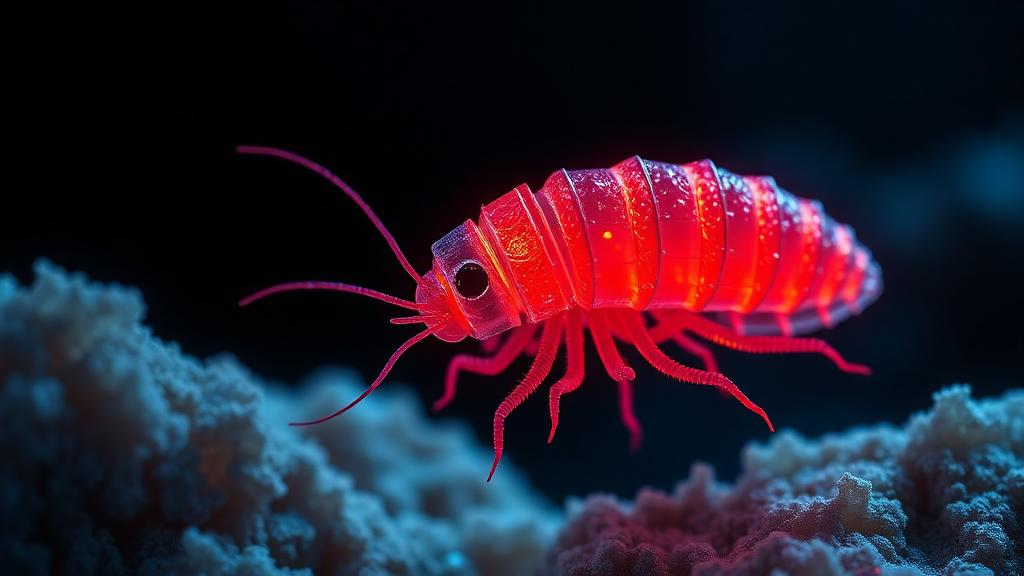
Gamma irradiation did not stop chromatin diminution in most Cyclops kolensis embryos, even when radiation severely damaged their chromosomes and halted development, according to a radiobiological study of the freshwater copepod. The researchers exposed embryos to doses from 5 to 200 Gy and found that nuclei inactivated by the treatment did not generally prevent presomatic cells from executing the programmed removal of about 90% of their nuclear DNA. The results indicate that the machinery initiating this genome reduction is present largely in the egg cytoplasm, rather than being created only by gene expression in embryonic nuclei after fertilization.
Chromatin diminution is a specialized developmental process in which a portion of the DNA is removed from the chromosomes of embryonic somatic-line cells. In C. kolensis , a zooplanktonic crustacean in the order Cyclopoida, the process occurs during the fourth cleavage division. Before this point, embryonic presomatic cells contain the same genome as the future germ line.
During diminution, somatic-line nuclei lose roughly 90% of their DNA, whereas germ-line cells retain their nuclear DNA unchanged throughout development. The study describes chromatin diminution as a marker of germline-soma differentiation and notes that the interphase before the diminution division is unusually long. The investigators designed the experiment to test whether nuclear activity is required to initiate chromatin diminution.
They reasoned that radiation could separate the effects of cytoplasmic determinants from the contributions of embryonic genes. Doses in the range used for nuclear inactivation were expected to produce chromosome aberrations while leaving enough cytoplasmic function for cleavage and other early developmental processes to continue. If nuclei were essential for launching diminution, extensive radiation damage should have prevented the process.
Instead, the observed survival of diminution under high doses supports a prominent role for factors already present in the fertilized egg’s cytoplasm. For the main irradiation experiments, the researchers used C. kolensis embryos at the four-cell stage, although some embryos at the two-cell stage received the highest dose. Irradiation was performed with gamma radiation at the Rokus-M facility of the Joint Institute for Nuclear Research.
Absorbed doses ranged from 5 to 200 Gy, delivered at a dose rate of 1.37 Gy per minute from a distance of 0.75 m. Embryos were examined 24 hours later. A mixture of ethanol and acetic acid was used for one hour of fixation, and aceto-orcein staining prepared the specimens for light microscopy.
The researchers counted blastomeres, inspected chromosome behavior during division and assessed micronuclei as indicators of chromosomal abnormalities. Data were processed using a t-test. The 5-Gy exposure produced a mixed developmental outcome.
Visible granules of eliminated chromatin indicated that diminution had occurred in all embryos irradiated at this dose. In the limited anaphases available for observation, the researchers recorded chromosome bridges, fragments and fused chromosomes. Thus, although this dose caused substantial chromosomal disruption, it did not prevent either the fourth cleavage division or the DNA-removal program that normally occurs during it.
At 20 Gy, approximately 41.0% of 307 embryos completed only one further division and reached the eight-cell stage, while 58.9% stopped at 16 cells after passing through the stage at which diminution normally occurs. Among 80 interphase figures assessed for micronuclei at the eight-cell stage, the mean was 1.14 micronuclei per cell, with a standard error of the mean of 0.35. A 100-Gy dose produced a similar developmental pattern: 64.5% of 353 embryos stopped at eight cells and 35.4% reached 16 cells.
The rare division figures again showed numerous bridges, chromosome fragments and adhering chromosomes. Although development failed, progression through the diminution stage indicated that nuclear damage did not suppress initiation of the process. The most extreme dose, 200 Gy, was administered to embryos at the two-cell stage, limiting direct comparisons with the lower doses that began at the four-cell stage.
Thirty-four percent of the 146 embryos stopped at the two-cell stage, apparently reflecting damage to cytoplasmic as well as nuclear structures. In 14 of 36 embryos, the usual signs of chromatin diminution were absent: researchers observed neither the expected abundance of eliminated-chromatin granules nor the sharp size difference between somatic-line cells before and after diminution. At this dose, chromosomes formed conglomerates that could not segregate normally during division.
Micronuclei were also observed in eight-cell embryos, and their mean number rose as radiation dose increased from 20 to 200 Gy. Across the 20–200-Gy treatments, irradiated embryos did not develop beyond the 16-cell stage, with some arresting earlier. The authors interpreted this pattern as evidence that early progression and the initiation of chromatin diminution are governed by a developmental program encoded in cytoplasmic determinants of the egg.
When nuclear function was lost, the embryo could nevertheless execute diminution before ceasing development. The comparison does not establish that nuclei are irrelevant to later morphogenesis: the numerous chromosomal aberrations could have blocked nuclear functions required for continued development. Rather, the results separate the apparently cytoplasm-driven initiation of diminution from the nuclear functions needed for subsequent embryonic growth.
A comparable phenomenon had previously been reported in the nematode Ascaris suum , whose embryos also undergo chromatin diminution. Irradiation of four-cell A. suum embryos prevented development beyond 16 cells, while radiation blocked the nuclear genome without suppressing chromatin diminution. The present study notes, however, that the earlier Ascaris experiment was not designed specifically to test diminution.
Its purpose was to examine radiation effects on early development. The newer experiment applies nuclear-inactivation logic directly to C. kolensis , adding evidence from a copepod whose diminution occurs specifically during the fourth cleavage division. The study has important measurement limitations.
The researchers did not systematically compare the frequency of chromosome aberrations across radiation doses using either anaphase analysis or micronucleus counts. Micronucleus counts were unavailable at the 16- and 32-cell stages after 20- and 100-Gy treatments because eliminated-chromatin granules obscured the micronuclei. The apparent dose-related increase in micronuclei was therefore described as a tendency rather than a completed quantitative analysis.
The highest dose was also applied at a different starting stage and damaged cytoplasmic components, so the absence of diminution in 14 embryos may reflect disrupted cytoplasmic organization rather than a direct requirement for nuclear function. The findings therefore support cytoplasmic control over initiation of diminution while identifying an extreme exposure in which damage beyond the nucleus can interfere with the process. Taken together, the results support the long-standing idea that early embryonic cytoplasm contains determinants capable of directing specialized developmental programs.
In C. kolensis , irradiation of nuclei did not generally cancel the somatic program that removes most of the genome during the fourth cleavage division, even though chromosomal damage stopped embryos from developing beyond the 16-cell stage. At 200 Gy, however, some embryos failed to show diminution, indicating that the process can also be disrupted when radiation damage extends beyond the nucleus. The experiment did not identify the individual cytoplasmic factors or establish whether they are proteins, RNAs or other molecules.
Its principal contribution is functional: it shows that severe nuclear inactivation alone is insufficient to prevent chromatin diminution in this copepod, while also revealing a high-dose condition in which disruption of cytoplasmic factors may interfere with the process.
Subject of Research: Experimental test of cytoplasmic control over chromatin diminution in the copepod Cyclops kolensis
Article Title: Study of chromatin diminution in Cyclops kolensis ( Copepoda , Crustacea ) by radiobiological methods
Article References: Grishanin, A., & Chinyakova, O. (2021). Study of chromatin diminution in Cyclops kolensis (Copepoda, Crustacea) by radiobiological methods. Comparative Cytogenetics, 15(4), 329-338. https://doi.org/10.3897/compcytogen.v15.i4.64350
Image Credits: AI Generated
DOI: 10.3897/CompCytogen.v15.i4.64350
Keywords: Chromatin diminution, Cyclops kolensis, Copepoda, Gamma radiation, Embryonic development, Genome reduction, Somatic differentiation, Cytoplasmic determinants, Chromosome damage, Radiobiology, chromatin, diminution
Cite Scienmag News
Drew Townsend. (October 20, 2026). Gamma Radiation Exposes Cytoplasmic Control of Copepod Chromatin Diminution. Scienmag. https://scienmag.com/gamma-radiation-exposes-cytoplasmic-control-of-copepod-chromatin-diminution/
Drew Townsend. "Gamma Radiation Exposes Cytoplasmic Control of Copepod Chromatin Diminution." Scienmag, 20 October 2026, https://scienmag.com/gamma-radiation-exposes-cytoplasmic-control-of-copepod-chromatin-diminution/. Accessed 20 October 2026.
Drew Townsend. "Gamma Radiation Exposes Cytoplasmic Control of Copepod Chromatin Diminution." Scienmag. October 20, 2026. https://scienmag.com/gamma-radiation-exposes-cytoplasmic-control-of-copepod-chromatin-diminution/


