


Alcoholic liver disease remains one of the most stubborn therapeutic challenges in modern hepatology. Alcohol consumption contributed to roughly 2.6 million deaths worldwide in 2019 and is linked to more than 200 diseases, yet the pharmacological arsenal for severe alcohol-related liver injury is remarkably thin. Corticosteroids such as prednisone can suppress excessive inflammation in selected patients, but their long-term use is limited by immunosuppression, metabolic disturbances, and heightened infection risk.
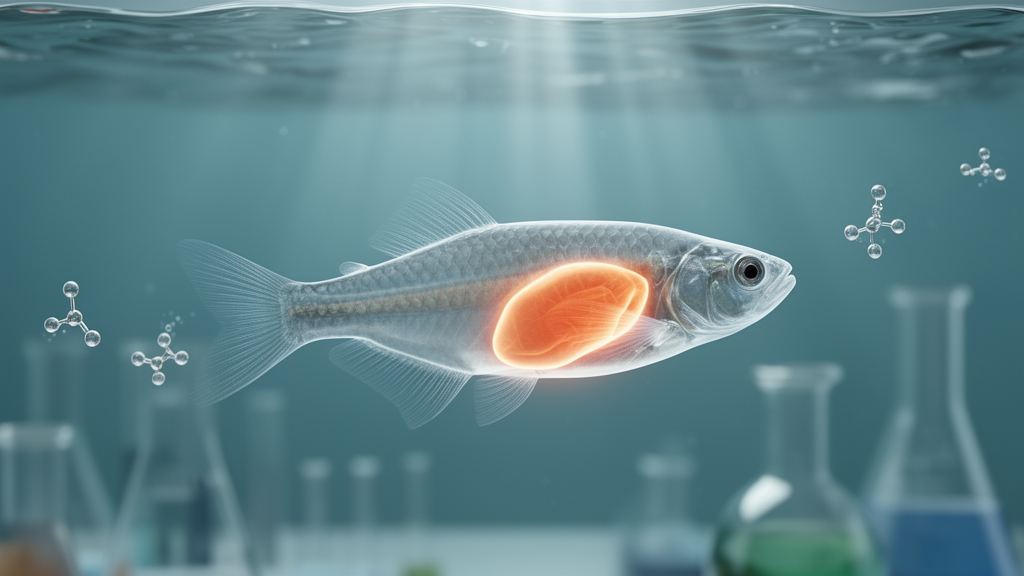
Against this backdrop, a new study published in Pharmacia reports that gabapentin, a drug already familiar to clinicians managing alcohol withdrawal syndrome, may do more than calm withdrawal symptoms: in a zebrafish model of alcoholic liver disease, it was associated with reduced hepatic steatosis, intestinal inflammation, and expression of a key inflammatory chemokine. The research team, integrating longitudinal in vivo experiments with bioinformatic analysis of human transcriptomic data, exposed adult zebrafish to 0.5% ethanol for 28 days to induce pathological features resembling alcoholic liver disease, then treated the fish with gabapentin by immersion at 150, 200, or 300 mg/L for two or four weeks. A prednisone-treated group served as the positive control.
The investigators sampled liver and intestinal tissues at four time points—day 0, day 28, day 42, and day 56—allowing them to track both the establishment of disease and the recovery process under treatment. Chronic ethanol exposure produced the expected histopathological signature. Liver sections showed hepatocellular vacuolation, macrovesicular and microvesicular steatosis, ballooning degeneration, peripheral displacement of nuclei, and inflammatory cell infiltration.
The intestine, a critical but often underappreciated player in alcoholic liver disease, fared no better: fish exposed to alcohol developed goblet cell hyperplasia, irregular goblet cell distribution, reduced mucosal height, and inflammatory infiltration of the lamina propria. These intestinal changes matter because chronic alcohol disrupts barrier integrity and increases permeability, allowing bacterial products such as lipopolysaccharide to translocate into the portal circulation and ignite Toll-like receptor 4-mediated inflammatory signaling in hepatic tissue. Gabapentin treatment was associated with progressive histological improvement over the recovery period.
Goblet cell hyperplasia declined, mucosal height was restored, and the area occupied by inflammatory foci shrank in both liver and intestine. The improvement was most pronounced at the higher gabapentin doses of 200 and 300 mg/L, and by day 56 the hepatic and intestinal morphology of the high-dose groups approached that of the prednisone-treated fish. Notably, the study was not designed to test equivalence, but the absence of statistically significant differences between the high-dose gabapentin group and the prednisone group at day 56 suggests that gabapentin deserves closer scrutiny as a corticosteroid alternative with a potentially more favorable safety profile.
To anchor the molecular side of the work, the team mined a publicly available RNA-seq dataset from the Gene Expression Omnibus containing liver tissue from five patients with alcoholic hepatitis and five healthy donors. Differential expression analysis using GEO2R identified a cluster of significantly upregulated inflammation-related genes, including CXCL8, CXCL6, CCL19, LIF, and MMP7. CXCL8—the gene encoding interleukin-8—showed a log2 fold change of 5.703 and ranked among the most significantly upregulated chemokines involved in neutrophil recruitment.
Functional enrichment analysis highlighted biological processes related to mitochondrial gene expression, fatty acid beta-oxidation, cellular respiration, and peroxisomal function, underscoring the intertwined roles of oxidative stress and metabolic dysfunction in disease progression. Produced by hepatocytes, Kupffer cells, infiltrating macrophages, and intestinal epithelial cells in response to ethanol-induced oxidative stress, IL-8 binds CXCR1 and CXCR2 receptors to recruit and activate neutrophils, which release reactive oxygen species, elastase, myeloperoxidase, and proteolytic enzymes that amplify hepatocellular injury. Elevated circulating and hepatic IL-8 levels have been consistently associated with neutrophil infiltration, disease severity, poor clinical outcomes, and short-term mortality in alcoholic hepatitis.
Experimental work has even shown a causal contribution: mice expressing human IL-8 exhibit aggravated hepatic steatosis and inflammation after ethanol exposure through activation of the Akt/HIF-1alpha pathway, and blockade of IL-8 receptors ameliorates experimental alcoholic steatohepatitis. Consistent with this human evidence, il8 expression in the zebrafish model surged to 4.68-fold above baseline after 28 days of ethanol exposure. Following treatment, il8 expression dropped substantially in all prednisone- and gabapentin-treated groups by day 42, with a partial rebound at day 56 that nonetheless remained below post-induction levels.
The reduction in il8 coincided with decreased inflammatory focus area in both organs, suggesting that gabapentin attenuated inflammatory activity during tissue remodeling. The authors caution that ethanol withdrawal itself promotes spontaneous recovery—clinical studies show IL-8 declines after abstinence—but the significantly greater reduction in il8 and more profound histological improvement in gabapentin-treated fish compared with untreated controls that also underwent withdrawal point to an additional therapeutic benefit beyond spontaneous recovery. Mechanistically, gabapentin binds the alpha2delta-1 subunit of voltage-gated calcium channels, reducing calcium influx and downstream activation of pro-inflammatory mediators including TNF-alpha and IL-1beta as well as NF-kappaB signaling.
Previous experimental studies have reported that gabapentin attenuates inflammatory cell infiltration, suppresses cytokine production, reduces oxidative stress, and may influence intestinal barrier function. Because inflammatory cytokines can impair lipid handling and mitochondrial function, the observed improvement in hepatic steatosis may reflect indirect modulation of inflammatory pathways rather than a direct effect on lipid metabolism. The goblet cell hyperplasia seen after alcohol exposure, meanwhile, likely represents a compensatory attempt to reinforce the mucus barrier, and its gradual normalization under gabapentin suggests partial restoration of intestinal homeostasis—a key component of gut-liver axis function.
The study has limitations worth noting. Only il8 was measured as a molecular marker, leaving TNF-alpha, IL-1beta, NF-kappaB, and CXCR1/CXCR2 signaling unexplored. The immersion concentrations used were exploratory and cannot be directly extrapolated to human therapeutic exposure.
Still, the translational logic is compelling: gabapentin is already widely prescribed for neuropathic pain, epilepsy, and alcohol withdrawal with a well-established safety profile, and drug repurposing offers reduced development costs and shorter timelines compared with de novo discovery. The zebrafish findings—reduced steatosis, restored intestinal architecture, and dampened il8 expression—provide preliminary support for gabapentin as a potential adjunctive therapy in alcoholic liver disease. The authors call for further studies in mammalian models incorporating broader inflammatory and metabolic markers to clarify mechanisms and establish clinically relevant exposure levels.
Subject of Research: Pharmacology
Article Title: Longitudinal evaluation of hepatic and intestinal alterations and il8 expression in gabapentin-treated alcohol-exposed zebrafish: integration of experimental and bioinformatics analyses
Article References: d’Arqom, A., Zulfatim, H. S., Tansy, B. A., Rimbun, Empitu, M. A., Noor, S. M., Megasari, N. L. A., & Amornsupak, K. (2026). Longitudinal evaluation of hepatic and intestinal alterations and il8 expression in gabapentin-treated alcohol-exposed zebrafish: integration of experimental and bioinformatics analyses. Pharmacia, 73, Article e204223. https://doi.org/10.3897/pharmacia.73.e204223
Image Credits: AI Generated
DOI: 10.3897/pharmacia.73.e204223
Keywords: gabapentin, alcoholic liver disease, zebrafish, gut-liver axis, interleukin-8, drug repurposing, Longitudinal, evaluation, hepatic, intestinal, alterations, expression
Cite Scienmag News
Ophelia Keating. (October 20, 2026). Gabapentin Shows Promise Against Alcohol-Induced Liver and Gut Injury in Zebrafish. Scienmag. https://scienmag.com/gabapentin-shows-promise-against-alcohol-induced-liver-and-gut-injury-in-zebrafish/
Ophelia Keating. "Gabapentin Shows Promise Against Alcohol-Induced Liver and Gut Injury in Zebrafish." Scienmag, 20 October 2026, https://scienmag.com/gabapentin-shows-promise-against-alcohol-induced-liver-and-gut-injury-in-zebrafish/. Accessed 20 October 2026.
Ophelia Keating. "Gabapentin Shows Promise Against Alcohol-Induced Liver and Gut Injury in Zebrafish." Scienmag. October 20, 2026. https://scienmag.com/gabapentin-shows-promise-against-alcohol-induced-liver-and-gut-injury-in-zebrafish/


