


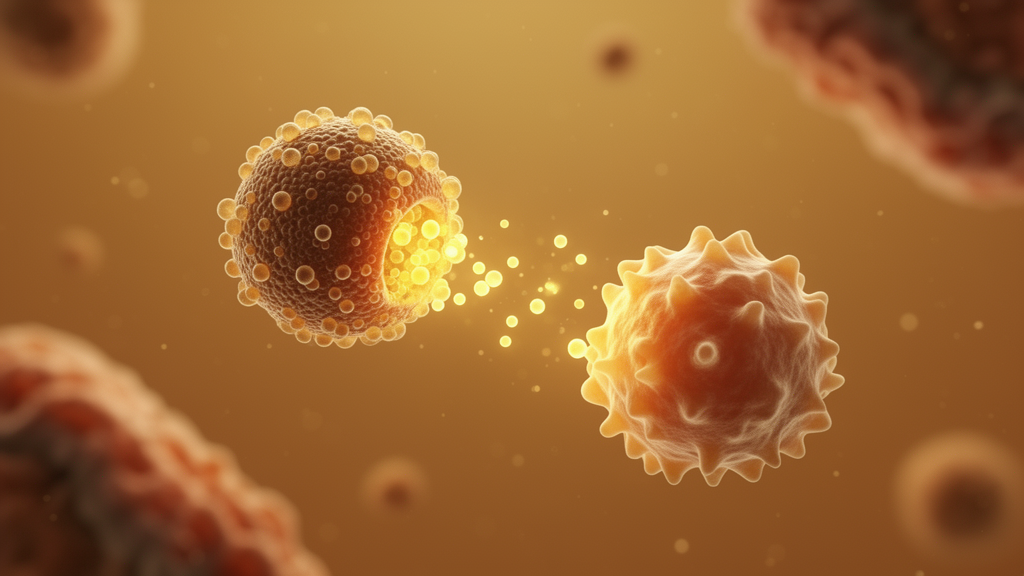
Pathogenic fungi package proteins, lipids, polysaccharides, and nucleic acids into tiny membrane-bound sacs and release them into their surroundings, and a new review argues that these extracellular vesicles may hold the key to better diagnosis and treatment of some of medicine’s most stubborn infections. The article, published in Frontiers in Cellular and Infection Microbiology, consolidates what is known about vesicles produced by fungi including Cryptococcus, Candida, Aspergillus, and a range of dimorphic species, and maps out where the field could go next. The burden behind the push is substantial: the review cites more than 150 million people worldwide affected by severe fungal infections and more than 1.6 million deaths annually, a toll the authors note exceeds three times that of malaria.
Extracellular vesicles, or EVs, are membranous structures that cells actively secrete. Because no universally accepted nomenclature based solely on biogenesis exists, the International Society for Extracellular Vesicles recommends using the generic term for all secreted vesicles. By size, they fall broadly into three categories: apoptotic bodies of roughly 800 to 1000 nanometers, microvesicles of roughly 100 to 1000 nanometers, and exosomes of roughly 30 to 150 nanometers. Their cargo is not random. The review highlights evidence that fungal small non-coding RNAs, including miRNA-like molecules, transfer RNA fragments, small nuclear RNAs, and small nucleolar RNAs, are selectively packaged into vesicles and delivered to recipient cells, where they may affect gene expression, immune responses, and fungal growth. That selective loading, the authors argue, suggests a regulated process rather than a random sampling of intracellular RNA, and it underpins hopes that vesicle contents could serve as biomarkers reflecting the physiological state of the donor cell.
Research on fungal vesicles remains young compared with work on mammalian EVs. Researchers first isolated and characterized fungal vesicles from Cryptococcus neoformans in 2007, and vesicles have since been reported in at least 19 other fungal species, spanning yeasts such as Histoplasma capsulatum, Candida albicans, and Sporothrix schenckii, and filamentous fungi including Trichoderma reesei, Fusarium oxysporum, Rhizopus delemar, Aspergillus fumigatus, and Aspergillus flavus. In eukaryotic cells, vesicles generally form through two major routes: outward budding of the plasma membrane, producing microvesicle-like particles, and the endosomal pathway, in which multivesicular bodies generate intraluminal vesicles that are released as exosomes when the bodies fuse with the plasma membrane. That process can involve the ESCRT machinery or ESCRT-independent mechanisms.
Fungal evidence for both routes is accumulating. Multivesicular body-like structures occur in C. neoformans, and Saccharomyces cerevisiae strains carrying ESCRT mutations still produce vesicles, though with altered contents. In C. albicans biofilms, vesicles contain ESCRT-associated proteins including Hse1 and Vps27, pointing to endosomal trafficking machinery in fungal vesicle production. Studies of C. neoformans have also identified distinct vesicle populations at the cell periphery, including vesicles of approximately 100 and 300 nanometers in diameter. Secretion itself involves cytoskeletal components, small GTPases, and membrane fusion machinery; in the conventional pathway, Sec6 has been implicated in C. neoformans vesicle secretion, while Sec4, a Rab-family GTPase, regulates vesicle composition and release in S. cerevisiae, and Golgi reassembly stacking proteins have been implicated in unconventional secretion in both yeasts.
One of the field’s most distinctive puzzles is how vesicles cross the fungal cell wall, a rigid barrier that initially led researchers to assume fungi could not release membrane-bound vesicles at all. Subsequent studies established that fungal vesicles can traverse the wall, but the mechanism remains unresolved. Proposed explanations include transient openings, localized cell-wall remodeling, wall elasticity, and turgor-driven passage. Walker and colleagues estimated a theoretical cell-wall pore size of approximately 5.8 nanometers and observed intact AmBisome liposomes traversing the cell walls of C. albicans and C. neoformans, observations that support wall deformability but do not directly establish how endogenous vesicles are released. Vesicle-associated glucanases and chitinases have been proposed to facilitate localized remodeling, though their coordinated contribution has yet to be demonstrated. In encapsulated Cryptococcus, the polysaccharide capsule poses an additional barrier whose transit mechanisms remain poorly understood. Environmental conditions add another layer of complexity: caspofungin treatment alters vesicle production and cargo in Candida auris, and nutritional conditions can change the inflammatory properties of Cryptococcus vesicles.
Once released, vesicles act as signaling platforms between fungus and host. Recipient cells internalize them through clathrin-mediated endocytosis, caveolin-dependent endocytosis, macropinocytosis, or direct membrane fusion, with the route depending on vesicle size, surface charge, ligand composition, and the recipient cell type. Inhibiting clathrin-mediated endocytosis reduces uptake of C. albicans vesicles by macrophages, and dendritic cells can efficiently internalize vesicles through clathrin-mediated endocytosis and process their cargo for antigen presentation. Following internalization or surface recognition, vesicles activate innate immunity through pathogen-associated molecular patterns such as beta-glucans, mannans, chitin-derived molecules, and glycolipids, which are recognized by host pattern-recognition receptors including Dectin-1, TLR2, and TLR4. Dectin-1 recognizes exposed beta-1,3-glucans and triggers the ITAM-Syk-CARD9 pathway, downstream of which lie NF-kappaB and MAPK signaling. Cooperative signaling between receptors can shape whether the resulting response is pro-inflammatory, anti-inflammatory, or immunoregulatory, and thus may influence infection outcomes.
The cargo determines the message. GXM-enriched vesicles from C. neoformans suppress Th1-type immune responses by enhancing IL-10 production and inhibiting IL-12 secretion in macrophages and monocytes, while phospholipid-rich vesicles from C. albicans activate NF-kappaB signaling and promote production of the pro-inflammatory mediators TNF-alpha, IL-6, and IL-12. In A. fumigatus, vesicle-associated proteins and polysaccharides activate macrophages and neutrophils through pathways linked to inflammasome activation and reactive oxygen species production, increasing IL-1beta and other inflammatory mediators. Vesicles from Paracoccidioides brasiliensis promote M1 macrophage polarization and inflammasome activation in vitro. Yet immune activation does not automatically mean protection. Vesicles from a virulent P. brasiliensis strain restored the ability of a non-virulent strain to grow under oxidative and nitrosative stress, and pretreatment with vesicles from an attenuated variant exacerbated infection in mice, increasing pulmonary fungal burden alongside TNF-alpha, IFN-gamma, IL-6, and MCP-1 levels. Similarly, vesicles from S. brasiliensis increased dendritic cell phagocytosis and cytokine production in vitro, but administering them before subcutaneous infection increased fungal burden in BALB/c mice.
Vesicles are also entangled with drug resistance. C. albicans biofilms release vesicles that contribute to extracellular matrix formation and can promote biofilm communities’ resistance to antifungal agents, and in mixed-species biofilms vesicles can improve the development and stability of both single-species and polymicrobial communities. That dependence offers a target: turbinmicin, a recently described antifungal compound, disrupts vesicle delivery during C. albicans biofilm development, impairing extracellular matrix assembly and rendering biofilms more susceptible to killing. Turbinmicin targets the Sec14p-associated vesicle trafficking pathway, has been reported to significantly reduce vesicle production in A. fumigatus biofilms, and showed antifungal activity against Candida and Aspergillus species in animal models. On the defensive side, C. albicans vesicles contain the high-affinity glucose transporter Hgt1p, which can bind complement factor H and interfere with alternative complement pathway activation; blocking Hgt1p increases neutrophil phagocytosis and intracellular killing of the fungus.
Translational prospects are tempting but early. On the diagnostic front, vesicles are released into blood, urine, saliva, and other biological fluids, and their cargo can reflect the state of their cells of origin, making them candidates for liquid biopsy. Ergosterol has been detected in serum vesicle preparations from patients with candidiasis, cryptococcosis, and paracoccidioidomycosis, suggesting potential as an infection-associated biomarker, and candidate fungal vesicle markers including the claudin-like proteins Sur7 and Evp1 have been identified in C. albicans. But the review is blunt about the obstacles: sensitivity and specificity depend heavily on sample source, fungal burden, isolation methods, and detection platforms; fungal vesicles are often present at low abundance in clinical specimens; standard isolation techniques co-purify host vesicles, and current methods such as particle tracking and electron microscopy cannot differentiate their origins; and benchmarking against antigen tests already in clinical use, such as galactomannan, beta-D-glucan, and cryptococcal antigen, has not yet been conducted. Most fungal vesicle-based diagnostic strategies remain experimental or preclinical.
As vaccines and drug carriers, the picture is similarly promising but unproven. No fungal vaccine is currently approved for human use, yet vesicles from C. albicans, C. neoformans, and A. flavus have protected Galleria mellonella against fungal infection in a dose-dependent manner, at least partly by activating innate immunity. Mice pre-exposed to A. fumigatus vesicles developed fungus-specific serum IgG responses, showed reduced pulmonary tissue injury, and cleared fungus better, and combined immunization with A. fumigatus vesicles and low-dose amphotericin B protected approximately 50 percent of infected animals in the experimental model. Prophylactic administration of C. neoformans vesicles induced antibody responses and prolonged survival in infected animals. The review calls for standardized isolation, quantification, and reporting frameworks, noting that the ISEV MISEV guidelines, though developed for mammalian systems, offer a starting point, and that well-designed multicenter clinical studies will be needed before vesicle-based diagnostics, vaccines, or delivery vehicles reach the clinic.
Subject of Research: A review of extracellular vesicles produced by pathogenic fungi, covering their biogenesis, roles in host immune modulation, and potential as diagnostic biomarkers, drug delivery vehicles, and vaccine candidates.
Article Title: Extracellular vesicles of pathogenic fungi: biogenesis, immune regulation and therapeutic potential
Article References: Wu, J., Qu, X., Yang, L., Wang, X., Xu, L., & Zhang, Y. (2026). Extracellular vesicles of pathogenic fungi: biogenesis, immune regulation and therapeutic potential. Frontiers in Cellular and Infection Microbiology, 16, Article 1922490. https://doi.org/10.3389/fcimb.2026.1922490
Image Credits: AI Generated
DOI: 10.3389/fcimb.2026.1922490
Keywords: extracellular vesicles, pathogenic fungi, exosomes, host immunity, invasive fungal infections, biomarkers, drug delivery, vaccine candidates, biofilm resistance, Cryptococcus, Candida, Aspergillus
Cite Scienmag News
Kristina Jarvis. (October 27, 2026). Fungal extracellular vesicles emerge as immune messengers and possible drug carriers. Scienmag. https://scienmag.com/fungal-extracellular-vesicles-emerge-as-immune-messengers-and-possible-drug-carriers/
Kristina Jarvis. "Fungal extracellular vesicles emerge as immune messengers and possible drug carriers." Scienmag, 27 October 2026, https://scienmag.com/fungal-extracellular-vesicles-emerge-as-immune-messengers-and-possible-drug-carriers/. Accessed 27 October 2026.
Kristina Jarvis. "Fungal extracellular vesicles emerge as immune messengers and possible drug carriers." Scienmag. October 27, 2026. https://scienmag.com/fungal-extracellular-vesicles-emerge-as-immune-messengers-and-possible-drug-carriers/


