


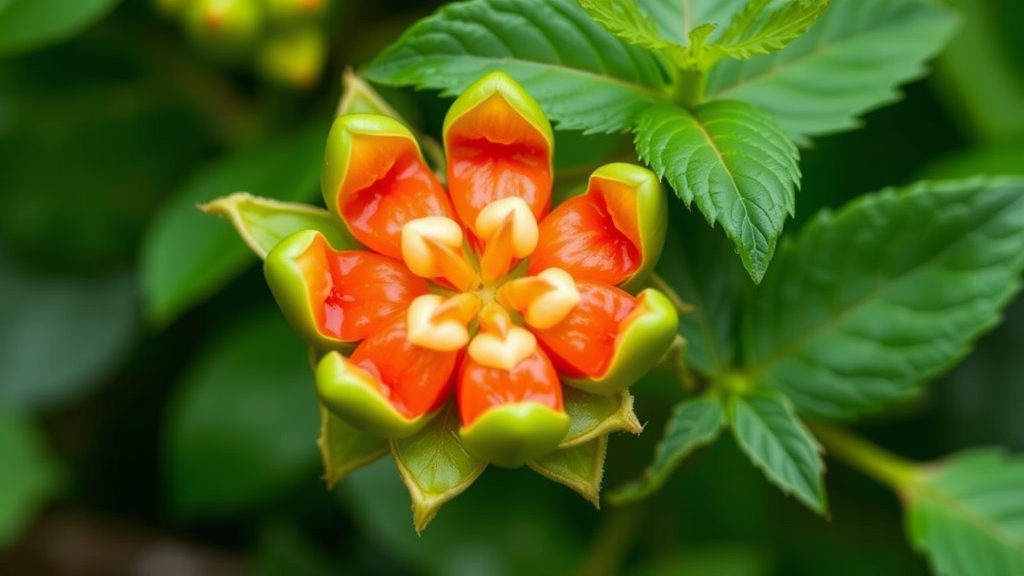
In the mist-wrapped hills of southern Yunnan, China, a climbing vine with a long history in traditional medicine is quietly rewriting the rules of how scientists hunt for potent plant drugs. The plant, Gongronemopsis tenacissima—known for decades as Marsdenia tenacissima and called Tongguanteng in Chinese medicine—has been used for centuries in formulations aimed at treating cancer, inflammation and digestive disorders. Now, a team of Chinese researchers has uncovered something remarkable: the shape of the plant’s fruits, features that farmers and botanists might dismiss as mere cosmetic variation, appears to predict how much medicinal chemistry the plant’s aerial tissues contain. The discovery, published in the journal Plant Biosystems, could transform how breeders and growers select the highest-quality medicinal raw material from this increasingly important species.
The research, led by Xianbin Deng and Linyan Xie of the Yunnan Province Key Laboratory of Cross-Border Chinese Herbal Materials along with colleagues at Honghe University and Yunnan Xintong Plant Pharmaceutical Co., Ltd., began in a germplasm nursery where the team had assembled a diverse collection of G. tenacissima accessions. From this living library, the researchers screened out fifteen accessions whose fruit morphologies differed dramatically from one another—some producing long, slender pods, others short, thick and strongly curved fruits. The strategy was deliberate. Rather than sampling randomly, the team deliberately chose extremes of fruit form to maximize the chance of detecting meaningful statistical relationships between external appearance and internal chemistry.
What makes the study methodologically elegant is its pairing of tissues from the same individual plants. The researchers collected only fruits for the full suite of morphological measurements—length, base diameter, chord length, bending index and thousand-seed weight among them—while the aerial parts of those very same plants were harvested for chemical analysis. This one-plant, two-trait design eliminates much of the confounding that plagues comparative studies of medicinal plants, where differences in growing site, age or cultivation history can masquerade as genuine genetic effects. By holding the individual constant, the team could ask a cleaner question: do plants that build fruits of a particular shape also build more medicine in their stems and leaves?
The chemical targets were not arbitrary. G. tenacissima is a rich source of C21 steroidal glycosides, a family of pregnane-type saponins that includes the tenacissosides—compounds that have attracted serious pharmaceutical attention. Tenacissoside H has been shown in laboratory studies to induce apoptosis and inhibit migration of colon cancer cells by downregulating the GOLPH3 gene, while tenacissoside G has been reported to synergistically enhance the inhibitory effects of the chemotherapy drug 5-fluorouracil against human colorectal cancer. Extracts of the plant, marketed in China as preparations such as Xiaoaiping injection and Tongguanteng injection, have been studied as adjuvant therapies for gastric and osteosarcoma cancers. Alongside the saponins, the team measured total phenolic acids, another class of bioactive compounds valued for antioxidant and antimicrobial properties.
The analytical arsenal combined classical phytochemistry with multivariate statistics. Quantification of tenacissoside I, G and H, total saponins and total phenolic acids was followed by correlation analysis, principal component analysis and hierarchical cluster analysis—three complementary tools that together reveal both pairwise relationships and overall patterns of similarity among accessions. The results were striking. The content of tenacissoside I ranged from a mere 0.03 percent to a substantial 1.70 percent of the aerial tissue, a nearly sixty-fold spread. Tenacissoside G varied from 0.05 to 0.90 percent and tenacissoside H from 0.02 to 0.13 percent. Total saponin content spanned 1.06 to 9.37 percent, and total phenolic acids ranged from 2.12 to 10.72 percent. Such enormous chemical variation within a single species underscores why selecting the right accession matters enormously for anyone producing medicine from this plant.
The correlations between fruit form and chemistry followed clear and interpretable patterns. Accessions bearing shorter fruits with larger base diameters, shorter chord lengths and higher bending indices—that is, short, stout, strongly curved fruits—consistently accumulated higher saponin contents in their aerial parts. In contrast, plants with longer fruits and higher thousand-seed weights tended to produce more total phenolic acids. The finding suggests that the same developmental programs shaping fruit architecture may be entangled with the metabolic pathways governing specialized metabolite biosynthesis, a phenomenon consistent with the growing body of literature showing that plant morphology and secondary metabolism are coordinated by shared hormonal and genetic regulators, including cytokinins, gibberellins and jasmonic acid.
Principal component analysis and hierarchical clustering distilled the multidimensional data into a clear hierarchy of elite germplasm. Three accessions—HM002, HM003 and HM005—emerged with the highest comprehensive scores across all measured traits. Among them, HM002 stood out as exceptional: it combined the characteristic short, thick, curved fruit phenotype with high accumulation of monomeric saponins, and it formed an entirely independent cluster in the dendrogram, genetically and chemically distinct from all other accessions in the study. The authors identify HM002 as a promising candidate accession for the production of medicinal raw material, a conclusion with immediate practical value for an industry that depends on reliable, standardized supplies of this herb.
The broader significance of the work lies in what it implies for medicinal plant breeding worldwide. Phenotypic traits that can be assessed by eye or with simple calipers—fruit length, curvature, seed weight—are cheap, fast and non-destructive proxies for expensive chemical assays that require laboratory equipment, solvents and skilled analysts. If the fruit shape–chemistry correlations hold up across larger populations, multiple environments and successive generations, breeders could conduct preliminary quality screening in the field, reserving costly chemical verification for the most promising candidates. This approach echoes strategies already proven in other medicinal and crop species, where morphological and pomological characterization has guided the selection of superior accessions in plants ranging from cornelian cherry to common bean core collections.
The study also contributes to a fundamental scientific conversation about why plants vary so much in their chemical armor. Plant specialized metabolites serve as defenses, regulators and signaling molecules, and their concentrations are shaped by an intricate interplay of genotype, environment and developmental stage. Recent research on species from Salvia miltiorrhiza to Cyclocarya paliurus has documented ecotype-specific phytochemical differentiation driven by both genetic and environmental factors. By linking a visible morphological trait to chemical phenotype within a shared genetic background, the G. tenacissima study adds a practical dimension to this debate: it offers a tangible marker that connects the plant’s external architecture to its internal metabolic economy. The recently published genome of the species, which revealed the genetic basis of calcium adaptation and tenacissoside biosynthesis, provides a foundation for eventually identifying the molecular mechanisms underlying these correlations.
Challenges remain before the findings can be translated into routine practice. Fifteen accessions, however carefully chosen, represent a narrow slice of the species’ diversity, and correlation does not establish causation—fruit shape may simply be a linked marker rather than a driver of saponin biosynthesis. Multi-year, multi-site trials will be needed to confirm that the relationships are stable under varying climates and cultivation regimes, particularly given the documented genotype-by-environment interactions that complicate phytochemical quality in many medicinal species. Nevertheless, the study delivers what the authors describe as fundamental data revealing associations between fruit morphological traits and bioactive compounds, and it offers a preliminary theoretical reference for screening candidate germplasm and securing a stable supply of medicinal raw materials. For a plant whose tenacissosides are drawing attention from oncology researchers, the message is clear: sometimes the secret to a plant’s healing power is written on the outside of its fruit.
Subject of Research: Correlation between fruit morphology and bioactive compound accumulation in the medicinal plant Gongronemopsis tenacissima
Article Title: Correlation analysis between fruit shape and bioactive compound accumulation in the medicinal plant Gongronemopsis tenacissima (Apocynaceae)
Article References: Deng, X., Xie, L., Cao, X., Li, J., Yang, S., Liu, Z., Wu, J., Lu, B., Shi, X., & Meng, H. (2026). Correlation analysis between fruit shape and bioactive compound accumulation in the medicinal plant Gongronemopsis tenacissima (Apocynaceae). Plant Biosystems, 160(5), Article 264. https://doi.org/10.1007/s44473-026-00268-5
Image Credits: AI Generated
DOI: 10.1007/s44473-026-00268-5
Keywords: Gongronemopsis tenacissima, Marsdenia tenacissima, fruit shape, tenacissoside, total saponins, phenolic acids, medicinal plants, germplasm screening, plant biosynthesis, traditional Chinese medicine, phytochemistry, Plant Biosystems
Cite Scienmag News
Alan Morgan. (September 20, 2026). Fruit Shape Reveals Medicinal Potency in Traditional Chinese Herb. Scienmag. https://scienmag.com/fruit-shape-reveals-medicinal-potency-in-traditional-chinese-herb/
Alan Morgan. "Fruit Shape Reveals Medicinal Potency in Traditional Chinese Herb." Scienmag, 20 September 2026, https://scienmag.com/fruit-shape-reveals-medicinal-potency-in-traditional-chinese-herb/. Accessed 5 October 2026.
Alan Morgan. "Fruit Shape Reveals Medicinal Potency in Traditional Chinese Herb." Scienmag. September 20, 2026. https://scienmag.com/fruit-shape-reveals-medicinal-potency-in-traditional-chinese-herb/


