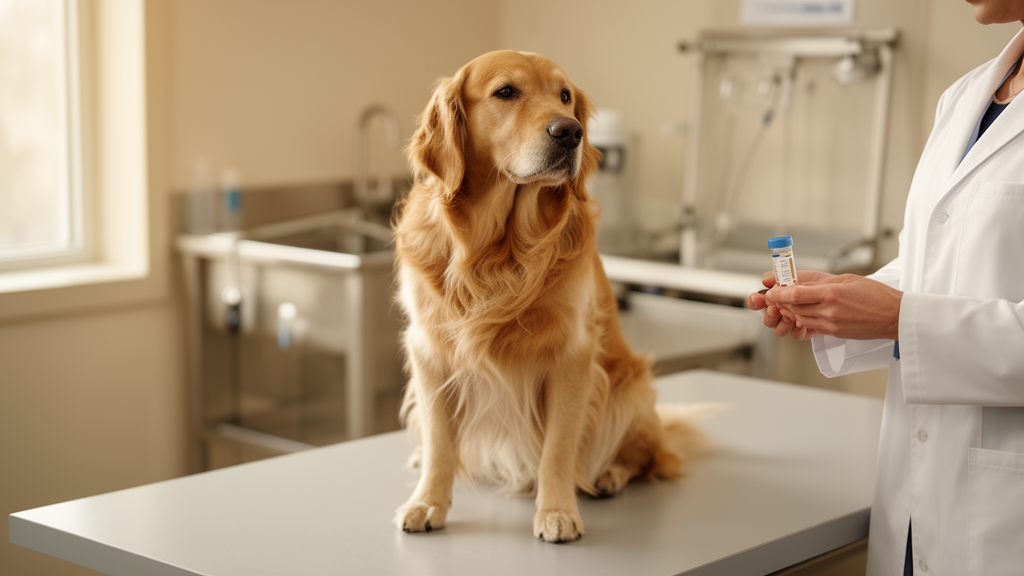
A four-week course of the gut-targeted antibiotic rifaximin produced no statistically significant changes in the fecal microbiota of healthy dogs, according to a small pilot study published in Frontiers in Veterinary Science. Five healthy laboratory beagles received oral rifaximin at a dose of 25 milligrams per kilogram every 12 hours for 28 days, and researchers sequenced bacterial DNA from rectal fecal samples collected before treatment, on day 14, and on day 28. Across all measured indicators of microbial diversity and composition, the dogs’ gut bacterial communities remained essentially stable, a result that contrasts sharply with the dysbiosis previously documented in dogs given other common antibiotics such as metronidazole and tylosin.
Rifaximin is a semisynthetic antibiotic derived from rifamycin that exhibits broad-spectrum activity against both Gram-positive and Gram-negative bacteria in the gut. Its defining feature is extraordinarily poor absorption: systemic uptake in the gastrointestinal tract is reported to be less than 0.4 percent, meaning the drug acts almost entirely within the intestinal lumen. The antibiotic works by inhibiting the DNA-dependent RNA polymerase of bacteria, thereby suppressing bacterial RNA synthesis. In human medicine, rifaximin has traditionally been deployed against a range of gastrointestinal disorders, including traveler’s diarrhea, irritable bowel syndrome, and small intestinal bacterial overgrowth, and it has been approved by the U.S. Food and Drug Administration to reduce the risk of recurrence in patients with overt hepatic encephalopathy. Numerous human studies suggest that its effects are largely limited to specific pathogenic taxa, with minimal impact on the overall healthy gut microbiota.
The motivation for testing the drug in dogs lies in the gut–liver axis, the bidirectional relationship between the gastrointestinal tract and the liver. The intestinal mucosal barrier acts as an anatomical filtering system that removes gut-derived toxins and microbial components, while remaining toxins travel to the liver through the portal vein for detoxification. In return, the liver secretes bile acids and antibodies into the duodenum, which helps maintain mucosal homeostasis by suppressing small intestinal bacterial overgrowth and inhibiting bacterial adhesion to the epithelium. Hepatic encephalopathy, a neurological disorder caused mainly by ammonia produced by gut bacteria, sits squarely at this intersection. In humans, microbiome research has revealed that patients with hepatic encephalopathy show dysbiosis—a reduction in beneficial gut bacteria and an overgrowth of harmful bacteria—which elevates endotoxin levels and damages the intestinal mucosal barrier, further worsening the condition.
In veterinary medicine, hepatic encephalopathy is currently managed with a multimodal approach combining a protein-restricted diet, lactulose, and antibiotics such as metronidazole. Yet the efficacy of antibiotics in treating the condition remains unclear, and their use is discouraged because of potential adverse effects and the risk of antimicrobial resistance. Prior research has questioned the value of adding antibiotics: a study of dogs with congenital extrahepatic portosystemic shunts, a major cause of hepatic encephalopathy, found no additional benefit from metronidazole, suggesting that hepatic-supportive diets combined with lactulose are sufficient for presurgical management. At the same time, medical management with diet and lactulose is not always enough—among dogs with congenital portosystemic shunts managed without surgery, one study estimated a median survival time of 3.2 years, with outcomes ranging from long-term survivors to dogs that died within a relatively short period. Because combination therapy with rifaximin and lactulose achieves high clinical efficacy in humans with hepatic encephalopathy, the Japanese team reasoned that rifaximin might eventually offer dogs a way to modulate the gut microbiota while sparing its beneficial diversity.
The study enrolled five healthy laboratory beagles—two males and three females—with a median age of 9 years and body weights ranging from 10.3 to 14.4 kilograms. All dogs were housed at a single facility, fed the same commercially available dry food from one month before the experiment through the 28-day study period, and had received no antibiotics, anthelmintics, or antidiarrheal agents within the preceding six months. Health status was confirmed through the absence of gastrointestinal signs, physical examinations, complete blood counts, and extensive serum biochemistry panels covering liver enzymes, bile acids, and ammonia. The dose of 25 milligrams per kilogram every 12 hours was selected based on a previous study demonstrating clinical efficacy of rifaximin in dogs with chronic enteropathy. Each dose was administered orally with a small amount of water after feeding, confirmed by visual inspection of the oral cavity, and each dog was monitored for at least 15 minutes to confirm the absence of vomiting.
Fecal samples were collected by digital rectal examination on day 0, day 14, and day 28, immediately sealed and stored at −20 °C. The team extracted fecal DNA using a bead-beating method, amplified the V3–V4 region of the bacterial 16S rRNA gene with polymerase chain reaction, and performed sequencing on an Illumina MiSeq system with 2 × 301 base-pair paired-end reads. After quality filtering and denoising with the DADA2 plugin in QIIME 2, the number of reads per sample ranged from 28,093 to 54,880, with a median of 37,828. Negative controls without template DNA showed no amplification, and taxonomic assignments were made against the SILVA version 138 reference database. Alpha diversity metrics—amplicon sequence variants, Chao1 richness, and the Shannon index—evaluated the richness and evenness of each sample, while beta diversity metrics—weighted and unweighted UniFrac distances and Bray–Curtis dissimilarities—assessed differences in community composition between samples, visualized through principal coordinate analysis.
The results were notable for their stability. All dogs completed the protocol without gastrointestinal symptoms, all stool samples remained well-formed, and serum biochemical analyses conducted every 14 days detected no abnormalities. Taxonomically, Firmicutes was the dominant phylum at every time point, with Fusobacteriota, Bacteroidota, and Actinobacteriota as additional major phyla—a composition consistent with previous surveys of healthy dogs, and one that showed no apparent change over the treatment period. None of the alpha diversity metrics shifted significantly: p-values were 0.449 for amplicon sequence variants, 0.241 for Chao1, and 0.248 for the Shannon index, although the authors noted a nonsignificant decreasing trend in these measures on days 14 and 28 compared with day 0. Beta diversity likewise showed no significant differences, with p-values of 0.471 for weighted UniFrac distances, 0.157 for unweighted UniFrac distances, and 0.089 for Bray–Curtis dissimilarities. Permutational analysis of multivariate dispersions confirmed no significant differences in dispersion among groups for any metric.
The authors emphasize that these findings align with human data. In one human study, eight weeks of rifaximin administration left gut microbial abundance unchanged, although correlation network analysis revealed reduced connectivity between individual bacteria and metabolites. Another study in patients with hepatic encephalopathy and cirrhosis suggested that twelve weeks of rifaximin maintained overall gut microbiota diversity while inducing specific strain substitutions and genomic mutations that altered metabolic pathways in certain bacteria. Human work has also shown that rifaximin’s targets tend to be species-level pathogenic taxa such as Ruminococcus gnavus and Streptococcus salivarius, and that in irritable bowel syndrome it can improve clinical signs without shifting phylum-level composition, instead modulating a limited number of low-abundance species. Some reports even describe rifaximin promoting the growth of beneficial bacteria such as Bifidobacterium.
The limitations of the study are substantial and the researchers are explicit about them. With only five dogs, no untreated control group, and no comparator antibiotic or placebo arm, the statistical power was limited and the risk of a type II error—failing to detect a real effect—was increased. The authors caution that the absence of statistically significant differences should not be interpreted as evidence that rifaximin has no effect on the fecal microbiota, and they state that the data do not provide evidence to guide clinical use of rifaximin in dogs. The 16S rRNA approach was also restricted to phylum-level composition and overall diversity, leaving questions about lower taxonomic levels, functional changes, and antimicrobial resistance gene acquisition unanswered. Additional caveats include a relatively short 28-day treatment window—chronic liver disease in dogs requires management lasting months to years—and fecal storage at −20 °C rather than −80 °C, which may have affected recovery of some bacterial taxa despite uniform handling.
For now, the study stands as the first evaluation of rifaximin’s influence on fecal microbiota in dogs, offering a cautiously encouraging signal for a drug class that has frequently disrupted the canine gut. Where metronidazole has been shown to induce reversible dysbiosis in healthy dogs—including reduced numbers of butyrate-producing and bile acid-metabolizing bacteria such as Clostridium hiranonis—and tylosin and amoxicillin-clavulanic acid have been reported to reduce bacterial diversity and species richness with limited recovery, rifaximin at least appeared to leave the ecosystem intact over four weeks. The research team calls for larger placebo-controlled studies incorporating metagenomics and metabolomics to capture changes at lower taxonomic levels and functional alterations, and to determine whether the same stability holds in clinical populations of dogs with hepatic encephalopathy and under different dietary, housing, and age conditions.
Subject of Research: Effects of 28-day rifaximin administration on the fecal microbiota of healthy dogs assessed by 16S rRNA gene sequencing
Article Title: Effects of rifaximin on the fecal microbiota of healthy dogs: a pilot study
Article References: Harada, H., Tamura, M., Kawabata, M., Sakatani, A., Deguchi, T., Fukuda, A., Usui, M., & Ohta, H. (2026). Effects of rifaximin on the fecal microbiota of healthy dogs: a pilot study. Frontiers in Veterinary Science, 13, Article 1761247. https://doi.org/10.3389/fvets.2026.1761247
Image Credits: AI Generated
DOI: 10.3389/fvets.2026.1761247
Keywords: rifaximin, dogs, gut microbiota, 16S rRNA sequencing, dysbiosis, hepatic encephalopathy, antibiotics, veterinary medicine, alpha diversity, beta diversity, beagles, gut-liver axis
Cite Scienmag News
Morgan Morrow. (October 23, 2026). Four-Week Course of Rifaximin Leaves Fecal Microbiota of Healthy Dogs Unchanged in Pilot Trial. Scienmag. https://scienmag.com/four-week-course-of-rifaximin-leaves-fecal-microbiota-of-healthy-dogs-unchanged-in-pilot-trial/
Morgan Morrow. "Four-Week Course of Rifaximin Leaves Fecal Microbiota of Healthy Dogs Unchanged in Pilot Trial." Scienmag, 23 October 2026, https://scienmag.com/four-week-course-of-rifaximin-leaves-fecal-microbiota-of-healthy-dogs-unchanged-in-pilot-trial/. Accessed 24 October 2026.
Morgan Morrow. "Four-Week Course of Rifaximin Leaves Fecal Microbiota of Healthy Dogs Unchanged in Pilot Trial." Scienmag. October 23, 2026. https://scienmag.com/four-week-course-of-rifaximin-leaves-fecal-microbiota-of-healthy-dogs-unchanged-in-pilot-trial/