


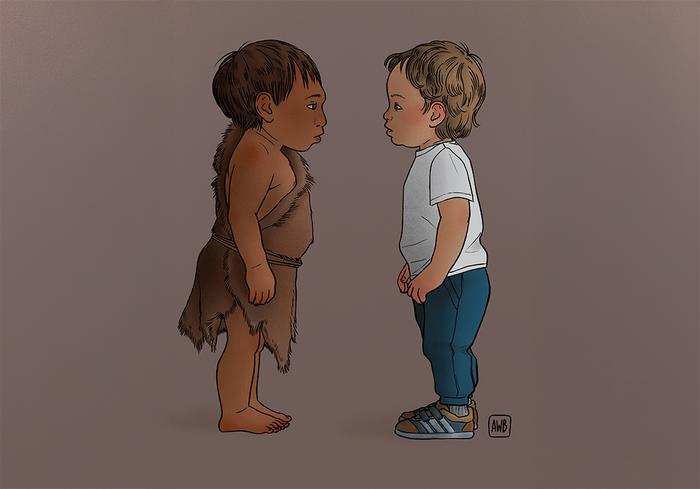
A groundbreaking international study has shed new light on the early development of Neanderthals, our closest extinct evolutionary relatives. By examining infant skeletal remains dating from 50,000 to 75,000 years ago, researchers have gained unprecedented insights into how Neanderthal babies grew and developed at the very earliest stages of life. This discovery challenges previous assumptions and narrows the developmental gap traditionally perceived between Neanderthals and modern humans.
At the forefront of this research is Dr. Justyna Miszkiewicz, a skeletal histologist from the University of Queensland, who led an innovative analysis of ancient baby teeth and bones unearthed from Sesselfelsgrotte, Germany. These rare and fragile specimens, excavated during the 1960s and 1970s, were stored in a museum collection for decades before it was confirmed that they belonged to Neanderthals. The remains include what may be an unborn baby’s bones as well as molar teeth from two different infants, providing a unique window into Neanderthal growth patterns.
Using advanced non-invasive micro-computed tomography (micro-CT), the team was able to visualize the internal microanatomy of these precious fossilized tissues without causing any damage. This state-of-the-art imaging technique enabled the reconstruction of the skeletal microstructure virtually in three dimensions, revealing intricate details about cellular organization and bone tissue development within the infant Neanderthal skeletons. The researchers coined this method “virtual microanatomy” to describe their novel approach.
The micro-CT data revealed telling indicators of rapid skeletal growth consistent with foetal development. In particular, the long bones such as the femur and humerus showed localized zones of heightened bone density and structural organization. Such features suggest an accelerated growth phase that may surpass that seen in typical modern human infants at similar developmental stages. Despite these advanced localized growth markers, the overall trajectory of development in Neanderthal babies remarkably parallels that of human babies today, underlying deep biological similarities.
Further insights came from the detailed examination of Neanderthal milk teeth. The researchers identified unusual mineralisation patterns within the dentine, the calcified tissue beneath the enamel surface. These mineralisation defects, identified as interglobular dentine, are a sign that tooth development was periodically interrupted. Such interruptions are interpreted as biomarkers of physiological stress during early life, potentially caused by nutritional deficiencies or metabolic disruptions.
The presence of these lesions in the teeth suggests episodes of systemic stress happening in utero or shortly after birth, possibly linked to vitamin D or calcium deficiencies, or impaired calcium absorption. These early indicators of health challenges shed light on the harsh environmental and nutritional conditions Neanderthal infants may have faced. The dental microstructure thus records a valuable biological narrative of survival struggles during the most vulnerable phases of Neanderthal life.
Co-lead author Dr. Ricardo Miguel Godinho from the University of Algarve emphasizes the significance of these mineralisation defects not only as health indicators but also as clues to Neanderthal infant vulnerability and resilience. The fact that such defects formed between late gestation and approximately two years of age ties them closely to critical windows of growth and development, highlighting the fragile nature of early Neanderthal life history.
While recognizing the exceptional rarity of these remains, the research emphasizes that Neanderthals, despite being a distinct species from Homo sapiens, shared remarkable developmental pathways with us. These findings help bridge the perceived developmental divide and illustrate the shared biological heritage in early growth patterns. Dr. Miszkiewicz highlights the profound implications of understanding these shared developmental signatures in reconstructing human evolutionary history.
This study contributes to the broader SHARP project spearheaded by Dr. Alvise Barbieri at the University of Algarve, with funding support from National Geographic among others. Future research, as suggested by the authors, will focus on employing higher resolution imaging and a combination of biochemical and histological methods to further dissect the nuances of Neanderthal growth and health.
By illuminating the intimate developmental stages of Neanderthal infants, this work provides vital context for appreciating the biology and life experiences of our closest relatives. In doing so, it enriches our understanding of how closely related species navigated similar biological challenges tens of thousands of years ago. The enduring similarities in early growth also underscore the shared vulnerabilities and adaptations that connect humans and Neanderthals at the foundational stages of life.
This landmark investigation not only pushes the boundaries of paleoanthropology but also introduces a pioneering application of virtual microanatomy for studying ancient fragile specimens. Such technological advancements open new doors for non-destructive morphological and physiological analysis of rare fossils, offering a blueprint for future evolutionary developmental biology studies.
Ultimately, these tiny fossilized remnants provide an extraordinary glimpse into the earliest phases of Neanderthal life, contributing significantly to our knowledge of human origins. They poignantly remind us that understanding our evolutionary journey involves untangling the complexities of our relatives’ lives, growth, challenges, and similarities right from the very start.
News Publication Date: 17-Jun-2026
Web References: http://dx.doi.org/10.1098/rsos.260485
References: Read the research in Royal Society Open Science, DOI: 10.1098/rsos.260485
Cite Scienmag News
Gavin Prescott. (June 22, 2026). Fossilized Infants Uncover Developmental Connection Between Humans and Neanderthals. Scienmag. https://scienmag.com/fossilized-infants-uncover-developmental-connection-between-humans-and-neanderthals/
Gavin Prescott. "Fossilized Infants Uncover Developmental Connection Between Humans and Neanderthals." Scienmag, 22 June 2026, https://scienmag.com/fossilized-infants-uncover-developmental-connection-between-humans-and-neanderthals/. Accessed 3 September 2026.
Gavin Prescott. "Fossilized Infants Uncover Developmental Connection Between Humans and Neanderthals." Scienmag. June 22, 2026. https://scienmag.com/fossilized-infants-uncover-developmental-connection-between-humans-and-neanderthals/


