


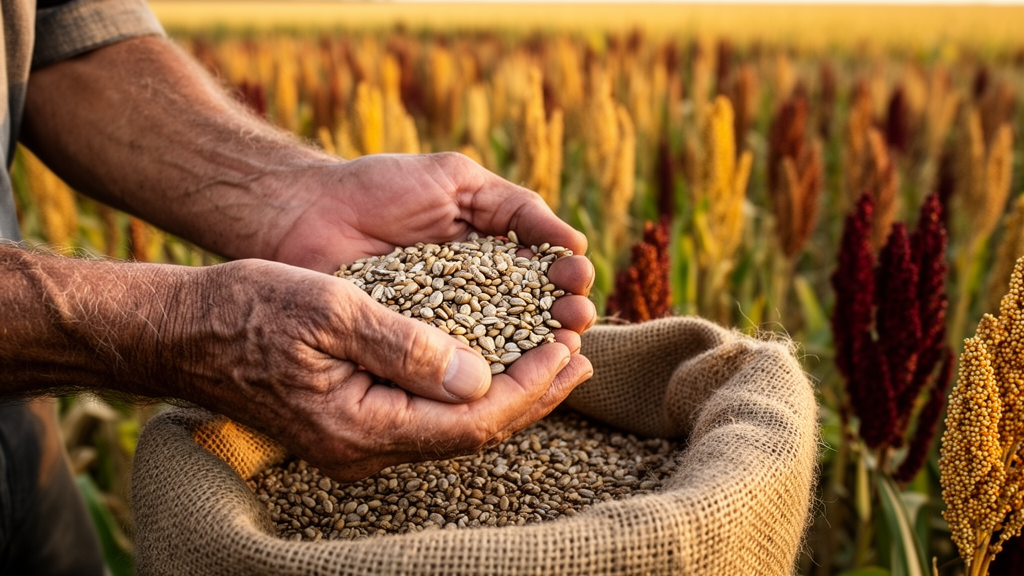
Global agriculture rests on a startlingly narrow foundation. A handful of cereal and legume species dominate the world’s fields and diets, while thousands of other plants with proven nutritional value and hardy constitutions linger at the margins of food systems. A new editorial published in Frontiers in Nutrition argues that these neglected and underutilized plant species, known in the research community as NUS, represent a strategic resource whose revitalization could simultaneously improve human nutrition, strengthen agroecological resilience, and conserve biodiversity in the face of mounting climate pressure.
The editorial, authored by Mihail Chervenkov of the University of Forestry and the Bulgarian Academy of Sciences, Marija Knez of the University of Belgrade, and Teodora Ivanova of the Bulgarian Academy of Sciences, synthesizes the findings of a multi-article Research Topic spanning nutrition, food science, consumer behavior, and agroecology. Its central claim is that the continued marginalization of these crops reflects a complex interplay of agronomic, socioeconomic, cultural, and market barriers rather than any deficiency in the crops themselves.
The technical case for NUS rests on several pillars. Many possess exceptional nutritional profiles, with high-quality protein, micronutrients, and bioactive compounds that rival or exceed those of staple commodities. Equally important is their adaptation to marginal environments: species that evolved under drought, poor soils, or temperature extremes offer built-in resilience that modern breeding programs often struggle to replicate in elite cultivars of major crops. Long histories of cultivation also mean that traditional knowledge about their agronomy and culinary use survives in many regions, providing a cultural foundation for renewed adoption.
The Research Topic begins with a crop-focused review of rye, presented as a traditional cereal whose nutritional composition and health-promoting properties justify renewed attention in contemporary food systems. Rye exemplifies a broader pattern: crops that were once dietary mainstays in Europe have been displaced by wheat and other commodities, despite documented benefits for metabolic health. The review of peas broadens the perspective to grain legumes, highlighting how a single multifunctional crop can address nutritional quality, environmental sustainability, and economic opportunity at once. Peas provide protein and micronutrients while improving soil fertility through biological nitrogen fixation, supporting sustainable crop rotations, and feeding into expanding plant-based food markets.
A review of chickpeas extends this logic further, emphasizing the crop’s nutritional, health, and culinary potential alongside the reduced environmental footprint of its production. Taken together, the editors argue, these crop-focused reviews provide compelling evidence that underutilized species can simultaneously support nutrition, environmental sustainability, and agricultural resilience. But demonstrating potential, they stress, is only the first step. Translating scientific evidence into dietary practice remains an equally formidable challenge.
That gap is quantified in a contribution comparing dietary recommendations with actual legume consumption patterns across European countries, which reveals persistent discrepancies between what nutrition authorities advise and what populations actually eat. The editors point to recent analyses showing that crops such as rye, pea, and chickpea remain marginal despite their climatic adaptability and recognized nutritional benefits, hindered by limited production, insufficient characterization and promotion of local genetic resources, dependence on imported raw materials, and weak integration into contemporary food markets.
Consumer behavior emerges as a decisive variable. One study explores the behavioral and socioeconomic factors influencing purchasing decisions regarding cereals, finding that health awareness, perceived value, and accessibility remain the key drivers of adoption. For crops such as buckwheat, successful revitalization requires overcoming limited consumer familiarity while addressing the sensory characteristics that shape food preferences. The editors note that recipe development, sensory evaluation, and market-oriented product innovation can measurably improve acceptance of NUS-based foods, demonstrating that revitalization depends on culinary creativity and consumer experience as much as on nutritional quality.
Innovation extends beyond the kitchen. Sustainable processing technologies, including green hydrogen-assisted extraction, are highlighted as a route to environmentally friendly recovery of bioactive compounds from NUS for functional foods and nutraceutical ingredients, adding industrial value to crops that might otherwise never leave the niche market. The scope of the topic also stretches beyond cultivated fields: the editors argue that the concept of underutilized food resources encompasses wild and locally harvested species whose nutritional, cultural, and ecological values remain insufficiently recognized.
Several contributions illustrate this wider frame. An analysis of local edible species traditionally used as wild vegetables on Hainan Island, including the calcium speciation of their tissues, shows how indigenous knowledge contributes to biodiversity conservation while sustaining food traditions. Research in Czechia demonstrates that wild foods follow distinct access pathways, with plant-based foods linked mainly to forest exposure and regulated animal foods shaped more by social networks and procurement systems, underscoring that revitalization requires attention to governance, accessibility, and cultural practice as much as to biology. An overview of millets in India’s Bundelkhand region broadens the lens from individual crops to agricultural landscapes, showing how resilient traditional species can strengthen food and nutrition security under increasingly challenging climatic conditions.
Viewed collectively, the editors identify three overarching themes. First, NUS should be regarded as multifunctional resources capable of simultaneously supporting nutrition, ecosystem services, and rural livelihoods. Second, scientific evidence on nutritional quality alone is insufficient to ensure wider adoption; consumer behavior, market development, food innovation, and sustainable processing are equally important. Third, biodiversity conservation, traditional knowledge, and climate resilience are not separate objectives but complementary dimensions of sustainable food systems. The editorial closes with a call for interdisciplinary collaboration linking plant breeding, characterization of local genetic resources, food technology, behavioral sciences, and policy development, along with greater attention to sustainable value chains, consumer awareness, and enabling policy environments. The message is unambiguous: these are not crops of the past, but strategic resources for building resilient, diversified, and nutrition-sensitive food systems capable of confronting the intertwined challenges of food security and environmental sustainability.
Subject of Research: Revitalization of neglected and underutilized plant species for human nutrition and agroecological resilience
Article Title: Editorial: Revitalization and sustainable utilization of neglected and underutilized plant species (NUS) for enhanced human nutrition and agroecological resilience
Article References: Chervenkov, M., Knez, M., & Ivanova, T. (2026). Editorial: Revitalization and sustainable utilization of neglected and underutilized plant species (NUS) for enhanced human nutrition and agroecological resilience. Frontiers in Nutrition, 13, Article 1980443. https://doi.org/10.3389/fnut.2026.1980443
Image Credits: AI Generated
DOI: 10.3389/fnut.2026.1980443
Keywords: neglected and underutilized species, agrobiodiversity, food security, climate adaptation, nutrition, sustainable agriculture, legumes, rye, buckwheat, millets, consumer behavior, biodiversity conservation
Cite Scienmag News
Margaret Porter. (October 19, 2026). Forgotten Crops May Hold the Key to Resilient Food Systems, Researchers Argue. Scienmag. https://scienmag.com/forgotten-crops-may-hold-the-key-to-resilient-food-systems-researchers-argue/
Margaret Porter. "Forgotten Crops May Hold the Key to Resilient Food Systems, Researchers Argue." Scienmag, 19 October 2026, https://scienmag.com/forgotten-crops-may-hold-the-key-to-resilient-food-systems-researchers-argue/. Accessed 19 October 2026.
Margaret Porter. "Forgotten Crops May Hold the Key to Resilient Food Systems, Researchers Argue." Scienmag. October 19, 2026. https://scienmag.com/forgotten-crops-may-hold-the-key-to-resilient-food-systems-researchers-argue/


