

Tuesday, July 14, 2026
Science
No Result
View All Result
  • Login
  • HOME
  • SCIENCE NEWS
  • CONTACT US
  • HOME
  • SCIENCE NEWS
  • CONTACT US
No Result
View All Result
Scienmag
No Result
View All Result
Home Science News Medicine

First Space Diagnostic X-rays Signal a New Era for Astronaut Health

July 14, 2026
in Medicine
Reading Time: 2 mins read
0
First Space Diagnostic X-rays Signal a New Era for Astronaut Health

First Space Diagnostic X-rays Signal a New Era for Astronaut Health

65
SHARES
587
VIEWS
Share on FacebookShare on Twitter
ADVERTISEMENT

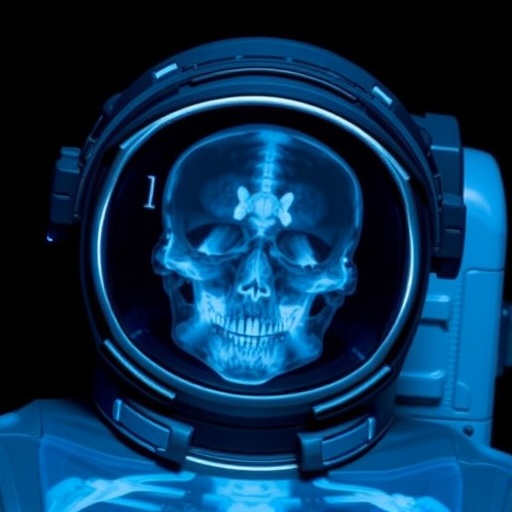
A crew aboard a commercial spacecraft has produced the first truly diagnostic X-ray images during an orbital mission, a milestone for space medicine that has long relied almost entirely on ultrasound. The results appear in Radiology, the journal of the Radiological Society of North America (RSNA), and outline how a compact, commercially available radiography system could extend medical capabilities beyond what ultrasound can deliver.

The study matters because future missions are expected to last longer and travel farther, increasing the likelihood of injuries and illnesses in orbit. Ultrasound can be helpful, but it demands substantial operator training and depends on sound-wave transmission through appropriate tissue. In contrast, X-rays are fast and provide high-value anatomical information when image quality is sufficient.

Traditional X-ray units are typically bulky, radiation-intensive, and prone to motion blur—problems intensified by the constant movement of microgravity. The research team therefore tested whether a portable system, designed for everyday use on Earth, could survive spacecraft prelaunch conditions and deliver interpretable images in space.

Prior to the Fram2 flight, the crew received four hours of training on the portable radiography workflow. Preflight imaging included hands, forearms, abdomen, pelvis, and chest X-rays, establishing baselines for comparison. The onboard setup also used an ultraportable wireless digital generator, enabling imaging with minimal medical expertise.

Fram2 launched on March 31, 2025, on a SpaceX Falcon 9 rocket into a 90-degree orbit roughly 425 to 450 kilometers above sea level. Over 3 days and 14 hours, the team acquired in-flight images of both a calibration phantom and several human anatomical regions, transmitting results to an onboard computer for immediate review by the crew.

After landing and recovery, the researchers captured postflight images designed to replicate the in-orbit protocol. Although the generator sustained superficial structural damage during touchdown, internal components and X-ray output remained functional, allowing the team to complete comparable imaging.

Three independent radiologists assessed image quality, spatial and contrast resolution, and positioning. Overall diagnostic performance was maintained between preflight and inflight acquisitions, with the main weakness appearing in the positioning scores for certain central-body images such as the chest, pelvis, and abdomen. Still, the inflight scans reached a diagnostic level for all examined regions.

Importantly, crew members reported that the system was easy to use and the protocol straightforward to follow. Estimated radiation exposure for the crew was no higher than standard clinical imaging on Earth, supporting the potential for routine onboard implementation.

Beyond human health, the study suggests X-rays could support mission-critical nonmedical tasks, from inspecting electronics and spacesuits to imaging malfunctioning satellites and analyzing lunar rover targets. The researchers argue that smaller, more rugged autonomous radiography systems could transform both space operations and broader global health logistics.

Subject of Research: People
Article Title: SpaceXray: Feasibility and Diagnostic Capabilities of On-Orbit Medical Radiography
News Publication Date: 14-Jul-2026
Web References: https://pubs.rsna.org/journal/radiology
References: Radiological Society of North America (RSNA) / Radiology
Image Credits: Radiological Society of North America (RSNA)

Keywords: Space flight; Medical imaging; Radiography; Astronauts

Tags: advancements in space medical technologyastronaut healthcare diagnosticscomparison of ultrasound and X-ray in spacediagnostic capabilities in space missionsinnovative medical tools for astronautslong-duration spaceflight health monitoringmicrogravity imaging challengesorbital X-ray imagingportable radiography systemsradiation safety in spaceradiology in microgravity environmentsSpace medicine
Share26Tweet16
Previous Post

SwRI and SMU to Create AI Controller for Multi-Modal Microgrids, Storage

Next Post

Plants respond instantly to sudden high light conditions

Related Posts

Treatment delays in colorectal cancer linked to higher metastasis risk thresholds
Medicine

Treatment delays in colorectal cancer linked to higher metastasis risk thresholds

July 14, 2026
Neurological Symptoms Linked to Hantavirus Infection Revealed
Medicine

Neurological Symptoms Linked to Hantavirus Infection Revealed

July 14, 2026
New Framework Compares Human and Mouse Cortical Neuron Dendrites
Medicine

New Framework Compares Human and Mouse Cortical Neuron Dendrites

July 14, 2026
Data-Driven Framework Maps Molecular Changes in Human MASLD Progression
Medicine

Data-Driven Framework Maps Molecular Changes in Human MASLD Progression

July 14, 2026
KIF14 silencing boosts chemosensitivity by altering 53BP1 in medulloblastoma
Medicine

KIF14 silencing boosts chemosensitivity by altering 53BP1 in medulloblastoma

July 14, 2026
Care Professionals’ Perspectives on Electronic Health Records for Elderly Care
Medicine

Care Professionals’ Perspectives on Electronic Health Records for Elderly Care

July 14, 2026
Next Post
Plants respond instantly to sudden high light conditions

Plants respond instantly to sudden high light conditions

  • Mothers who receive childcare support from maternal grandparents show more

    Mothers who receive childcare support from maternal grandparents show more parental warmth, finds NTU Singapore study

    27656 shares
    Share 11059 Tweet 6912
  • University of Seville Breaks 120-Year-Old Mystery, Revises a Key Einstein Concept

    1061 shares
    Share 424 Tweet 265
  • Bee body mass, pathogens and local climate influence heat tolerance

    682 shares
    Share 273 Tweet 171
  • Researchers record first-ever images and data of a shark experiencing a boat strike

    546 shares
    Share 218 Tweet 137
  • Groundbreaking Clinical Trial Reveals Lubiprostone Enhances Kidney Function

    531 shares
    Share 212 Tweet 133
Science

Embark on a thrilling journey of discovery with Scienmag.com—your ultimate source for cutting-edge breakthroughs. Immerse yourself in a world where curiosity knows no limits and tomorrow’s possibilities become today’s reality!

RECENT NEWS

  • Study Finds Honey Bees’ Smell Senses Shift from Larvae to Adults
  • Climate Change Forces Amphibians to Shift Diet, but Limits Adaptation
  • Plants respond instantly to sudden high light conditions
  • First Space Diagnostic X-rays Signal a New Era for Astronaut Health

Categories

  • Agriculture
  • Anthropology
  • Archaeology
  • Athmospheric
  • Biology
  • Biotechnology
  • Blog
  • Bussines
  • Cancer
  • Chemistry
  • Climate
  • Earth Science
  • Editorial Policy
  • Marine
  • Mathematics
  • Medicine
  • Pediatry
  • Policy
  • Psychology & Psychiatry
  • Science Education
  • Social Science
  • Space
  • Technology and Engineering

Subscribe to Blog via Email

Enter your email address to subscribe to this blog and receive notifications of new posts by email.

Join 5,146 other subscribers

© 2025 Scienmag - Science Magazine

Welcome Back!

Login to your account below

Forgotten Password?

Retrieve your password

Please enter your username or email address to reset your password.

Log In
No Result
View All Result
  • HOME
  • SCIENCE NEWS
  • CONTACT US

© 2025 Scienmag - Science Magazine

Discover more from Science

Subscribe now to keep reading and get access to the full archive.

Continue reading
