


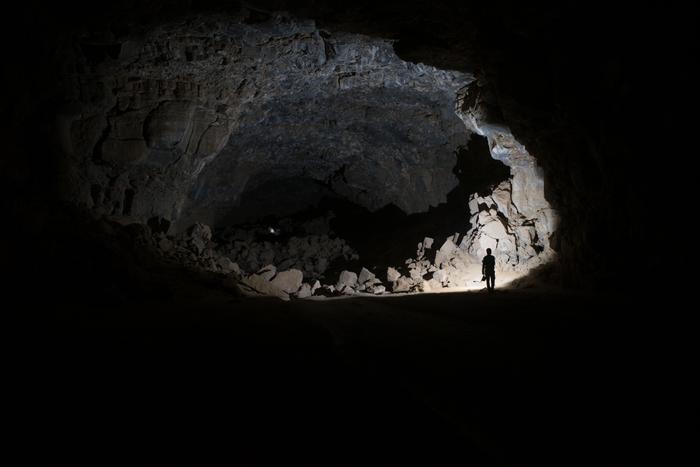
Recent strides in interdisciplinary archaeological research in Arabia have unveiled new insights into the evolution and historical development of regional human populations, as well as the dynamic patterns of cultural change, migration, and adaptation to environmental fluctuations.

Credit: Credit: Green Arabia Project
Recent strides in interdisciplinary archaeological research in Arabia have unveiled new insights into the evolution and historical development of regional human populations, as well as the dynamic patterns of cultural change, migration, and adaptation to environmental fluctuations.
Despite the challenges posed by limited preservation of archaeological assemblages and organic remains in arid environments, these discoveries are reshaping our understanding of the region’s rich cultural heritage.
One such breakthrough led by Griffith University’s Australian Research Centre for Human Evolution (ARCHE), in collaboration with international partners, comes from the exploration of underground settings, including caves and lava tubes, which have remained largely untapped reservoirs of archaeological abundance in Arabia.
Through meticulous excavation and analysis, researchers have uncovered a wealth of evidence at Umm Jirsan, spanning from the Neolithic to the Chalcolithic/Bronze Age periods (~10,000-3,500 years ago).
“Our findings at Umm Jirsan provide a rare glimpse into the lives of ancient peoples in Arabia, revealing repeated phases of human occupation and shedding light on the pastoralist activities that once thrived in this landscape,” said Dr Mathew Stewart, the lead researcher and a Research Fellow at ARCHE.
“This site likely served as a crucial waypoint along pastoral routes, linking key oases and facilitating cultural exchange and trade.”
Rock art and faunal records attest to the pastoralist use of the lava tube and surrounding areas, painting a vivid picture of ancient lifeways.
Depictions of cattle, sheep, goat and dogs corroborate the prehistoric livestock practices and herd composition of the region.
Isotopic analysis of animal remains indicates that livestock primarily grazed on wild grasses and shrubs, while humans maintained a diet rich in protein, with a notable increase in the consumption of C3 plants over time, suggesting the emergence of oasis agriculture.
“While underground localities are globally significant in archaeology and Quaternary science, our research represents the first comprehensive study of its kind in Saudi Arabia,” added Professor Michael Petraglia, Director of ARCHE.
“These findings underscore the immense potential for interdisciplinary investigations in caves and lava tubes, offering a unique window into Arabia’s ancient past.”
The research at Umm Jirsan underscores the importance of collaborative, multidisciplinary approaches to archaeological inquiry and highlights the significance of Arabia’s archaeological heritage on the global stage.
Researchers involved in this study work in close partnership with the Heritage Commission, Saudi Ministry of Culture, and the Saudi Geological Survey. Additional partners include King Saud University and key institutions in the UK, the USA, and Germany.
The study ‘First evidence for human occupation of a lava tube in Arabia: the archaeology of Umm Jirsan Cave and its surroundings, northern Saudi Arabia’ has been published in PLOS ONE.
Journal
PLoS ONE
Article Title
First evidence for human occupation of a lava tube in Arabia: The archaeology ofUmm Jirsan Cave and its surroundings, northern Saudi Arabia
Cite Scienmag News
Courtney Benton. (April 17, 2024). First evidence of human occupation in lava tube cave in Saudi Arabia. Scienmag. https://scienmag.com/first-evidence-of-human-occupation-in-lava-tube-cave-in-saudi-arabia/
Courtney Benton. "First evidence of human occupation in lava tube cave in Saudi Arabia." Scienmag, 17 April 2024, https://scienmag.com/first-evidence-of-human-occupation-in-lava-tube-cave-in-saudi-arabia/. Accessed 3 September 2026.
Courtney Benton. "First evidence of human occupation in lava tube cave in Saudi Arabia." Scienmag. April 17, 2024. https://scienmag.com/first-evidence-of-human-occupation-in-lava-tube-cave-in-saudi-arabia/

