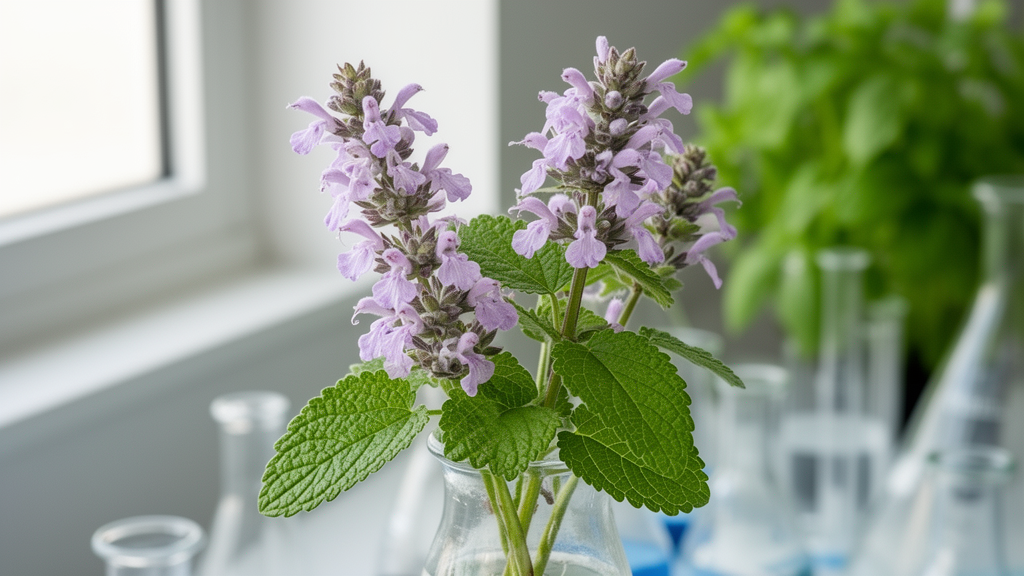
Scientists have assembled the first complete chloroplast genome of Nepeta griffithii, a perennial herb native to Afghanistan and northwestern Pakistan, and placed it within the most comprehensive chloroplast genomic comparison yet attempted for its genus. The new genome, submitted to GenBank under accession number PZ342510, was sequenced alongside nine previously published Nepeta plastomes to chart how genome size, gene content, codon usage, repeat structure and evolutionary relationships vary across a genus of roughly 300 accepted species in the mint family, Lamiaceae. The work, published in Ecology and Evolution, fills a conspicuous geographic gap: until now, no chloroplast genome had been reported for any species from the western Himalayan and Afghan-Pakistani region, an area recognized as one of the genus’s centers of diversity.
Nepeta is a large genus of aromatic herbs distributed across temperate Europe, Asia and Africa, with its greatest species richness in southwestern Asia, particularly Turkey and Iran, and in the western Himalaya including Afghanistan and Pakistan. Many species are valued in traditional medicine for pharmacological activities linked to bioactive compounds such as nepetalactones, 1,8-cineole, rosmarinic acid and flavonoids. Despite this importance, the genus as traditionally circumscribed is not monophyletic, a question that has remained unresolved owing to limited molecular sampling. Chloroplast genomes, with their predominantly uniparental inheritance, low recombination rate and moderate substitution rate, are informative markers for reconstructing plant phylogeny, assessing genetic diversity, developing DNA barcodes and supporting species identification and conservation planning. Before this study, complete chloroplast genomes were available for only 10 Nepeta species in the NCBI database.
The plant material behind the new genome has a long laboratory history. Fresh leaf tissue of N. griffithii was collected at the National Agriculture Research Centre in Islamabad, Pakistan, in April 2017, identified by Dr. Sayed Afzal Shah and preserved as voucher specimen RAW100892 at the National Herbarium of Pakistan. The leaves were dried in silica gel to maintain DNA integrity, and total genomic DNA was extracted from approximately 20 milligrams of dried material. A paired-end sequencing library with an insert size of roughly 350 base pairs was constructed and sequenced on a DNBSeq platform, yielding whole-genome short-read data suitable for organelle assembly.
Sequencing quality proved exceptionally high. The run produced approximately 54.46 million raw reads, which yielded nearly the same number of clean reads after quality filtering, about 8.14 gigabases in total, with a Q20 rate of 98.89 percent and a Q30 rate of 97.95 percent. The chloroplast genome was assembled de novo using GetOrganelle with a series of k-mer values, and its circularity was verified before annotation. Read mapping back to the assembly showed 501,653 reads aligning specifically to the plastome, with an average sequencing depth of 494.1-fold, providing strong support for the accuracy of the final sequence. Annotation was performed with GeSeq and cross-verified with a parallel pipeline, with tRNA boundaries validated by dedicated tools and discrepancies in start and stop codons, intron-exon boundaries and junction pseudogenes resolved through manual curation.
The resulting genome fits the conserved quadripartite architecture typical of angiosperm chloroplasts: a large single-copy region, a small single-copy region, and a pair of inverted repeats separating them. Among the 10 Nepeta species examined, complete genome lengths ranged from 151,254 base pairs in N. tenuifolia to 152,348 base pairs in N. stewartiana, averaging approximately 151,998 base pairs. The large single-copy region varied from 82,663 to 83,455 base pairs, the small single-copy region from 17,339 to 17,631 base pairs, and the inverted repeats from 25,592 base pairs in N. santoana to 25,697 base pairs in N. cataria, averaging 25,635 base pairs. Every genome contained 113 unique genes: 79 protein-coding genes, 30 transfer RNA genes and 4 ribosomal RNA genes. The inverted repeats duplicated 16 genes in total, including five protein-coding genes, seven tRNA genes and all four rRNA genes. Notably, no pseudogenes were identified in any of the analyzed genomes, indicating complete gene conservation within the sampled species.
Guanine-cytosine content was remarkably uniform across the genus, ranging from 37.84 to 37.95 percent overall, but regional differences were pronounced. The inverted repeats showed substantially higher GC content, between 43.04 and 43.20 percent, than the large single-copy region at 35.85 to 36.02 percent and the small single-copy region at 31.65 to 32.08 percent. This enrichment pattern is consistent with the presence of GC-rich rRNA genes within the repeats. Intron content was similarly conserved: analysis identified 18 intron-containing genes, including 12 protein-coding genes and six tRNA genes, with conserved positions across species. The genes ycf3 and clpP each contained two introns, while rps12 was confirmed as a trans-splicing gene with its 5-prime exon in the large single-copy region and its 3-prime exon duplicated in both inverted repeats. The longest tRNA intron belonged to trnK-UUU, spanning 2480 to 2512 base pairs and housing the matK gene, while the shortest was in trnL-UAA at 441 to 480 base pairs. Among protein-coding introns, ndhA was the longest at 991 to 1032 base pairs, whereas the cis-spliced intron of rps12 was perfectly conserved at 536 base pairs in all species.
Comparative inspection of the inverted repeat boundaries revealed highly conserved junction patterns with only minor variation. At the junction between the large single-copy region and inverted repeat b, the rps19 gene consistently spanned the boundary, with 217 to 238 base pairs in the large single-copy region and 41 to 62 base pairs extending into the repeat. At the opposite end, ndhF crossed the boundary with 32 to 76 base pairs in the repeat and 2156 to 2200 base pairs in the small single-copy region, while ycf1 crossed with 4457 to 4497 base pairs in the small single-copy region and 1056 to 1100 base pairs extending into the second repeat. The authors interpret this stability as evidence that only limited expansion and contraction of the inverted repeats occurred during chloroplast genome evolution in the genus, in contrast to lineages such as the subfamily Asclepiadoideae, where small single-copy genes have been incorporated into the repeats.
Repeat and diversity analyses yielded practical tools for future work. Simple sequence repeat analysis identified 387 SSRs across the 10 species, with individual genomes containing between 31 and 51 repeats. Mononucleotide repeats were the most abundant, at 46.2 to 72.7 percent, dominated overwhelmingly by A/T motifs consistent with the AT-rich nature of chloroplast genomes, followed by dinucleotide repeats at 9.8 to 25.6 percent and tetranucleotide repeats at 9.8 to 22.2 percent. Most SSRs sat in intergenic spacer regions, between 61.3 and 74.4 percent, with smaller fractions in genic regions and introns. Nucleotide diversity, estimated across 236 chloroplast genome regions, averaged 0.022 overall, with intergenic spacers the most variable at an average of 0.035, introns at 0.021 and genes at 0.011. The most polymorphic intergenic spacer was ccsA-ndhD at 0.083, followed by rpl32-trnL-UAG at 0.077 and ndhG-ndhI at 0.075. Among protein-coding sequences, ycf1 showed the highest diversity at 0.041, whereas the widely used barcode rbcL showed low diversity at 0.013. These loci, particularly ycf1 and rpl32-trnL-UAG, are proposed as candidates for a multi-locus barcoding framework, echoing findings from an independent recent Nepeta plastome comparison. Codon usage was also highly similar across species, with most amino acids encoded by codons ending in A or T, leucine the most frequently encoded amino acid at 10.70 to 10.75 percent, and cysteine the least at 1.11 to 1.16 percent.
A maximum likelihood phylogeny built from 79 shared protein-coding genes, with Glechoma hederacea as the outgroup, recovered all nodes with full bootstrap support. Within the ingroup, N. tenuifolia was resolved as sister to all remaining Nepeta species, followed by N. cataria, which occupied the second-earliest diverging position and showed the longest branch among the sampled taxa, indicative of elevated substitution rates. N. dentata diverged next, sister to a clade of seven species in which N. santoana was sister to a core group of six. Within that core group, N. hemsleyana was sister to two subclades: N. griffithii plus N. nuda, and N. bracteata plus a sister pair of N. stewartiana and N. thomsonii, the latter showing very short branch lengths suggesting minimal sequence divergence, possibly reflecting recent speciation or incomplete lineage sorting. The placement of N. griffithii as sister to N. nuda provides the first molecular evidence for the phylogenetic affinity of this poorly studied Afghan-Pakistani species, linking it to a Eurasian taxon rather than to geographically proximate Himalayan congeners.
The authors are careful about the limits of their sampling. With only 10 of roughly 300 accepted species represented, it is premature to draw conclusions about the monophyly of the genus or the circumscription of infrageneric groups from chloroplast data alone. Chloroplast phylogenies also reflect maternal lineage history and may differ from nuclear gene trees due to incomplete lineage sorting or hybridization, phenomena documented within the subtribe Nepetinae. Even so, the study delivers a robust chloroplast backbone for future expansion, and the newly identified markers may prove immediately useful for a species such as N. griffithii, whose geographically fragmented range in Afghanistan and northwestern Pakistan makes population-level genetic assessment a conservation priority. Expanded taxon sampling and integrative analyses combining chloroplast and nuclear datasets with morphology, the team concludes, will be essential to resolve the systematics of this species-rich and taxonomically complex genus.
Subject of Research: Chloroplast genome assembly and comparative genomics of the genus Nepeta
Article Title: Complete Chloroplast Genome of Nepeta griffithii and Comparative Genomics of 10 Nepeta Species
Article References: Li, X., Sammad, A., Shah, S. A., Sun, J., Karim, A., Yir‐erong, B., Tian, X., & Abdullah (2026). Complete Chloroplast Genome of Nepeta griffithii and Comparative Genomics of 10 Nepeta Species. Ecology and Evolution, 16(10), Article e74582. https://doi.org/10.1002/ece3.74582
Image Credits: AI Generated
DOI: 10.1002/ece3.74582
Keywords: chloroplast genome, Nepeta griffithii, Lamiaceae, comparative genomics, DNA barcoding, phylogenetics, inverted repeats, simple sequence repeats, nucleotide diversity, western Himalaya, Nepeta nuda, plastome
Cite Scienmag News
Juliet Wilcox. (October 27, 2026). First Complete Chloroplast Genome of Nepeta griffithii Illuminates Evolution of a 300-Species Mint Genus. Scienmag. https://scienmag.com/first-complete-chloroplast-genome-of-nepeta-griffithii-illuminates-evolution-of-a-300-species-mint-genus/
Juliet Wilcox. "First Complete Chloroplast Genome of Nepeta griffithii Illuminates Evolution of a 300-Species Mint Genus." Scienmag, 27 October 2026, https://scienmag.com/first-complete-chloroplast-genome-of-nepeta-griffithii-illuminates-evolution-of-a-300-species-mint-genus/. Accessed 28 October 2026.
Juliet Wilcox. "First Complete Chloroplast Genome of Nepeta griffithii Illuminates Evolution of a 300-Species Mint Genus." Scienmag. October 27, 2026. https://scienmag.com/first-complete-chloroplast-genome-of-nepeta-griffithii-illuminates-evolution-of-a-300-species-mint-genus/