


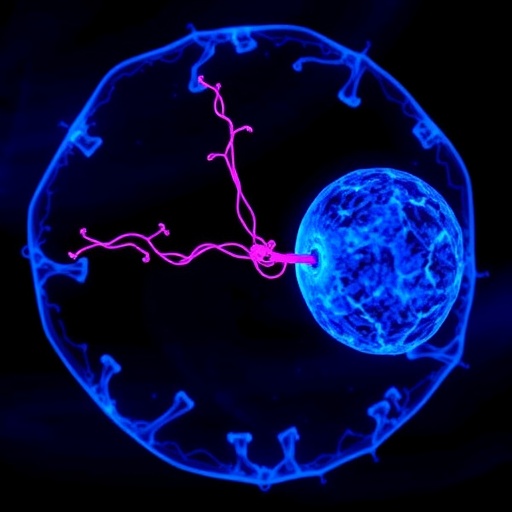
In a landmark publication emerging from the harrowing yet inspiring journey of the late Dr. Kathryn Anderson’s laboratory at Memorial Sloan Kettering Cancer Center, researchers have unveiled novel insights into the intricate signaling landscapes that govern early embryonic development. Over five years after Dr. Anderson’s passing, her colleagues have brought to completion a study that deciphers how the WNT signaling pathway finely steers embryonic cells from a flexible, pluripotent state to specified mesodermal fates, thereby orchestrating the genesis of vital organs and tissues.
At the core of this study lies the sophisticated interplay between genetic regulators AXIN1 and AXIN2, which function as critical modulators of WNT signaling intensity. Devoid of these regulatory genes, embryonic cells encounter aberrant WNT overactivation, resulting in a constricted developmental repertoire and a failure to form anterior structures including the heart and craniofacial tissues. By employing genetically engineered mouse models and advanced single-cell transcriptomic techniques, the researchers meticulously mapped cellular trajectories, capturing the dynamic transcriptional shifts that herald commitment from the epiblast—an embryonic layer characterized by remarkable plasticity.
Crucially, the findings reveal that WNT operates through a temporally and spatially resolved mechanism, initially propelling pluripotent epiblast cells toward differentiation pathways but subsequently integrating additional positional cues to solidify specific cell identities. This second wave of instruction involves collaboration with signals from the TGF-beta superfamily, notably bone morphogenetic protein (BMP) and NODAL pathways. These counteracting gradients create a molecular topography whereby cells interpret their locational context within the developing embryo to adopt diverse mesodermal fates. BMP, with WNT, biases cells toward posterior lineages, whereas NODAL, paired with the same WNT cues, favors anterior identities. This nuanced signaling crosstalk challenges simplistic paradigms treating the TGF-beta family as uniform actors.
Beyond embryogenesis, the study carries profound implications for oncology, particularly in understanding cancer metastasis—the predominant cause of cancer mortality. Metastatic dissemination involves epithelial-to-mesenchymal transition (EMT), a cellular plasticity and migration program that mirrors embryonic processes governed by the same signaling axes. The differential roles of BMP and NODAL within the TGF-beta family suggest that therapeutic targeting of metastatic pathways must consider the specific molecular context rather than blanket inhibition of TGF-beta signaling. This refined perspective paves the way for potentially selective interventions aiming to disrupt malignant cell invasion without impairing physiological tissue homeostasis.
The path to publication of these significant findings was fraught with challenges. Dr. Anderson’s illness and subsequent death left her team dispersed and the ambitious project at risk of stagnation. Despite these setbacks and the constraints imposed by the COVID-19 pandemic, her collaborators, including Dr. Anna-Katerina Hadjantonakis who assumed leadership of the Developmental Biology Program, persevered to honor Dr. Anderson’s scientific vision. The collective efforts of graduate researchers, senior scientists, and international collaborators culminated in the comprehensive dissection of AXIN-mediated WNT functions elucidated in this study.
Single-cell RNA sequencing emerged as a pivotal tool, enabling the deciphering of gene expression patterns with cellular resolution. This approach illuminated how WNT signaling reconfigures epiblast cellular states in a stepwise manner: an initial push out of pluripotency followed by integration of spatially patterned TGF-beta signals. The emergent picture is one of a complex molecular dialogue guiding cells’ fate decisions with high fidelity in the three-dimensional embryonic environment.
Insight into the antagonistic yet related activities of BMP and NODAL reshapes our understanding of developmental signal transduction. Both belong to the TGF-beta ligand family, yet they engage divergent intracellular effectors and drive cells toward opposite differentiation pathways. This antagonism eloquently exemplifies how cells interpret combinatorial cues to generate spatial complexity during organismal formation. The discovery that WNT functions as a pivotal integrator of these opposing signals underscores its fundamental role beyond a singular pathway, operating instead as a master regulator of developmental landscapes.
The research underscores the importance of genetic “dimmer switches” such as AXIN1 and AXIN2 in fine-tuning signaling strength. Loss of these regulators locks WNT activity in an aberrantly high state, demonstrating that precise modulation—not merely activation—is crucial for correct tissue patterning. This concept holds translational promise; targeting analogous regulatory nodes in cancer might recalibrate dysregulated signaling networks that drive malignancy without collateral damage to normal tissues.
Moreover, the study invites consideration of how cellular decision-making processes function within a milieu of competing cues. Cells act as signal integrators, filtering and weighting diverse molecular inputs to reach binary or graded fate outcomes. Understanding these computational principles at the molecular level offers a blueprint for decoding developmental robustness and plasticity, with implications extending into regenerative medicine and cancer therapeutics.
Committed to advancing knowledge despite personal loss and logistical hurdles, the team’s dedication to completing Dr. Anderson’s final project testifies to her enduring impact on developmental biology. Beyond honoring her legacy, this work advances a refined conceptual framework detailing how embryonic cells transition from totipotency to differentiated states through multilayered signaling interactions.
Future avenues opened by this study include delineating the molecular mechanisms by which WNT integrates spatial signals from BMP and NODAL at the receptor and intracellular effector levels. Elucidating these pathways may reveal novel regulatory nodes amendable to pharmacological modulation. Additionally, translating these embryonic insights into cancer biology could unveil targets to disrupt metastasis selectively, thereby improving patient outcomes.
Collectively, this study embodies a tour de force of modern developmental biology, blending genetics, genomics, and rigorous experimental validation. It showcases the power of perseverance and collaboration in scientific inquiry and highlights the profound interconnectedness of developmental and cancer biology. As we continue to unravel the cellular conversations shaping life from its earliest moments, such discoveries illuminate both the elegance and vulnerability of biological systems.
News Publication Date: July 1, 2026.
Web References:
- Developmental Cell publication: https://www.cell.com/developmental-cell/fulltext/S1534-5807(26)00226-1
- Kathryn Anderson profile: https://www.mskcc.org/profile/kathryn-anderson
References:
- Hadjantonakis, A.-K., Hernández-Martínez, R., et al. (2026). AXIN1 and AXIN2 regulate the WNT-signaling landscape to promote distinct mesoderm programs. Developmental Cell. DOI: 10.1016/j.devcel.2026.06.004
Cite Scienmag News
Juliet Wilcox. (July 1, 2026). Final Breakthrough from Dr. Kathryn Anderson’s Lab: How Embryo Signals Direct Cell Fate. Scienmag. https://scienmag.com/final-breakthrough-from-dr-kathryn-andersons-lab-how-embryo-signals-direct-cell-fate/
Juliet Wilcox. "Final Breakthrough from Dr. Kathryn Anderson’s Lab: How Embryo Signals Direct Cell Fate." Scienmag, 1 July 2026, https://scienmag.com/final-breakthrough-from-dr-kathryn-andersons-lab-how-embryo-signals-direct-cell-fate/. Accessed 3 September 2026.
Juliet Wilcox. "Final Breakthrough from Dr. Kathryn Anderson’s Lab: How Embryo Signals Direct Cell Fate." Scienmag. July 1, 2026. https://scienmag.com/final-breakthrough-from-dr-kathryn-andersons-lab-how-embryo-signals-direct-cell-fate/


