

Wednesday, October 21, 2026
Science
No Result
View All Result
  • Login
  • HOME
  • SCIENCE NEWS
  • CONTACT US
  • HOME
  • SCIENCE NEWS
  • CONTACT US
No Result
View All Result
Scienmag
No Result
View All Result
Home Science News Agriculture

Field trial links bacterial co-inoculation to mungbean yield gains

October 21, 2026
in Agriculture
Alan Morgan
By Alan Morgan Scienmag Editorial Profile - Precision Agriculture
Reading Time: 3 mins read
0
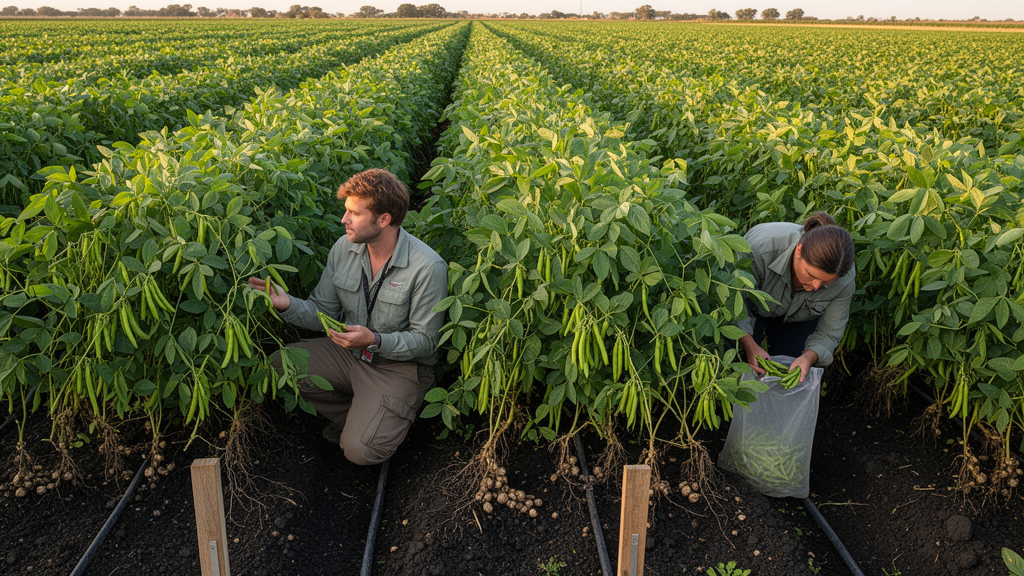
Field trial links bacterial co-inoculation to mungbean yield gains

Field trial links bacterial co-inoculation to mungbean yield gains

65
SHARES
587
VIEWS
Share on FacebookShare on Twitter
ADVERTISEMENT

A randomized block-design field experiment found that co-inoculating mungbean with Bradyrhizobium sp. PMR-1 and selected plant growth-promoting rhizobacteria generally outperformed single inoculations and an uninoculated control under the conditions tested. The combined treatments increased nodule number by 32.35% and nodule dry weight by 54.8%, while grain yield rose by 5.8% and straw yield by 24.85%. Principal component analysis identified the pairing of Bradyrhizobium sp. PMR-1 with Bacillus cereus NE-10 as producing the strongest overall response.

The experiment included seven treatments comprising single and co-inoculations formulated in talc-based carriers. The researchers applied the inoculants to mungbean, Vigna radiata L., and measured plant growth, nodulation, chlorophyll content, yield attributes, grain and straw yields, and grain protein. At harvest, they also measured soil enzyme activities, microbial biomass carbon, available nutrients, soil organic carbon stocks, and populations of bacteria, fungi, and phosphate-solubilizing bacteria. Multivariate analyses were used to compare the treatment responses across the measured variables.

Co-inoculation affected several components of plant development and production rather than grain yield alone. In addition to the reported increases in nodulation, grain yield, and straw yield, the study found enhanced grain nutritional quality, assessed through grain protein. The abstract does not provide the absolute grain and straw yields, the magnitude of the change in grain protein, or the exact statistical significance of each response. It therefore supports the reported differences among treatments but does not establish that the same percentage gains will occur under other growing conditions.

The harvest measurements also showed changes in the biological and chemical properties of the rhizosphere. Co-inoculation enhanced enzyme activities and microbial biomass, which the researchers interpreted as evidence of improved rhizosphere nutrient cycling. The combination of Bradyrhizobium sp. with Pantoea agglomerans increased soil organic carbon stocks by 40.06% and microbial biomass carbon by 21.28%. Populations of bacteria, fungi, and phosphate-solubilizing bacteria increased two- to five-fold during crop growth. Together, these observations associate the tested inoculant combinations with greater microbial abundance and activity around mungbean roots, although the reported results do not identify a specific mechanism for the yield responses.

The findings are limited to the particular strains, carrier formulations, and environmental conditions represented by this field experiment. The study compared seven treatments, but the supplied results do not describe multi-location or multi-season replication, and they do not establish how the inoculants would perform in different soils or climates. The authors therefore called for additional multi-season and multi-location trials to determine whether the benefits remain consistent across environments and over time. Subject to that limitation, the research provides evidence that combining Bradyrhizobium with selected PGPR can improve mungbean productivity, measured grain quality, and rhizosphere biological functioning under the tested conditions.

Subject of Research: Effects of bacterial co-inoculation on mungbean yield, grain protein and rhizosphere functioning

Article Title: Synergistic effects of Bradyrhizobium and PGPR bioinoculants on yield, nutritional quality, and rhizosphere functioning of mungbean

Article References: Gupta, D., Pareek, N., Chandra, R., Raverkar, K. P., Sharma, B., Singh, S., Maurya, R., Vishwakarma, D. K., Gaur, A., Rahman, M. Z., Dewidar, A. Z., & Mattar, M. A. (2026). Synergistic effects of Bradyrhizobium and PGPR bioinoculants on yield, nutritional quality, and rhizosphere functioning of mungbean. Plant and Soil. https://doi.org/10.1007/s11104-026-09178-z

Image Credits: AI Generated

DOI: 10.1007/s11104-026-09178-z

Keywords: mungbean, Bradyrhizobium, plant growth-promoting rhizobacteria, bioinoculants, grain yield, grain protein, soil microbial biomass, rhizosphere functioning, field experiment, Synergistic, effects, PGPR

Cite Scienmag News

Alan Morgan. (October 21, 2026). Field trial links bacterial co-inoculation to mungbean yield gains. Scienmag. https://scienmag.com/field-trial-links-bacterial-co-inoculation-to-mungbean-yield-gains/

Alan Morgan. "Field trial links bacterial co-inoculation to mungbean yield gains." Scienmag, 21 October 2026, https://scienmag.com/field-trial-links-bacterial-co-inoculation-to-mungbean-yield-gains/. Accessed 21 October 2026.

Alan Morgan. "Field trial links bacterial co-inoculation to mungbean yield gains." Scienmag. October 21, 2026. https://scienmag.com/field-trial-links-bacterial-co-inoculation-to-mungbean-yield-gains/


Tags: Bacillus cereus NE-10bacterial co-inoculation in mungbeanbioinoculantsBradyrhizobiumBradyrhizobium sp. PMR-1co-inoculation versus single inoculation effectsEffectsfield experimentfield trial on legume crop productivitygrain proteingrain protein enhancementgrain yieldimpact of microbial inoculants on plant developmentincreased nodulation and yieldmultivariate analysis of inoculation effectsmungbeanorganic carbon and nutrient availability in soilPGPRplant growth-promoting rhizobacteriarhizosphere functioningsoil enzyme activity and microbial biomasssoil microbial biomasssynergistic
Share26Tweet16
Previous Post

Unstressed yeast study links Zuo1 surveillance to predicted protein disorder

Next Post

X-ray and Radio Study Links Hot Plasma to Relativistic Jet Launch

Related Posts

Reindeer grazing reduces roots in three Finnish pine forests
Agriculture

Reindeer grazing reduces roots in three Finnish pine forests

October 21, 2026
Research report: Bioactive and Functional Properties of Ferulago angulata Essential Oil for Sustainable Food Packaging Systems
Agriculture

Research report: Bioactive and Functional Properties of Ferulago angulata Essential Oil for Sustainable Food Packaging Systems

October 21, 2026
Soybean drought resilience requires field validation across African environments
Agriculture

Soybean drought resilience requires field validation across African environments

October 21, 2026
Brine boiling cuts drying time for Kenya’s nutrient-dense Dagaa fish
Agriculture

Brine boiling cuts drying time for Kenya’s nutrient-dense Dagaa fish

October 21, 2026
Meta-analysis links sesame to modest cholesterol reductions in adults
Agriculture

Meta-analysis links sesame to modest cholesterol reductions in adults

October 21, 2026
Cobalt fertiliser needs a soil-specific reassessment
Agriculture

Cobalt fertiliser needs a soil-specific reassessment

October 21, 2026
Next Post
X-ray and Radio Study Links Hot Plasma to Relativistic Jet Launch

X-ray and Radio Study Links Hot Plasma to Relativistic Jet Launch

  • Mothers who receive childcare support from maternal grandparents show more optimized

    Mothers who receive childcare support from maternal grandparents show more parental warmth, finds NTU Singapore study

    27656 shares
    Share 11059 Tweet 6912
  • University of Seville Breaks 120-Year-Old Mystery, Revises a Key Einstein Concept

    1061 shares
    Share 424 Tweet 265
  • Bee body mass, pathogens and local climate influence heat tolerance

    682 shares
    Share 273 Tweet 171
  • Researchers record first-ever images and data of a shark experiencing a boat strike

    546 shares
    Share 218 Tweet 137
  • Groundbreaking Clinical Trial Reveals Lubiprostone Enhances Kidney Function

    531 shares
    Share 212 Tweet 133
Science

Embark on a thrilling journey of discovery with Scienmag.com—your ultimate source for cutting-edge breakthroughs. Immerse yourself in a world where curiosity knows no limits and tomorrow’s possibilities become today’s reality!

RECENT NEWS

  • X-ray and Radio Study Links Hot Plasma to Relativistic Jet Launch
  • Field trial links bacterial co-inoculation to mungbean yield gains
  • Unstressed yeast study links Zuo1 surveillance to predicted protein disorder
  • Small trial links SlimSEB to weight and metabolic improvements

Categories

  • Agriculture
  • Anthropology
  • Archaeology
  • Athmospheric
  • Biology
  • Biotechnology
  • Blog
  • Bussines
  • Cancer
  • Chemistry
  • Climate
  • Earth Science
  • Editorial Policy
  • Marine
  • Mathematics
  • Medicine
  • Pediatry
  • Policy
  • Psychology & Psychiatry
  • Science Education
  • Science News
  • Social Science
  • Space
  • Technology and Engineering

Subscribe to Blog via Email

Enter your email address to subscribe to this blog and receive notifications of new posts by email.

Join 5,151 other subscribers

© 2025 Scienmag - Science Magazine

Welcome Back!

Login to your account below

Forgotten Password?

Retrieve your password

Please enter your username or email address to reset your password.

Log In
No Result
View All Result
  • HOME
  • SCIENCE NEWS
  • CONTACT US

© 2025 Scienmag - Science Magazine

Discover more from Science

Subscribe now to keep reading and get access to the full archive.

Continue reading