


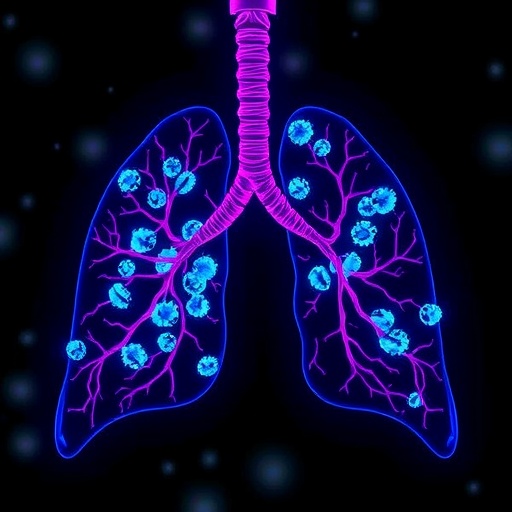
In a groundbreaking study, researchers have elucidated the role of cancer-associated fibroblasts (CAFs) in promoting metastasis in lung adenocarcinoma through the secretion of superoxide dismutase 3 (SOD3). This revelation offers new insights into the intricate relationships between tumor microenvironments and cancer progression, significantly expanding our understanding of metastasis mechanisms. The malignant behaviors typical of lung adenocarcinoma patients have been linked to various factors, including genetic mutations, environmental influences, and the dynamic interactions between cancer cells and neighboring stromal cells, primarily CAFs.
The study highlights that CAFs are not merely passive elements within the tumor microenvironment but play active roles in altering local signaling networks that can propel tumor growth and metastasis. SOD3, an antioxidant enzyme that protects tissues from oxidative damage, was identified as a key player in enhancing lymphangiogenesis, which refers to the formation of new lymphatic vessels. Lymphangiogenesis is critical because it creates new pathways for tumor cells to disseminate throughout the body, thereby promoting metastasis—a process that is often associated with a poorer prognosis in cancer patients.
Previous research had already established that CAFs contribute to various aspects of tumorigenesis including extracellular matrix remodeling, immune evasion, and cancer cell proliferation. This study shifts the focus toward SOD3 and its lymphangiogenic properties, opening a new avenue for therapeutic intervention. Increased lymphatic vessel formation has been linked to advanced tumor stages in several cancers, including lung adenocarcinoma, which emphasizes the clinical significance of this discovery.
Researchers employed advanced imaging techniques and molecular biology tools to investigate the relationship between CAF-derived SOD3 and lymphatic structures in lung adenocarcinoma models. The results demonstrated that SOD3 not only promoted the proliferation and migration of lymphatic endothelial cells but also enhanced the overall vascular permeability, facilitating the movement of tumor cells through these newly formed lymphatic vessels. It appears that SOD3 induces a microenvironment ripe for metastatic spread, a finding that could reshape our therapeutic strategies against lung cancer.
The study utilized a panel of in vitro and in vivo experiments. This included co-culture systems to observe the dynamics between CAFs and lymphatic endothelial cells, as well as animal models with induced lung adenocarcinoma to evaluate the effects of SOD3 on tumor progression and lymphatic vessel formation. Following the administration of inhibitors targeting SOD3, researchers noted a significant decrease in lymphangiogenesis and reduced metastatic activity, underscoring SOD3’s potential as a therapeutic target.
Notably, the impact of SOD3 extends beyond metastasis. Its presence in the tumor microenvironment may also influence the immune response. By promoting oxidative stress and altering the inflammatory milieu, SOD3’s authorization of immune evasion tactics may be another layer contributing to tumor progression. The interplay between oxidative stress, immune modulation, and metastasis is a complex but crucial pathway that warrants further study to fully understand how cancer cells adapt and thrive despite therapeutic interventions.
Moreover, the implications of CAF-derived SOD3 in other cancer types are worth consideration. While this study focuses on lung adenocarcinoma, evidence suggests that similar mechanisms may exist in other malignancies such as breast and prostate cancers. Exploring these connections could unveil a broader significance of SOD3 in cancer biology and lead to wider therapeutic applications.
In summary, the research signifies a pivotal moment in cancer biology, where the focus shifts towards the role of CAFs and their secretory products in shaping the tumor microenvironment. Targeting CAF-derived SOD3 might not only hinder lymphangiogenesis and metastasis in lung adenocarcinoma but may also render the tumors more amenable to conventional therapies. The quest to understand how tumor-associated fibroblasts transform the tumor landscape will undoubtedly continue to unfold, potentially leading to innovative therapeutic strategies that can halt cancer in its tracks.
The profound implications of these findings cannot be overstated. As the field of cancer research evolves, studies such as this highlight the importance of integrative approaches that consider both tumor cells and their supportive stroma. The ability of certain fibroblast-derived factors to drive critical processes such as lymphangiogenesis opens a window for developing targeted treatments that could change the course of disease in patients facing aggressive cancers.
The journey towards unraveling the complex relationships in tumor biology is filled with challenges, yet it is precisely this exploration that holds promise for the future of oncology. As researchers continue to dissect the nuances of cancer interactions, it is likely that multifaceted therapeutic strategies will emerge, combining conventional methods with novel approaches aimed at the tumor stroma and its influences.
Furthermore, the next generation of cancer therapies may prioritize a holistic view of the tumor landscape, integrating insights from this study and others to tailor interventions specific to the unique biological contexts of individual tumors. This presents a remarkable opportunity for improved patient outcomes in the battle against cancer, an endeavor that remains unwavering amidst the evolving landscape of cancer research.
In light of these findings, the research community is urged to ramp up investigations into the mechanistic pathways through which CAFs interact with lymphatic systems and immune responses. By doing so, they may uncover the potential for revolutionary breakthroughs that not only inhibit cancer growth but also empower the body’s own defense mechanisms to combat malignancies, thereby heralding a new era in cancer treatment.
Ultimately, while the study raises critical questions and pathways to explore, it firmly establishes SOD3 as a key player in the malignancy of lung adenocarcinoma and potentially other cancers. As research into CAFs expands, it is essential to pursue these insights diligently, paving the way for practical applications in clinical settings that will contribute to reducing cancer’s devastating toll on humanity.
Oo, M.W., Hikita, T., Mashima, T. et al. Cancer-associated fibroblast-derived SOD3 enhances lymphangiogenesis to drive metastasis in lung adenocarcinoma.
Angiogenesis 28, 51 (2025). https://doi.org/10.1007/s10456-025-10005-9
Cite Scienmag News
Nathaniel Bowman. (January 24, 2026). Fibroblast-Derived SOD3 Fuels Lung Cancer Spread. Scienmag. https://scienmag.com/fibroblast-derived-sod3-fuels-lung-cancer-spread/
Nathaniel Bowman. "Fibroblast-Derived SOD3 Fuels Lung Cancer Spread." Scienmag, 24 January 2026, https://scienmag.com/fibroblast-derived-sod3-fuels-lung-cancer-spread/. Accessed 5 September 2026.
Nathaniel Bowman. "Fibroblast-Derived SOD3 Fuels Lung Cancer Spread." Scienmag. January 24, 2026. https://scienmag.com/fibroblast-derived-sod3-fuels-lung-cancer-spread/


