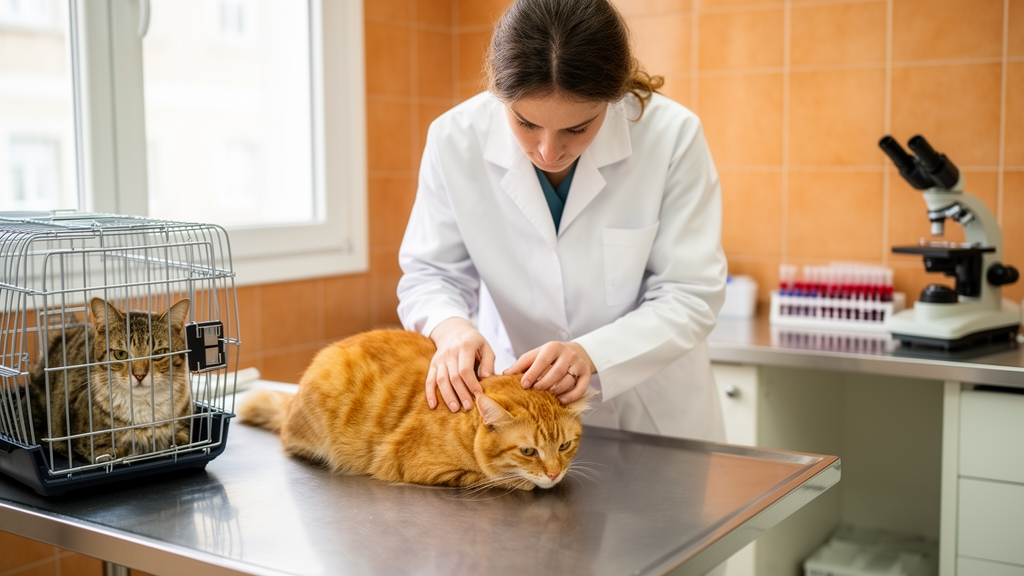
A quarter of cats screened for haemotropic Mycoplasma bacteria at a veterinary teaching hospital in Lisbon carried signs of recent infection, and the strongest predictor of a positive result was not outdoor access, fleas or sex, but infection with feline immunodeficiency virus. That is the central finding of an analytical cross-sectional study published in the open-access journal Companion Animal Health and Genetics, which reviewed 134 feline cases seen at the Veterinary Teaching Hospital of the Faculty of Veterinary Medicine, University of Lisbon, between 1 January 2021 and 30 June 2024.
Haemotropic Mycoplasma species, often called haemoplasmas, are bacteria that target the red blood cells of vertebrate hosts and have the potential to cause haemolytic anaemia. Three species are recognised worldwide as agents of feline infectious anaemia: Mycoplasma haemofelis, “Candidatus Mycoplasma haemominutum” and “Candidatus Mycoplasma turicensis”. The agents have a worldwide distribution and have been detected in domestic, stray and wild cats, with most studies reporting “Ca. M. haemominutum” as the most prevalent species, followed by M. haemofelis and then “Ca. M. turicensis”. Coinfection by more than one species in the same host is frequent, with M. haemofelis paired with “Ca. M. haemominutum” the most common combination.
The Lisbon team classified a case as acute feline mycoplasmosis when the cat had a positive immunoglobulin M (IgM) result, an antibody class that indicates relatively recent contact with the bacteria. Cases diagnosed by polymerase chain reaction were excluded because too few had been screened by that method during the study period, and patients with only a positive immunoglobulin G result but no IgM information were also excluded. Of the 134 cats tested, 32 were IgM positive and 102 negative, giving an observed prevalence of 23.8 percent, with a 95 percent confidence interval of 0.169 to 0.320. That figure sits close to prevalence values reported in other Portuguese studies of 20.4, 22.1 and 27.1 percent.
The study population reflected a broad slice of urban feline life. The cats averaged 7.4 plus or minus 5 years of age and 4.3 plus or minus 1.3 kilograms in weight. Seventy-four were male and 60 female, and 114 of 134, or 85 percent, had been neutered. Most were European Shorthair (44 percent) or mixed breed (41 percent), with Persian, Norwegian Forest Cat, British Shorthair and Scottish Fold among the less frequent breeds. A large proportion, 76.9 percent, were described as indoor cats, 62.7 percent lived with other pets, and 27.6 percent were former street strays. Most had up-to-date vaccinations, but internal and external parasite prophylaxis habits were inconsistent in roughly three quarters of the cats for which this was recorded. Ectoparasites, most often fleas, were found in 23 percent of cases, yet no cat showed wounds suggesting recent aggression.
When the researchers ran univariate analysis, the association between FIV-positive animals and IgM-positive status stood out clearly, with an odds ratio of 13.3 and a p-value below 0.001. Multivariate logistic regression confirmed the association, yielding an adjusted odds ratio of 12.768 with a p-value of 0.05. The same multivariate model revealed a negative association between haemoplasma infection and the senior age group, with an adjusted odds ratio of 0.333 and a p-value of 0.043, meaning senior cats were less likely to test IgM positive. No statistically significant differences emerged for the other analysed variables, including sex, reproductive status, lifestyle or origin, despite these factors being identified in previous studies.
The authors offer a possible explanation for the age pattern. Feline mycoplasmosis tends to be more prevalent in adult animals because of cumulative exposure risk, but senior cats may be less likely to acquire recent infections because they roam less and engage in fewer aggressive interactions that promote haemoplasma transmission, compared with younger cats leading more active lives. The FIV link, meanwhile, echoes earlier work proposing that the retrovirus’s immunosuppressive effect enables infections by additional agents, or that both pathogens simply share similar transmission routes, since FIV itself is strongly associated with transmission through aggressive interactions between cats.
Perhaps the most clinically instructive result was what the study did not find. No obvious correlation emerged between mycoplasmosis and the presence of anaemia or ectoparasite infestations, confirming what other investigations have also observed: positive cats can be clearly anaemic or have seemingly normal blood test results, and asymptomatic chronic carriers exist. Multivariate analysis did flag some trends that fell short of statistical significance, including a positive association between IgM-positive animals and red blood cell distribution width, a measure of variation in red cell size known as anisocytosis (adjusted odds ratio 2.588, p = 0.119), and with lymphadenopathy, or reactive lymph nodes (adjusted odds ratio 7.31, p = 0.126). Conversely, negative relationships appeared with low alanine aminotransferase (adjusted odds ratio 0.209, p = 0.157) and hypoproteinaemia (adjusted odds ratio 0.374, p = 0.243), a mirror image of the raised liver enzymes and hyperproteinaemia reported in acute cases elsewhere.
The prognostic analysis, restricted to IgM-positive cases considered for treatment, produced one statistically significant result: a negative correlation between a favourable clinical outcome and corticosteroid use, with an adjusted odds ratio of 0.068 and a p-value of 0.05. The authors attribute this to the existence of more complex haemolytic anaemia cases that failed to respond to antibiotics, prompting clinicians to add glucocorticoids to the treatment plan even though their effectiveness in mycoplasmosis remains debatable. A positive trend linked favourable resolution to doxycycline use (odds ratio 3.71, p = 0.355), while concomitant hepatic disease (odds ratio 0.12, p = 0.105) and oncological disease (odds ratio 0.154, p = 0.292) showed inverse relationships with recovery. Overall, 104 of the 134 cats, or 77.6 percent, achieved clinical recovery, while 30, or 22.4 percent, died or were euthanised at the owner’s request.
The study’s diagnostic backbone deserves scrutiny. Cytological examination of blood smears is accessible but insensitive, requiring exuberant bacteraemia and experienced operators, and it cannot differentiate the three species because of their morphological similarities. PCR detects fragments of the 16S rRNA gene with high sensitivity and specificity, but bacterial loads do not directly correlate with clinical status, and some cats remain seropositive despite negative PCR, suggesting persistence below the detection limit. Serology offers a practical alternative, with IgM titers helping distinguish acute from chronic infection. Antibiotics such as doxycycline and marbofloxacin reduce haemoplasma loads and hasten recovery, but pharmacological therapy does not reliably eliminate the agent entirely, which is why the authors emphasise monitoring for disease reactivation even after an appropriate antibiotic course.
The retrospective design imposed real constraints. The species of Mycoplasma affecting each patient could not be determined, coinfections could not be distinguished from single infections, and analyses performed by different laboratories with different reference values added heterogeneity. Gaps in medical records left missing data on breed, vaccination status, parasite prophylaxis and origin for some animals, and too few cases had been screened for other vector-borne pathogens, such as Ehrlichia and Rickettsia, to analyse their relationship with mycoplasmosis. On transmission, the authors note that haemoplasma genetic material has been detected in vectors removed from feline hosts, confirming that arthropods ingest the bacteria, but this does not prove the agents remain viable for transmission, and experimental vector transmission studies have yielded inconclusive results. The absence of a correlation with ectoparasites in this urban sample suggests transmission between cats is not restricted to arthropod activity. The team concludes that a positive serological or molecular result does not always imply active disease and must be weighed against the cat’s overall condition, and that adequate monitoring should be maintained in animals living in close contact with humans, given the still-unknown zoonotic potential of these agents.
Subject of Research: Seroprevalence and clinical associations of feline haemotropic Mycoplasma infection in a Lisbon veterinary hospital population
Article Title: Feline haemotropic Mycoplasma spp. in Portugal: association with identifiable risk factors, clinical parameters and prognostic factors
Article References: Li, W., Reisinho, A. T. S. C., & Carvalho, L. M. M. D. (2026). Feline haemotropic Mycoplasma spp. in Portugal: association with identifiable risk factors, clinical parameters and prognostic factors. Companion Animal Health and Genetics, 13(1), Article 9. https://doi.org/10.1186/s40575-026-00157-2
Image Credits: AI Generated
DOI: 10.1186/s40575-026-00157-2
Keywords: feline haemotropic Mycoplasma, haemoplasmas, cats, FIV, seroprevalence, IgM serology, Portugal, Lisbon, anaemia, risk factors, prognosis, cross-sectional study
Cite Scienmag News
William Thompson. (October 28, 2026). Feline haemotropic Mycoplasma infection linked to FIV status in Lisbon hospital cats. Scienmag. https://scienmag.com/feline-haemotropic-mycoplasma-infection-linked-to-fiv-status-in-lisbon-hospital-cats/
William Thompson. "Feline haemotropic Mycoplasma infection linked to FIV status in Lisbon hospital cats." Scienmag, 28 October 2026, https://scienmag.com/feline-haemotropic-mycoplasma-infection-linked-to-fiv-status-in-lisbon-hospital-cats/. Accessed 28 October 2026.
William Thompson. "Feline haemotropic Mycoplasma infection linked to FIV status in Lisbon hospital cats." Scienmag. October 28, 2026. https://scienmag.com/feline-haemotropic-mycoplasma-infection-linked-to-fiv-status-in-lisbon-hospital-cats/