


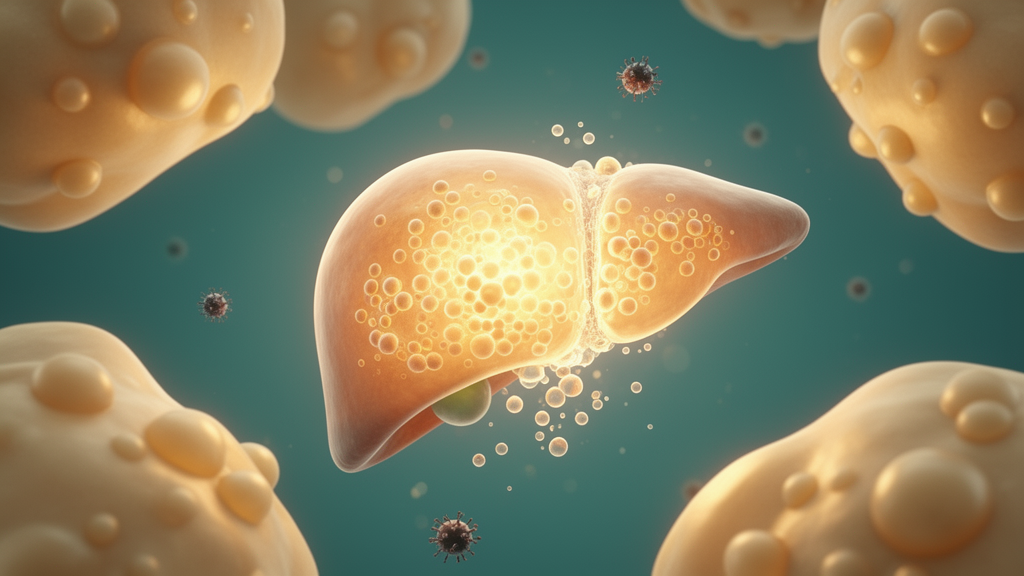
Chronic hepatitis B virus (HBV) infection and metabolic dysfunction–associated steatotic liver disease (MASLD) are colliding with increasing frequency in clinics worldwide, and the consequences of that collision have puzzled hepatologists for years. Clinical observations have repeatedly hinted at a paradox: patients whose livers accumulate fat often show lower levels of HBV replication markers than expected, yet the molecular machinery responsible for this inverse relationship has remained stubbornly obscure. A new in vitro study published in Virology Journal by Maoping Li, Kaizhong Luo, Na Qin, Yuxin Zheng, Xinqiang Xiao of Central South University’s Second Xiangya Hospital and colleagues, with corresponding author Yanjiao Wang, now offers a mechanistic explanation. The team reports that free fatty acid–induced steatosis in HBV-producing liver cells activates an apoptotic signaling cascade running from tumor necrosis factor-alpha (TNF-α) through its receptor TNFR1 and the proteases Caspase−8 and Caspase−2, and that this cascade is associated with a measurable decline in HBV replication markers.
The experimental system at the heart of the study is HepG2.2.15, a hepatocyte-derived cell line that stably produces HBV, making it a workhorse for virologists who want to study viral replication in a controlled setting. To mimic the lipotoxic environment of a fatty liver, the researchers exposed these cells to a defined mixture of free fatty acids—sodium oleate and sodium palmitate combined in a 2:1 ratio. This particular blend was chosen to reflect the composition of fatty acids that typically accumulates in steatotic hepatic tissue, where oleate-driven triglyceride deposition coexists with palmitate-induced lipotoxic stress. The success of the steatosis induction was verified using two complementary approaches: biochemical quantification of intracellular triglyceride content and Oil Red O staining, a histochemical technique that renders neutral lipids visible as red-stained droplets under the microscope.
Once lipid accumulation was confirmed, the team turned its attention to cell fate. Flow cytometric analysis revealed that FFA treatment was accompanied by a modest increase in apoptosis, the programmed cell death process that can be triggered by a variety of stress pathways. This was not a catastrophic wave of cell death that would simply destroy the viral factory; rather, it was a subtle shift in the balance between survival and apoptosis, the kind of low-level cellular distress that is increasingly recognized as biologically meaningful in chronic liver disease. The modesty of the apoptotic response is itself an important observation, because it suggests that the effects on HBV replication are not merely an artifact of widespread hepatocyte loss but potentially reflect a regulated signaling event within living cells.
The signaling pathway the investigators traced begins with TNF-α, a pro-inflammatory cytokine whose concentrations rose in the culture medium following FFA exposure. TNF-α exerts many of its effects by binding to tumor necrosis factor receptor 1 (TNFR1) on the cell surface, and the study documented increased TNFR1 expression in the fatty acid–treated cells. Downstream of the receptor, the researchers measured elevated levels of Caspase−8, an initiator caspase classically associated with the extrinsic apoptotic pathway, and Caspase−2, a more enigmatic protease that has been implicated in stress responses, metabolic regulation, and apoptosis in various contexts. The coordinated upregulation of this TNF-α/TNFR1/Caspase−8/Caspase−2 axis in steatotic HBV-producing cells forms the central technical finding of the paper.
Crucially, the activation of this apoptotic signaling pathway occurred alongside a consistent reduction in every HBV replication marker the team measured. Intracellular HBV DNA declined, as did pregenomic RNA (pgRNA), the RNA intermediate that serves as the template for viral reverse transcription and as the substrate for new viral genomes. The viral surface antigen HBsAg and the e antigen HBeAg, both widely used clinical surrogates of viral activity, also fell in the FFA-treated cultures. The parallel decline of these four markers—spanning viral nucleic acids, replicative intermediates, and secreted proteins—strengthens the conclusion that fatty acid exposure genuinely suppresses HBV replication rather than selectively altering one downstream readout.
To determine whether endogenous TNF-α signaling was causally involved rather than merely correlated, the researchers performed TNF-α neutralization experiments, using antibodies or blocking reagents to mop up the cytokine secreted by the stressed cells. The results were instructive: neutralization partially restored the HBV replication markers that FFA exposure had suppressed, and it simultaneously attenuated the activation of the TNFR1–Caspase−8/Caspase−2 pathway. This bidirectional effect—viral markers recovering as apoptotic signaling recedes—provides the strongest causal evidence in the study that the TNF-α-driven cascade contributes to the suppression of HBV replication under lipotoxic conditions. The word partial, however, deserves emphasis, because restoration was incomplete, leaving open the possibility that other fatty acid–triggered mechanisms also participate.
The team then interrogated the role of Caspase−2 more directly by pharmacological means. They employed Z-VDVAD-FMK, a cell-permeable inhibitor designed to block the enzymatic activity of Caspase−2 by binding irreversibly to its catalytic site. Treatment with the inhibitor reduced Caspase−2 enzymatic activity, as expected, and partially reversed the FFA-induced reduction of HBV replication markers. This pharmacological rescue experiment complements the TNF-α neutralization data and places Caspase−2, a protease that has often been overshadowed by its better-known relatives Caspase−3, −8, and −9, squarely within the pathway connecting hepatic steatosis to diminished HBV replication. It also raises the possibility that Caspase−2 could represent a node at which metabolic and viral signaling intersect in the infected liver.
The authors are careful in their conclusions, noting that TNF-α/TNFR1–Caspase−2 signaling contributes to, but may not fully account for, the reduction of HBV replication markers during lipotoxic stress. This restraint is scientifically appropriate for several reasons. The work was conducted entirely in vitro, using a cell line rather than infected liver tissue, so the complex multicellular environment of a steatotic HBV-infected liver—with its immune infiltrates, stellate cells, and inflammatory mediators—is absent. Supplementary data from HBV-infected HepG2-NTCP cells incubated with one millimolar free fatty acids provided additional support for the HBV DNA findings, but the translational leap from culture dish to patient remains substantial. Moreover, fatty acids exert pleiotropic effects on hepatocytes, including endoplasmic reticulum stress, mitochondrial dysfunction, and alterations in lipid droplet biology, any of which could independently influence viral replication.
Nevertheless, the study arrives at a moment when the clinical overlap of chronic hepatitis B and MASLD is growing. As obesity and metabolic syndrome spread globally, hepatologists increasingly encounter patients carrying both diagnoses, and understanding how steatosis reshapes viral behavior has implications for monitoring, prognosis, and treatment sequencing. If fatty liver genuinely restrains HBV replication through defined signaling pathways, then metabolic interventions that resolve steatosis might, in principle, alter viral dynamics in ways that clinicians should anticipate. Conversely, the apoptotic signaling that accompanies lipotoxicity is itself a driver of liver injury and fibrosis, so a lower viral load purchased at the cost of hepatocyte stress is not obviously a favorable trade for the patient.
The research, which was supported by the Natural Science Foundation of Hunan Province, the Clinical Medical Research Center for Viral Hepatitis of Hunan Province, and the Scientific Research Program of FuRong Laboratory, adds a specific molecular thread to what had been a largely correlative clinical literature. By connecting free fatty acid exposure to TNF-α secretion, TNFR1 upregulation, Caspase−8 and Caspase−2 activation, and diminished HBV DNA, pgRNA, HBsAg, and HBeAg—and by showing that both cytokine neutralization and Caspase−2 inhibition partially rescue viral markers—the study converts a long-standing epidemiological observation into a testable mechanistic hypothesis. Future work in more physiologically faithful models, including primary hepatocytes, organoids, and animal systems, will be needed to establish whether the TNFR1–Caspase−2 axis operates similarly in vivo and whether manipulating it could ever serve therapeutic ends. For now, the message is that the fat-laden hepatocyte is not a passive container for the virus but an active signaling environment in which metabolic stress and viral replication are inextricably entangled.
Subject of Research: TNF-α/TNFR1–Caspase−2 apoptotic signaling linking hepatic steatosis to reduced hepatitis B virus replication in vitro
Article Title: TNFR1–Caspase−2 apoptotic signaling is associated with reduced HBV replication markers during free fatty acid exposure in vitro
Article References: Li, M., Luo, K., Qin, N., Zheng, Y., Xiao, X., & Wang, Y. (2026). TNFR1–Caspase−2 apoptotic signaling is associated with reduced HBV replication markers during free fatty acid exposure in vitro. Virology Journal. https://doi.org/10.1186/s12985-026-03315-x
Image Credits: AI Generated
DOI: 10.1186/s12985-026-03315-x
Keywords: hepatitis B virus, MASLD, hepatic steatosis, free fatty acids, TNF-α, TNFR1, Caspase-2, Caspase-8, apoptosis, HepG2.2.15, HBV replication, virology
Cite Scienmag News
Kristina Jarvis. (October 9, 2026). Fatty Liver Cells Turn On a Caspase-2 Death Pathway That Damps Hepatitis B Replication. Scienmag. https://scienmag.com/fatty-liver-cells-turn-on-a-caspase-2-death-pathway-that-damps-hepatitis-b-replication/
Kristina Jarvis. "Fatty Liver Cells Turn On a Caspase-2 Death Pathway That Damps Hepatitis B Replication." Scienmag, 9 October 2026, https://scienmag.com/fatty-liver-cells-turn-on-a-caspase-2-death-pathway-that-damps-hepatitis-b-replication/. Accessed 9 October 2026.
Kristina Jarvis. "Fatty Liver Cells Turn On a Caspase-2 Death Pathway That Damps Hepatitis B Replication." Scienmag. October 9, 2026. https://scienmag.com/fatty-liver-cells-turn-on-a-caspase-2-death-pathway-that-damps-hepatitis-b-replication/


