

Saturday, September 5, 2026
Science
No Result
View All Result
  • Login
  • HOME
  • SCIENCE NEWS
  • CONTACT US
  • HOME
  • SCIENCE NEWS
  • CONTACT US
No Result
View All Result
Scienmag
No Result
View All Result
Home Science News Cancer

Fasting Boosts Gut Microbiome for Better Intestinal Recovery Post-Radiation

July 9, 2026
in Cancer
Morgan Morrow
By Morgan Morrow Scienmag Editorial Profile - Bacteriology
Reading Time: 2 mins read
0
Fasting Boosts Gut Microbiome for Better Intestinal Recovery Post-Radiation

Fasting Boosts Gut Microbiome for Better Intestinal Recovery Post-Radiation

65
SHARES
587
VIEWS
Share on FacebookShare on Twitter
ADVERTISEMENT

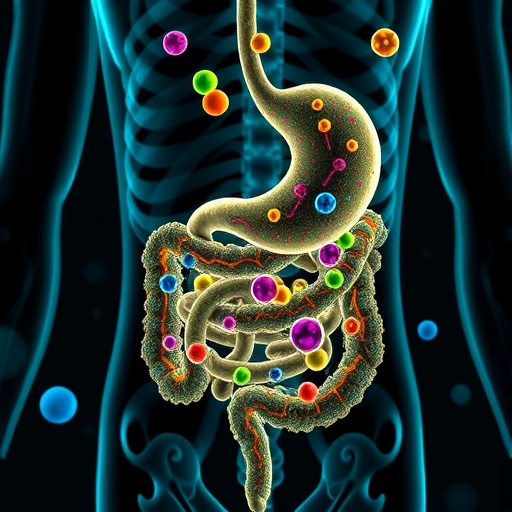
A groundbreaking study from The University of Texas MD Anderson Cancer Center unveils a crucial link between gut microbiota, fasting, and intestinal regeneration after radiation damage. The research identifies the bacterium Akkermansia muciniphila (AKK) as a key factor that primes intestinal stem cells for accelerated recovery following radiation therapy, a common treatment for abdominal cancers such as pancreatic, colorectal, and gynecologic malignancies.

Radiation therapy, while effective against cancer cells, often damages the sensitive lining of the small intestine. This collateral damage leads to severe side effects including nausea, diarrhea, and infections, which can limit the dosage of radiation patients can safely receive. The new findings shed light on a potential biological mechanism that could mitigate these adverse effects and enhance the efficacy of radiation treatments.

In preclinical models, a 24-hour fasting period significantly increased the levels of AKK in the gut microbiome. This bacterium produces propionate, a short-chain fatty acid that influences intestinal cell metabolism. The combined effect of fasting-induced metabolic shifts and propionate leads to the chemical modification of histones—proteins around which DNA is tightly coiled—within intestinal cells. These epigenetic changes, marked by the addition of small chemical tags, enhance the accessibility of DNA regions linked to regenerative gene programs.

This epigenetic priming effectively prepares a subset of intestinal stem cells to respond more rapidly after injury. By unwrapping DNA from histone constraints, the cells are pre-set to initiate gene expression necessary for tissue repair. Following radiation exposure, these preconditioned cells expand robustly, contributing to faster regeneration of the intestinal lining.

Crucially, experiments that removed AKK from the microbiome demonstrated a complete loss of the regenerative benefit conferred by fasting. Reintroducing AKK during fasting restored the enhanced repair response, emphasizing that both the microbial presence and fasting-induced metabolic environment are indispensable for this protective effect.

This microbiome–metabolite–chromatin axis not only uncovers a novel mechanism of tissue resilience but also points toward innovative therapeutic opportunities. While fasting itself may be impractical for cancer patients, harnessing microbial therapies or metabolite-based interventions could replicate these benefits without dietary restrictions.

Future research will explore whether similar regenerative pathways can support other rapidly dividing tissues vulnerable to cancer treatments, such as bone marrow. The potential translation of this approach into clinical settings could revolutionize how radiation side effects are managed, ultimately improving patient outcomes.

This study represents a compelling advancement in understanding how diet, microbial ecosystems, and epigenetic regulation collaborate to influence health and recovery, opening new frontiers in supportive care for cancer therapy.


Subject of Research: Gut microbiome, intestinal regeneration, radiation therapy, fasting
Article Title: Fasting primes small intestinal regeneration after damage via a microbiome–metabolite–chromatin axis
News Publication Date: 23-Jun-2026
Web References: https://www.pnas.org/doi/10.1073/pnas.2529215123
Image Credits: The University of Texas MD Anderson Cancer Center
Keywords: Radiation therapy, Cancer, Colorectal cancer, Pancreatic cancer, Human gut microbiota, Gut microbiota, Small intestine

Article Title: Fasting Boosts Gut Microbiome for Better Intestinal Recovery Post-Radiation

Article References: Original research article

Image Credits: AI Generated

DOI: Not provided

Keywords: Akkermansia muciniphila in radiation therapy, biological mechanisms of intestinal repair, epigenetic modifications in intestinal cells, fasting and intestinal regeneration, fasting-induced gut microbiota shifts, Gut microbiome, gut microbiome and cancer treatment outcomes, microbiome and stem cell activation post-radiation, microbiota-targeted therapies for radiation side effects, microbiota's role in gut healing, radiation-induced gut damage mitigation, short-chain fatty acids and colon recovery

Cite Scienmag News

Morgan Morrow. (July 9, 2026). Fasting Boosts Gut Microbiome for Better Intestinal Recovery Post-Radiation. Scienmag. https://scienmag.com/fasting-boosts-gut-microbiome-for-better-intestinal-recovery-post-radiation/


Morgan Morrow. "Fasting Boosts Gut Microbiome for Better Intestinal Recovery Post-Radiation." Scienmag, 9 July 2026, https://scienmag.com/fasting-boosts-gut-microbiome-for-better-intestinal-recovery-post-radiation/. Accessed 5 September 2026.

Morgan Morrow. "Fasting Boosts Gut Microbiome for Better Intestinal Recovery Post-Radiation." Scienmag. July 9, 2026. https://scienmag.com/fasting-boosts-gut-microbiome-for-better-intestinal-recovery-post-radiation/

Tags: Akkermansia muciniphila in radiation therapybiological mechanisms of intestinal repairepigenetic modifications in intestinal cellsfasting and intestinal regenerationfasting-induced gut microbiota shiftsGut microbiomegut microbiome and cancer treatment outcomesmicrobiome and stem cell activation post-radiationmicrobiota-targeted therapies for radiation side effectsmicrobiota's role in gut healingradiation-induced gut damage mitigationshort-chain fatty acids and colon recovery
Share26Tweet16
Previous Post

New Catalyst Transforms Recycling of Mixed Plastics

Next Post

Over 40% of Users Are Reducing AI Usage Amid Declining Popularity

Related Posts

Vaginal estrogen versus moisturizer in aromatase inhibitor users: randomized trial
Cancer

Vaginal estrogen versus moisturizer in aromatase inhibitor users: randomized trial

September 5, 2026
New bispecific TCR-like antibody targets PRAME complex for cancer immunotherapy
Cancer

New bispecific TCR-like antibody targets PRAME complex for cancer immunotherapy

September 5, 2026
Culturally tailored food vouchers ease food insecurity in Latino cancer patients
Cancer

Culturally tailored food vouchers ease food insecurity in Latino cancer patients

September 5, 2026
Genetically predicted vitamin D levels show no link to head and neck cancer risk
Cancer

Genetically predicted vitamin D levels show no link to head and neck cancer risk

September 5, 2026
Machine learning predicts functional outcomes after vestibular schwannoma surgery: systematic review and meta-analysis
Cancer

Machine learning predicts functional outcomes after vestibular schwannoma surgery: systematic review and meta-analysis

September 5, 2026
Dancing and Diet Boost Health and Gut Microbes in Obese Breast Cancer Survivors
Cancer

Dancing and Diet Boost Health and Gut Microbes in Obese Breast Cancer Survivors

September 4, 2026
Next Post
Over 40% of Users Are Reducing AI Usage Amid Declining Popularity

Over 40% of Users Are Reducing AI Usage Amid Declining Popularity

  • Mothers who receive childcare support from maternal grandparents show more optimized

    Mothers who receive childcare support from maternal grandparents show more parental warmth, finds NTU Singapore study

    27656 shares
    Share 11059 Tweet 6912
  • University of Seville Breaks 120-Year-Old Mystery, Revises a Key Einstein Concept

    1061 shares
    Share 424 Tweet 265
  • Bee body mass, pathogens and local climate influence heat tolerance

    682 shares
    Share 273 Tweet 171
  • Researchers record first-ever images and data of a shark experiencing a boat strike

    546 shares
    Share 218 Tweet 137
  • Groundbreaking Clinical Trial Reveals Lubiprostone Enhances Kidney Function

    531 shares
    Share 212 Tweet 133
Science

Embark on a thrilling journey of discovery with Scienmag.com—your ultimate source for cutting-edge breakthroughs. Immerse yourself in a world where curiosity knows no limits and tomorrow’s possibilities become today’s reality!

RECENT NEWS

  • Hybrid deep learning sensor network enables smart underwater monitoring
  • Simulating realistic global rainfall patterns from atmospheric circulation models
  • New drought index framework projects future compound drought in Central China
  • Single-cell RNA sequencing reveals heterogeneity in chicken gonadal germ cells

Categories

  • Agriculture
  • Anthropology
  • Archaeology
  • Athmospheric
  • Biology
  • Biotechnology
  • Blog
  • Bussines
  • Cancer
  • Chemistry
  • Climate
  • Earth Science
  • Editorial Policy
  • Marine
  • Mathematics
  • Medicine
  • Pediatry
  • Policy
  • Psychology & Psychiatry
  • Science Education
  • Social Science
  • Space
  • Technology and Engineering

Subscribe to Blog via Email

Enter your email address to subscribe to this blog and receive notifications of new posts by email.

Join 5,151 other subscribers

© 2025 Scienmag - Science Magazine

Welcome Back!

Login to your account below

Forgotten Password?

Retrieve your password

Please enter your username or email address to reset your password.

Log In
No Result
View All Result
  • HOME
  • SCIENCE NEWS
  • CONTACT US

© 2025 Scienmag - Science Magazine

Discover more from Science

Subscribe now to keep reading and get access to the full archive.

Continue reading