

Saturday, November 14, 2026
Science
No Result
View All Result
  • Login
  • HOME
  • SCIENCE NEWS
  • CONTACT US
  • HOME
  • SCIENCE NEWS
  • CONTACT US
No Result
View All Result
Scienmag
No Result
View All Result
Home Science News Technology and Engineering

FA-PPO Method Helps Drones Dodge Obstacles in Cluttered Skies

October 24, 2026
in Technology and Engineering
Denise Maddox
By Denise Maddox Scienmag Editorial Profile - Mechanical Engineering
Reading Time: 2 mins read
0
FA-PPO Method Helps Drones Dodge Obstacles in Cluttered Skies

FA-PPO Method Helps Drones Dodge Obstacles in Cluttered Skies

65
SHARES
587
VIEWS
Share on FacebookShare on Twitter
ADVERTISEMENT

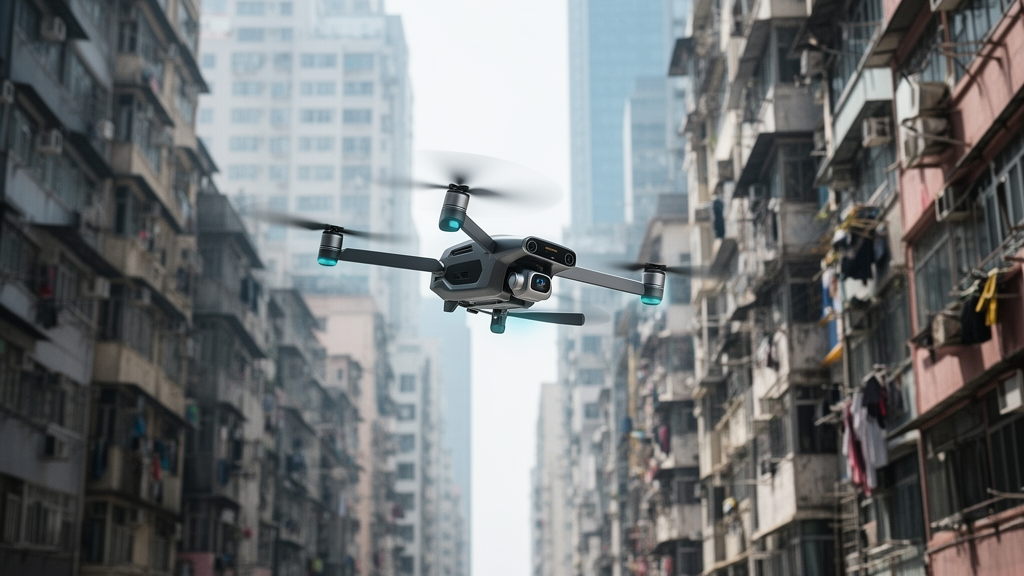
Researchers have developed a reinforcement learning method that lets unmanned aerial vehicles autonomously avoid obstacles in cluttered environments, and it outperformed established algorithms in simulated tests. The approach, called FA-PPO—feature-wise adaptive fusion proximal policy optimization—is described in a study published in the International Journal of Machine Learning and Cybernetics. In evaluations against three widely used baselines, FA-PPO was the only method tested that completed the autonomous obstacle-avoidance task in all three simulated scenarios.

Safe flight in dense environments depends on combining navigation information with environmental perception, and the new method is built around that principle. The researchers organized the drone’s observation space into three structured components: target-relative information, the UAV’s own motion state, and regularized geometric observations from light detection and ranging (LiDAR). Two modality-specific encoders then separately extract navigation-state features and LiDAR features from this input, keeping the two information streams distinct before they are combined.

The key innovation lies in how those features are fused. An observation-conditioned feature-wise weighting mechanism dynamically recalibrates individual latent features before policy optimization, allowing the system to adjust how much weight it gives to different pieces of information depending on the situation the drone faces. The learned policy outputs continuous three-axis velocity commands directly, giving the drone a smooth control signal rather than discrete decisions.

To test the method, the team ran simulations in three static-obstacle scenarios of increasing complexity, comparing FA-PPO against proximal policy optimization (PPO), soft actor–critic (SAC), and deep deterministic policy gradient (DDPG). Among the baselines, PPO achieved the highest maximum training reward, making it the strongest competitor. FA-PPO improved on that metric by 1.4 percent in the first scenario, 11.4 percent in the second, and 19.7 percent in the third, with the gains growing larger as environmental complexity increased.

Ablation experiments, in which components of the system are removed to test their contribution, confirmed that the feature-wise adaptive fusion mechanism was responsible for the performance advantage. FA-PPO also showed more stable reward convergence during training than the comparison methods, and the trajectories and forward-velocity profiles it produced were smoother than those of the baseline algorithms.

The authors indicate that the results demonstrate advantages in heterogeneous feature utilization and policy learning, pointing to potential applications for LiDAR-equipped UAVs in inspection, patrol missions, and autonomous navigation through cluttered static-obstacle environments. Because the evaluation was conducted entirely in simulation across static-obstacle settings, performance in dynamic or real-world conditions remains to be demonstrated, but the consistent improvement with rising complexity suggests the fusion mechanism becomes more valuable precisely where obstacle avoidance is hardest.

Subject of Research: A feature-wise adaptive fusion proximal policy optimization method for autonomous UAV obstacle avoidance using LiDAR and navigation features

Article Title: An autonomous obstacle-avoidance method for unmanned aerial vehicles based on FA-PPO

Article References: Zheng, J., Ma, M., Chen, Z., Gao, Y., & Ou, Y. (2026). An autonomous obstacle-avoidance method for unmanned aerial vehicles based on FA-PPO. International Journal of Machine Learning and Cybernetics, 17(11), Article 508. https://doi.org/10.1007/s13042-026-03349-1

Image Credits: AI Generated

DOI: 10.1007/s13042-026-03349-1

Keywords: UAV, obstacle avoidance, reinforcement learning, PPO, LiDAR, feature fusion, autonomous navigation, soft actor-critic, DDPG, drone flight control, simulation, machine learning

Cite Scienmag News

Denise Maddox. (October 24, 2026). FA-PPO Method Helps Drones Dodge Obstacles in Cluttered Skies. Scienmag. https://scienmag.com/fa-ppo-method-helps-drones-dodge-obstacles-in-cluttered-skies/

Denise Maddox. "FA-PPO Method Helps Drones Dodge Obstacles in Cluttered Skies." Scienmag, 24 October 2026, https://scienmag.com/fa-ppo-method-helps-drones-dodge-obstacles-in-cluttered-skies/. Accessed 14 November 2026.

Denise Maddox. "FA-PPO Method Helps Drones Dodge Obstacles in Cluttered Skies." Scienmag. October 24, 2026. https://scienmag.com/fa-ppo-method-helps-drones-dodge-obstacles-in-cluttered-skies/

Tags: advanced machine learning techniques for cluttered sky navigationautonomous drone obstacle avoidanceautonomous navigationcontinuous velocity command generation for dronesDDPGdense environment drone navigationdrone flight controldynamic feature weighting in reinforcement learningFA-PPO feature-wise adaptive fusionfeature fusionLiDARLiDAR-based environmental perception in dronesMachine learningmulti-modal sensor data fusion in autonomous flyingobstacle avoidancepolicy optimization for unmanned aerial vehiclesPPOreinforcement learningreinforcement learning for UAV navigationsimulationsimulation-based drone obstacle avoidance algorithmsSoft Actor–CriticUAVUAV motion state and target-relative information integration
Share26Tweet16
Previous Post

Freezing Shifts Serum Neurofilament Light Chain Results Differently Across Four Immunoassays

Next Post

Chlamydophila psittaci jumps from broiler chickens to turkeys, ducks, pigeons, and quails

Related Posts

Battery Train Modeling Emphasizes Lower Electrification Costs Over Traction Fleet Annuities
Technology and Engineering

Battery Train Modeling Emphasizes Lower Electrification Costs Over Traction Fleet Annuities

November 14, 2026
Structural Anchors Improve Long Legal Document Summarization in Language Models
Technology and Engineering

Structural Anchors Improve Long Legal Document Summarization in Language Models

November 14, 2026
Cold-Bonded Extrusion Converts Lithium Slag Into Durable Lightweight Construction Aggregates
Technology and Engineering

Cold-Bonded Extrusion Converts Lithium Slag Into Durable Lightweight Construction Aggregates

November 14, 2026
Basalt Fibers Mitigate Crack Evolution and Strength Loss in Compacted Clay
Technology and Engineering

Basalt Fibers Mitigate Crack Evolution and Strength Loss in Compacted Clay

November 14, 2026
Renewable Nanomedicines Require Rigorous Performance Metrics Beyond Natural Origin Alone
Technology and Engineering

Renewable Nanomedicines Require Rigorous Performance Metrics Beyond Natural Origin Alone

November 14, 2026
Adaptive AI System Models Student Learning Pathways Using Educational Proxy Data
Technology and Engineering

Adaptive AI System Models Student Learning Pathways Using Educational Proxy Data

November 14, 2026
Next Post
Chlamydophila psittaci jumps from broiler chickens to turkeys, ducks, pigeons, and quails

Chlamydophila psittaci jumps from broiler chickens to turkeys, ducks, pigeons, and quails

  • Mothers who receive childcare support from maternal grandparents show more optimized

    Mothers who receive childcare support from maternal grandparents show more parental warmth, finds NTU Singapore study

    27656 shares
    Share 11059 Tweet 6912
  • University of Seville Breaks 120-Year-Old Mystery, Revises a Key Einstein Concept

    1061 shares
    Share 424 Tweet 265
  • Bee body mass, pathogens and local climate influence heat tolerance

    682 shares
    Share 273 Tweet 171
  • Researchers record first-ever images and data of a shark experiencing a boat strike

    546 shares
    Share 218 Tweet 137
  • Groundbreaking Clinical Trial Reveals Lubiprostone Enhances Kidney Function

    531 shares
    Share 212 Tweet 133
Science

Embark on a thrilling journey of discovery with Scienmag.com—your ultimate source for cutting-edge breakthroughs. Immerse yourself in a world where curiosity knows no limits and tomorrow’s possibilities become today’s reality!

RECENT NEWS

  • Dual Albumin Exposure Drives Pronounced Barrier Dysfunction in In Vitro Model
  • Modeled Thirty Percent Canopy Increase Significantly Lowers Radiant Heat in Antakya Parks
  • Battery Train Modeling Emphasizes Lower Electrification Costs Over Traction Fleet Annuities
  • Eml1 mutations disrupt organelle distribution and translation in radial glia

Categories

  • Agriculture
  • Anthropology
  • Archaeology
  • Athmospheric
  • Biology
  • Biotechnology
  • Blog
  • Bussines
  • Cancer
  • Chemistry
  • Climate
  • Earth Science
  • Editorial Policy
  • Marine
  • Mathematics
  • Medicine
  • Pediatry
  • Policy
  • Psychology & Psychiatry
  • Science Education
  • Science News
  • Social Science
  • Space
  • Technology and Engineering

Subscribe to Blog via Email

Enter your email address to subscribe to this blog and receive notifications of new posts by email.

Join 5,150 other subscribers

© 2026 Scienmag - Science Magazine

Welcome Back!

Login to your account below

Forgotten Password?

Retrieve your password

Please enter your username or email address to reset your password.

Log In
No Result
View All Result
  • HOME
  • SCIENCE NEWS
  • CONTACT US

© 2026 Scienmag - Science Magazine

Discover more from Science

Subscribe now to keep reading and get access to the full archive.

Continue reading

