


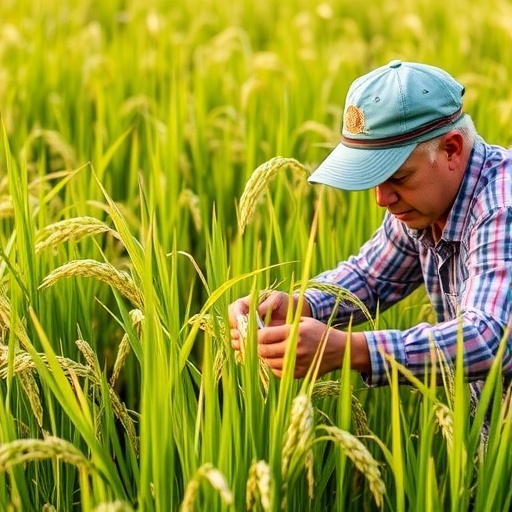
In a comprehensive exploration of agronomic potential and biodiversity, researchers have embarked on a study focusing on the rainfed rice landraces of Gokuleshwor in Baitadi, Nepal. This region represents a crucial agricultural zone where traditional rice cultivation practices have coexisted with local ecosystems for generations. The diversity exhibited by these landraces not only reflects the adaptability of rice to various environmental conditions but also offers substantial insights into enhancing food security.
The primary objective of this groundbreaking study is to conduct a multivariate analysis of yield and phenotypic diversity among these landraces of Oryza sativa L. This multifaceted approach allows researchers to dissect the genetic traits that contribute to variations in yield, providing a roadmap for potential agricultural advancements. The researchers meticulously gathered data from local farmers, who possess in-depth knowledge and understanding of the various rice cultivars.
One of the noteworthy aspects of this research is the emphasis on rainfed rice cultivation. Unlike irrigated varieties, rainfed rice is reliant on natural rainfall, making it crucial for regions where irrigation infrastructure may be limited or non-existent. The study aims to assess how different climatic and soil conditions affect the growth and yield of these traditional landraces. Given the ongoing challenges posed by climate change, such insights are vital for devising adaptive agricultural strategies.
The research team conducted rigorous field trials, measuring various phenotypic traits such as plant height, grain weight, and days to flowering. These phenotypic characteristics are significant as they directly influence yield and are indicators of how well a particular rice strain can thrive in specific environmental conditions. Through statistical analysis, the researchers were able to identify correlations between these traits, leading to a better understanding of which genetic factors could be enhanced for improved productivity.
Additionally, the genetic diversity found within these landraces is of paramount importance in breeding programs aimed at developing new rice varieties. Landraces often harbor unique alleles that are absent in high-yielding commercial varieties. By leveraging this genetic richness, researchers can introduce traits such as drought resistance and pest tolerance into future crops. This not only preserves traditional agriculture but also fosters sustainable farming practices that can withstand the challenges posed by a changing climate.
Local farmers, integral to the research process, have provided invaluable insights into the strengths and weaknesses of different landraces. Through participatory evaluation, the researchers created a platform for knowledge exchange, empowering farmers to share their experiences and preferences. This collaborative approach enhances the study’s relevance, ensuring that the findings align with the practical needs of those who cultivate these crops.
As results from the study start to emerge, preliminary analyses suggest significant variations in yield among the different landraces. Some local strains are showing promising yield potential, which could revolutionize local agriculture if cultivated on a larger scale. However, the study also highlights the importance of considering local climatic conditions, soil health, and pest populations when recommending specific landraces for cultivation.
The work conducted by Bist, Chapagaee, Rawal, and their colleagues underscores the complexity of agricultural systems shaped by both human activity and natural processes. They advocate for a holistic approach to breeding that integrates traditional knowledge with modern scientific techniques. By valuing and incorporating local biodiversity, the research promotes sustainable agricultural practices that could lead to enhanced resilience and food security.
In parallel with these findings, the study’s authors emphasize the potential economic and social benefits that could arise from boosting local rice production. With increased yield, farmers could enjoy higher incomes, contributing to improved livelihoods in rural communities. This multifaceted approach not only addresses immediate agricultural challenges but also plays a vital role in rural development and poverty alleviation.
The implications of this research extend beyond Nepal, resonating with global challenges pertaining to food production, climate resilience, and sustainability. As food systems worldwide grapple with the volatility of climate change and population growth, studies like this illuminate pathways toward more resilient agricultural frameworks. By prioritizing the conservation and utilization of genetic diversity, such research can help secure food resources for future generations.
Moreover, the study invites policymakers and agricultural stakeholders to recognize the significance of supporting local farming practices. Investment in traditional agriculture is often overlooked, yet it bears immense potential for sustainable development. Enhanced funding for research and infrastructure could bolster the resilience of rainfed rice cultivation, making it an attractive option for both farmers and communities at large.
In conclusion, the groundbreaking work on rainfed rice landraces in Gokuleshwor not only advances our understanding of rice genetics and phenotypic traits but also champions a more sustainable and inclusive agricultural model. The findings underscore the essence of biodiversity in agriculture, advocating for the integration of traditional knowledge into modern agricultural practices. As this study unfolds, it holds the promise of transforming local farming landscapes and contributing significantly to global food security challenges.
Bist, D.R., Chapagaee, P., Rawal, R. et al. Multivariate analysis of yield and phenotypic diversity in rainfed rice (Oryza sativa L.) landraces from Gokuleshwor, Baitadi, Nepal.
Discov Agric 3, 167 (2025). https://doi.org/10.1007/s44279-025-00288-3
Cite Scienmag News
Alan Morgan. (September 19, 2025). Exploring Yield and Diversity in Nepalese Rice. Scienmag. https://scienmag.com/exploring-yield-and-diversity-in-nepalese-rice/
Alan Morgan. "Exploring Yield and Diversity in Nepalese Rice." Scienmag, 19 September 2025, https://scienmag.com/exploring-yield-and-diversity-in-nepalese-rice/. Accessed 3 September 2026.
Alan Morgan. "Exploring Yield and Diversity in Nepalese Rice." Scienmag. September 19, 2025. https://scienmag.com/exploring-yield-and-diversity-in-nepalese-rice/


