


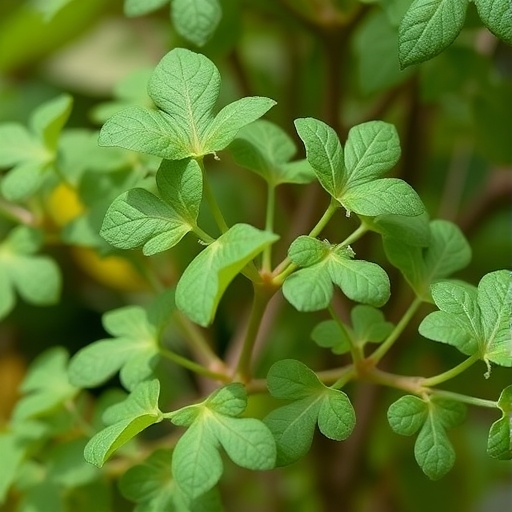
In a groundbreaking study that ventures deep into the genetic underpinnings of a vital tree species, researchers have conducted a genome-wide identification and analysis of the WD40 protein family in Populus yunnanensis, revealing crucial insights into how these proteins play a pivotal role in mediating the plant’s response to salt stress. The study, published in BMC Genomics, opens a new frontier in our understanding of plant resilience and adaptation to adverse environmental conditions, which is increasingly important as climate change intensifies.
The investigation into the WD40 protein family is particularly significant given the essential functions of these proteins in various biological processes. This family of proteins is known to be involved in diverse cellular processes, including signal transduction, gene regulation, and responses to various stressors. Specifically, the study sheds light on the mechanisms by which Populus yunnanensis manages to thrive in salt-affected soils, a condition detrimental to many plant species.
Researchers employed advanced genomic techniques to conduct a comprehensive analysis of the WD40 protein family. They meticulously identified WD40 genes distributed across the entire genome of Populus yunnanensis. This species is of considerable ecological importance due to its ability to grow in harsh environments, including saline regions where other plants struggle. The genome-wide identification was a monumental task involving intricate computational biology techniques and extensive bioinformatics analyses.
The identification of these WD40 proteins revealed a total of 36 unique members within the Populus yunnanensis genome. The researchers utilized various bioinformatics tools to analyze gene features, conserved domains, and phylogenetic relationships. Such analyses highlighted the evolutionary trajectory of the WD40 protein family within the Populus genus and provided insights into the specific functions that these proteins may serve in stress adaptation.
Further dissecting the role of WD40 proteins in response to salt stress, the study integrated both transcriptomic and functional analyses. The researchers treated seedlings of Populus yunnanensis with varying concentrations of salt and monitored changes in the expression of WD40 genes. They found that a significant number of these genes were upregulated in response to salt treatment, suggesting that they play an active role in the plant’s adaptive mechanisms. This finding solidifies the hypothesis that WD40 proteins are integral in mediating plant stress responses.
In addition to expression analysis, the researchers also examined the localization of WD40 proteins within the plant cells. Utilizing confocal microscopy, they were able to visualize the localization patterns of selected WD40 proteins, which elucidated potential pathways through which these proteins could be exerting their functional roles. Understanding where these proteins reside within the cell provides critical insights into their specific mechanisms of action under stress conditions.
Moreover, the team correlated the expression profiles of WD40 genes with various physiological parameters of the plants under salt stress. Their findings indicated that plants demonstrating elevated levels of certain WD40 proteins exhibited enhanced growth and resilience in saline conditions compared to control groups. This correlation between gene expression and phenotypic resistance underscores the importance of molecular responses in adapting to environmental challenges.
The implications of this research extend beyond mere academic interest; they hold significant potential for practical applications in agriculture and conservation. As the global agricultural landscape faces challenges from salinity, which affects crop yields and food security, understanding the molecular basis of salt tolerance in trees like Populus yunnanensis offers a pathway for developing more resilient crops. The insights gained from WD40 protein functions could lead to innovative biotechnological approaches aimed at enhancing salt tolerance in economically important plant species.
This study marks a crucial step in plant genomics, as it not only explores the genetic factors involved in stress response but also sets the stage for further research into other protein families and their roles in plant adaptation. Future studies are likely to build on these findings by integrating them with metabolic analyses and environmental stress modeling, ensuring a holistic understanding of plant resilience mechanisms.
As researchers continue to decipher the complex interactions within the Populus yunnanensis genome, there exists a significant opportunity to contribute to global strategies for managing soil salinity and improving tree-based ecosystems. Understanding these genetic adaptations not only aids in conservation efforts but could also have a lasting impact on agricultural practices in a world where climate crises are becoming more commonplace.
The collaborative efforts of the research team underscore the importance of interdisciplinary approaches in modern biological research. By combining expertise in genomics, molecular biology, and bioinformatics, the study exemplifies how collaborative science can yield fruitful results that pave the way for future innovations.
The findings from this extensive research into the WD40 protein family are expected to resonate within the scientific community and beyond, sparking discussions around plant resilience, adaptation strategies, and the future of sustainable agriculture in the face of mounting environmental pressures. As we continue to explore the intricate relationships between genes, proteins, and environmental stressors, the insights from this study position Populus yunnanensis as a key player in understanding how trees might adapt to changing climates.
With ongoing research efforts, the hope is that the genetic knowledge gleaned from Populus yunnanensis can be harnessed to facilitate the development of new strategies and practices that can mitigate the effects of salinity on crop production and promote sustainable ecosystem management.
As the implications of this study unfold, the potential for translating basic research into real-world applications becomes clearer. By harnessing the genetic diversity and resilience of Populus yunnanensis and other similar species, we stand to not only protect these valuable ecological resources but also improve food security and agricultural sustainability in an uncertain future.
In summary, the recent genome-wide identification and salt stress response analysis of the WD40 protein family in Populus yunnanensis represent a pioneering effort that bridges fundamental research with practical applications, illuminating the path toward resilient agricultural systems and sustainable environmental stewardship.
Wu, Y., Kang, Y., Shi, L. et al. Genome-wide identification and salt stress response analysis of the WD40 protein family in Populus yunnanensis.
BMC Genomics (2026). https://doi.org/10.1186/s12864-026-12560-x
Cite Scienmag News
Juliet Wilcox. (January 23, 2026). Exploring WD40 Proteins in Populus yunnanensis Under Salt Stress. Scienmag. https://scienmag.com/exploring-wd40-proteins-in-populus-yunnanensis-under-salt-stress/
Juliet Wilcox. "Exploring WD40 Proteins in Populus yunnanensis Under Salt Stress." Scienmag, 23 January 2026, https://scienmag.com/exploring-wd40-proteins-in-populus-yunnanensis-under-salt-stress/. Accessed 3 September 2026.
Juliet Wilcox. "Exploring WD40 Proteins in Populus yunnanensis Under Salt Stress." Scienmag. January 23, 2026. https://scienmag.com/exploring-wd40-proteins-in-populus-yunnanensis-under-salt-stress/


