


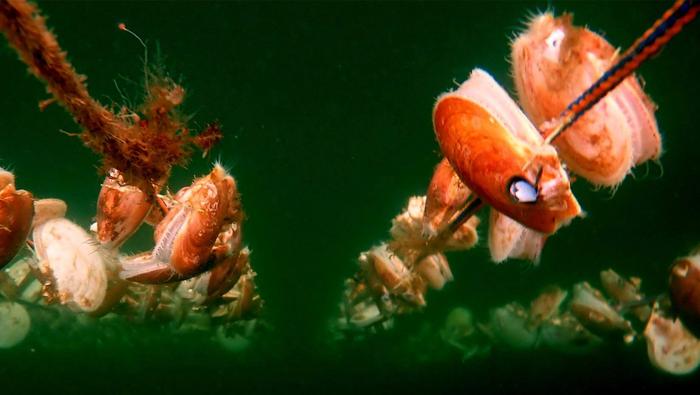
A groundbreaking study conducted by researchers at the University of Maine’s Aquaculture Research Institute and the Darling Marine Center is paving the way for a deeper understanding of efficient practices in growing Atlantic sea scallops (Placopecten magellanicus). As this species garners increasing interest in Maine’s aquaculture sector, this research emerges as a critical guide for commercial growers, particularly those in the nascent scallop farming industry.
The study was published in the prestigious academic journal Aquaculture and provides an invaluable comparison between two widely used scallop farming methods: ear-hanging and lantern net culture. By evaluating these methods over a complete grow-out cycle, the research aims to determine which approach can yield superior results for commercial scallop growers interested in optimizing their production efforts. The lead researcher, Christopher Noren, a postdoctoral researcher at UMaine, emphasizes the importance of these findings, noting how they can directly influence the profitability of growers operating in competitive seafood markets.
Maine’s scallop aquaculture industry remains in its infancy, yet it is eager to expand production in response to growing consumer demand. Traditionally, the suspended culture method has been the standard approach, with farmers utilizing heavy multi-tiered lantern nets to cultivate scallops until they reach harvestable size. However, this technique comes with a significant drawback; it necessitates frequent maintenance, predominantly to combat biofouling, which represents an unwanted accumulation of microorganisms, plants, and animals that can interfere with scallop growth.
In contrast, the ear-hanging method, borrowed from Japanese scallop farming techniques, offers a potentially more efficient alternative. This process involves drilling a small hole in the scallop’s shell and suspending it on a line, thereby enhancing water flow around the scallops. This increased water movement can optimize growth conditions and potentially lessen the maintenance demands that come with traditional net culture methods.
To accurately compare the effectiveness of these two farming techniques, researchers collaborated with two commercial scallop farms situated in Maine’s Penobscot Bay and Frenchman Bay. Over the span of four years, they meticulously tracked growth metrics for scallops, focusing particularly on shell height and adductor muscle weight—crucial factors for market value, as the adductor muscle is the primary edible portion of the scallop.
The results of the study yield compelling insights into the efficacy of ear-hanging versus lantern net culture. Scallops cultivated using the ear-hanging method exhibited slightly larger shell heights, with increases ranging from 1% to 4% compared to their lantern net counterparts. More significantly, researchers found that scallops grown via ear-hanging culture exhibited up to a remarkable 12% increase in adductor muscle weight. Given that larger adductor muscles command higher prices in U.S. seafood markets, these findings suggest that ear-hanging techniques may provide an advantageous pathway for growers aiming to maximize profitability.
Christopher Noren remarks, "We wanted to provide growers with data they could actually use on the water. By comparing these two methods across a full grow-out cycle, we were able to identify where the biological advantages lie and how they might translate to better yields and more efficient operations." His sentiment underscores the practical significance of this research within the realm of aquaculture, where sound data can guide operational decisions.
Temperature also played a pivotal role in determining scallop growth outcomes. Scallops raised through ear-hanging techniques demonstrated accelerated growth in optimal temperature ranges, specifically between 50 and 59 degrees Fahrenheit. However, this method also rendered scallops more vulnerable to adverse winter conditions, impacting their development when compared to scallops grown in lantern nets. This nuance adds another dimension for farmers to consider when choosing their cultivation techniques.
Co-author Damian Brady, a noted oceanography professor at UMaine, states, "These findings give scallop farmers a clearer picture of how different methods impact growth and harvest timing. Understanding the trade-offs between techniques will help inform decisions about production strategies." Such insights become increasingly essential as the aquaculture sector in Maine aims to bolster local seafood supplies while concurrently ensuring sustainability.
As the United States grapples with the reality that much of its seafood, including scallops, is imported from foreign markets, the rise of domestic scallop aquaculture has the potential to change this landscape significantly. With growing consumer interest in locally sourced seafood, research that enables Maine farmers to fine-tune their operations becomes ever more crucial for improving profitability while supporting local economies.
Andrew Peters, owner of Vertical Bay LLC and co-author on the study, expresses the importance of the research by stating, "This research gives us real-world numbers to work with. Understanding how small changes in gear choice impact growth and market value helps us make smarter decisions as we scale up scallop farming in Maine." Through refining gear technologies and adopting methods that emphasize efficiency, local farmers can work toward establishing a resilient and sustainable scallop aquaculture industry in the Gulf of Maine.
This study stands as a beacon for the future of scallop farming in the U.S., highlighting the necessity of data-driven practices that balance growth efficiency with labor demands. With ongoing research and exploration into optimal farming methods, Maine could very well emerge as a leader in domestic scallop aquaculture, sustaining both its marine resources and local communities.
The future of scallop aquaculture relies on such innovative approaches, merging traditional practices with modern insights. Continued collaboration between scientists, farmers, and industry stakeholders remains essential for advancing not just scallop production but the sustainability of aquaculture in general. As Maine’s scallop industry continues to grow, this research serves as a critical stepping stone, illuminating pathways that could redefine the seafood supply chain in the United States for years to come.
Cite Scienmag News
Violet Maxwell. (April 4, 2025). Exploring Optimal Techniques for Cultivating Atlantic Sea Scallops: UMaine Research Insights. Scienmag. https://scienmag.com/exploring-optimal-techniques-for-cultivating-atlantic-sea-scallops-umaine-research-insights/
Violet Maxwell. "Exploring Optimal Techniques for Cultivating Atlantic Sea Scallops: UMaine Research Insights." Scienmag, 4 April 2025, https://scienmag.com/exploring-optimal-techniques-for-cultivating-atlantic-sea-scallops-umaine-research-insights/. Accessed 3 September 2026.
Violet Maxwell. "Exploring Optimal Techniques for Cultivating Atlantic Sea Scallops: UMaine Research Insights." Scienmag. April 4, 2025. https://scienmag.com/exploring-optimal-techniques-for-cultivating-atlantic-sea-scallops-umaine-research-insights/


