


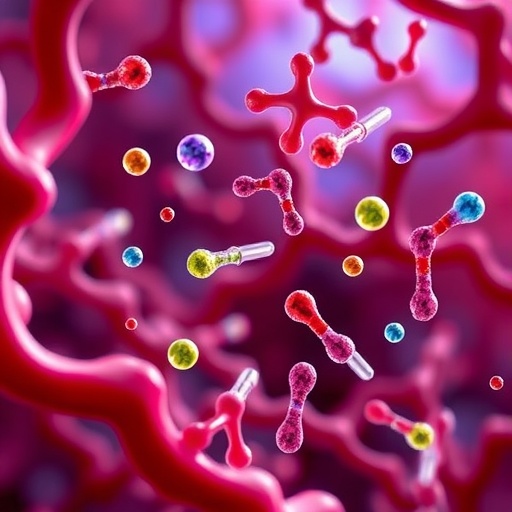
In a groundbreaking study published in Angiogenesis, researchers have illuminated the complex interplay of extracellular vesicles (EVs) in the context of atherosclerosis. This cardiovascular disease, characterized by the accumulation of plaques within arterial walls, has long challenged scientists and clinicians alike. The newly uncovered roles of EVs raise exciting prospects for targeted therapies that may revolutionize treatment approaches.
Extracellular vesicles, which are nano-sized particles released by cells, play a pivotal role in cell-to-cell communication. They serve as carriers of various biomolecules, including proteins, lipids, and RNA, facilitating physiological processes. Importantly, their presence in bodily fluids and their interaction with recipient cells make them fascinating subjects of investigation for understanding disease mechanisms, particularly in atherosclerosis.
The authors, led by researchers Zhang, W., and Wu, meticulously explored diverse sources of EVs in the context of atherosclerosis. Their findings indicate that these vesicles can originate from various cell types, including endothelial cells, smooth muscle cells, and macrophages. This diversity not only highlights the complexity of atherosclerotic pathology but also underscores the potential for utilizing EVs as biomarkers for disease progression.
Moreover, the research provides compelling evidence that the cargo within EVs can vary significantly depending on their originating cell type. For instance, EVs derived from macrophages exhibit pro-inflammatory components, while those from endothelial cells may carry regenerative signals. This differential cargo composition suggests that targeting specific EV populations might offer tailored therapeutic strategies, enhancing efficacy and minimizing adverse effects in patients.
In addition to their biomarker potential, the study elaborates on the therapeutic applications of EVs. The authors describe how engineering EVs to deliver therapeutic agents, such as anti-inflammatory drugs or gene-editing components, could pave the way for innovative treatments. This notion of harnessing the natural transport capabilities of EVs aligns with current trends in precision medicine, where treatments are increasingly individualized based on a patient’s unique profile.
The implications of these findings reach beyond atherosclerosis. The study’s insights into the diverse roles of EVs could extend to other cardiovascular diseases and conditions characterized by inflammation. By advancing our understanding of EV-mediated pathways, researchers may unveil commonalities that transcend individual disease states, leading to broader therapeutic avenues.
Furthermore, the research emphasizes the importance of understanding the environmental factors that influence EV biogenesis. Conditions such as hypoxia or oxidative stress, prevalent in atherosclerotic plaques, significantly impact the production and functionality of EVs. Therefore, elucidating the relationship between these environmental cues and EV characteristics will be essential for developing a comprehensive therapeutic strategy.
As the field of EV research continues to grow, the necessity for standardized methods to isolate and characterize these vesicles becomes paramount. The study highlights that variability in isolation protocols could lead to discrepancies in study outcomes, necessitating collaborative efforts to establish robust methodologies. Such standardization could also facilitate the translation of findings from bench to bedside, ensuring that therapeutic applications of EVs reach clinical settings efficiently.
To further explore the potential of EVs in atherosclerosis, longitudinal studies will be crucial to track the changes in EV profiles during disease progression and treatment responses. By understanding how EVs evolve in relation to therapeutic interventions, researchers can better assess their utility as dynamic biomarkers for monitoring disease activity and treatment efficacy.
The research conducted by Zhang et al. serves as a clarion call for the scientific community to invest in understanding the multifaceted roles of EVs. Not only do these vesicles represent a promising frontier for enhancing diagnosis and treatment, but they also challenge existing paradigms in our approach to cardiovascular diseases.
Moreover, the implications of this research extend into the realms of regulatory science and therapeutic approval processes. As EV-based therapies move closer to realization, regulatory agencies will need to address the unique challenges associated with these nanoscale entities. Establishing clear guidelines for the manufacturing, testing, and approval of EV products will be essential to ensure their safety and efficacy in clinical applications.
As we stand on the cusp of potential breakthroughs in atherosclerosis treatment, the insights gained from this research underscore the need for an integrated approach that encompasses basic science, clinical research, and regulatory frameworks. Effective collaboration among researchers, clinicians, and regulatory bodies will be essential to translate findings into real-world therapies that can significantly impact patient outcomes.
In conclusion, the exploration of extracellular vesicles in atherosclerosis opens a myriad of possibilities that bridge scientific understanding and therapeutic innovation. As the complexities of these vesicles become clearer, they may well form the foundation for next-generation therapies that not only combat atherosclerosis but also enhance our understanding of cardiovascular health.
Zhang, Y., Zhang, W., Wu, Z. et al. Diversity of extracellular vesicle sources in atherosclerosis: role and therapeutic application.
Angiogenesis 28, 34 (2025). https://doi.org/10.1007/s10456-025-09983-7
Cite Scienmag News
Drew Townsend. (January 23, 2026). Exploring Extracellular Vesicle Diversity in Atherosclerosis. Scienmag. https://scienmag.com/exploring-extracellular-vesicle-diversity-in-atherosclerosis/
Drew Townsend. "Exploring Extracellular Vesicle Diversity in Atherosclerosis." Scienmag, 23 January 2026, https://scienmag.com/exploring-extracellular-vesicle-diversity-in-atherosclerosis/. Accessed 3 September 2026.
Drew Townsend. "Exploring Extracellular Vesicle Diversity in Atherosclerosis." Scienmag. January 23, 2026. https://scienmag.com/exploring-extracellular-vesicle-diversity-in-atherosclerosis/


