


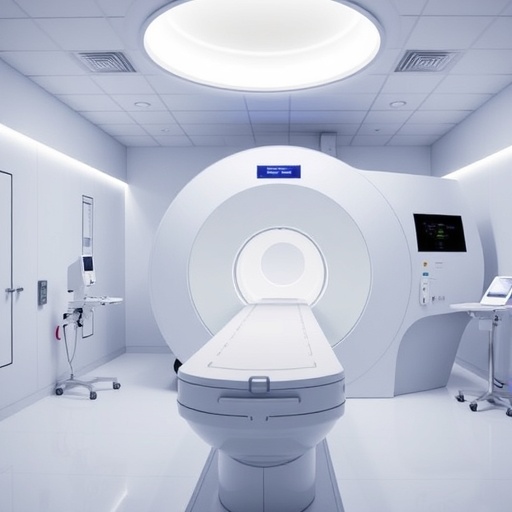
In recent years, proton therapy has emerged as a powerful and precision-driven modality in the arsenal of cancer treatment. Unlike traditional radiotherapy that employs X-rays, proton therapy utilizes positively charged particles known as protons to target malignancies. This approach offers the distinct advantage of delivering maximal radiation dose directly to tumors while significantly sparing the surrounding healthy tissues. However, the deployment of such advanced therapy remains uneven across Europe, influenced heavily by geographical, economic, and infrastructural factors. New research presented at the 2026 Congress of the European Society for Radiotherapy and Oncology (ESTRO) sheds light on the accessibility of proton therapy centers in Europe and proposes strategic expansions that could revolutionize oncology care continent-wide.
Currently, proton therapy centers are limited to 29 facilities which collectively ensure that approximately 59% of cancer patients across Europe have reasonable access to this cutting-edge treatment within a four-hour drive. This geographic distribution contrasts starkly with the epidemiological need and demonstrates significant disparities depending on the region. Such disparities often translate to increased patient burden in terms of travel, costs, and treatment delays, which can critically affect outcomes. Sophisticated mapping studies deployed in this research utilize computational modeling to assess population coverage more accurately and identify underserved areas crucial for intervention.
One compelling dimension of the research is the exploration of cross-border accessibility. By allowing patients to access proton therapy facilities across national boundaries without restrictions, access coverage can instantly increase to 65%, representing an additional 32 million people with better treatment options. This finding highlights the potential benefits of enhanced international collaboration and policy reform in healthcare access, underscoring the critical role of political will and clinical coordination in addressing cancer survival gaps.
Looking forward to 2030, the study projects that the addition of 21 new, already planned proton therapy centers will expand coverage to 80% of the European population. However, significant regional ‘blind spots’ remain, notably in Northwestern Romania, Northern Greece, Southern Italy, Northern Ireland, and Northeastern Poland. The deployment of five additional strategically placed centers in these regions could elevate the coverage to an impressive 87%, bridging many current inequities and setting a benchmark for equitable healthcare delivery.
Dr. Dominik Wawrzuta, the lead author of this compelling study, emphasizes that geographic disparities in access do not hinge solely on the presence of facilities but also on their proximity and convenience of travel. Even within countries housing proton therapy centers, patients frequently face long journeys, compounding physical and psychological stressors during treatment. This insight advocates not only for increased investment but also for thoughtful placement of new centers to optimize both capacity and equitable accessibility.
In an intriguing complementary study, European researchers have focused on the niche yet critical application of proton therapy in treating cancer during pregnancy. Given the rarity but complexity of such cases, this work strategically addresses the dual challenge of effectively managing maternal cancer while minimizing radiation exposure to the developing fetus. Proton therapy’s physical properties, especially its precise dose deposition with minimal exit dose beyond the target tissue, present a therapeutic advantage in this delicate clinical scenario.
Dr. Maite Romero-Expósito’s survey-based investigation uncovers that proton therapy has been utilized in at least 26 reported cases involving pregnant patients, predominantly for cancers located in the head, neck, or thoracic regions. Treatment typically occurs in the third trimester, a period crucial for balancing fetal development and maternal health, highlighting the need for precise dosimetry and stringent radiation protection protocols tailored to this vulnerable population. The team’s development of detailed guidelines and checklists enhances the safety and efficacy of such treatments moving forward.
Central to optimizing proton therapy’s clinical impact is rigorous treatment planning and radiation monitoring. This involves comprehensive imaging, robust computational modeling of radiation dispersal, and precise dose assessments outside the target volume to safeguard the fetus and surrounding critical structures. The European research collaboration underscores that sharing clinical experience and harmonizing protocols across centers will fortify the evidence base and improve patient outcomes globally.
Commenting on these advances, ESTRO President-Elect Professor Barbara Jereczek-Fossa acknowledges the transformative potential of proton therapy within the continuum of cancer care. She highlights how innovative research identifying geographic and clinical gaps, coupled with strategic planning, can democratize access to advanced therapies. Notably, proton therapy offers distinct benefits for pediatric cancers and malignancies in sensitive anatomical sites such as the brain and eyes, as well as for pregnant patients where safety concerns are paramount.
The integration of proton therapy into standard oncology practice depends not just on technological availability but on multidisciplinary cooperation, health policy reform, and international resource sharing. The ESTRO 2026 studies lay a data-driven roadmap for expanding proton therapy infrastructure, ensuring equitable patient access, and fostering clinical applications that ameliorate the burden of cancer while tailoring treatment to complex patient groups.
Ultimately, making proton therapy widely accessible across Europe by 2030 will require a blend of smart infrastructure investments, regulatory harmonization, and comprehensive education for healthcare providers on its indications and safety protocols. Such systemic approaches promise to enhance survival rates, reduce treatment-related morbidity, and provide patients and their families with greater hope during one of life’s most challenging battles.
Meeting: ESTRO 2026
Cite Scienmag News
Nathaniel Bowman. (May 14, 2026). Expanding Proton Therapy Access: Five New Centres Planned Across Romania, Greece, Italy, Northern Ireland, and Poland to Serve Patients Europe-Wide. Scienmag. https://scienmag.com/expanding-proton-therapy-access-five-new-centres-planned-across-romania-greece-italy-northern-ireland-and-poland-to-serve-patients-europe-wide/
Nathaniel Bowman. "Expanding Proton Therapy Access: Five New Centres Planned Across Romania, Greece, Italy, Northern Ireland, and Poland to Serve Patients Europe-Wide." Scienmag, 14 May 2026, https://scienmag.com/expanding-proton-therapy-access-five-new-centres-planned-across-romania-greece-italy-northern-ireland-and-poland-to-serve-patients-europe-wide/. Accessed 5 September 2026.
Nathaniel Bowman. "Expanding Proton Therapy Access: Five New Centres Planned Across Romania, Greece, Italy, Northern Ireland, and Poland to Serve Patients Europe-Wide." Scienmag. May 14, 2026. https://scienmag.com/expanding-proton-therapy-access-five-new-centres-planned-across-romania-greece-italy-northern-ireland-and-poland-to-serve-patients-europe-wide/


