


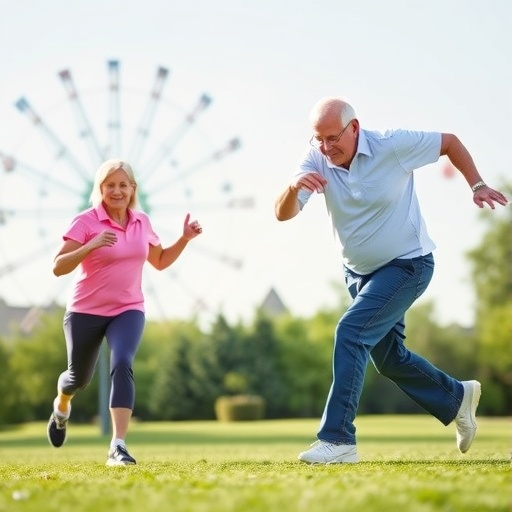
In recent research that highlights an urgent public health concern, a study conducted by Courtay-Breuil et al. investigates the profound influence of a multicomponent exercise intervention on the fear of falling and related gait parameters among community-dwelling older adults. This prospective study showcases how physical activity programs can mitigate the psychological and physical challenges that often accompany aging, providing valuable insights for healthcare professionals and community leaders alike.
Fear of falling is an escalating issue within the elderly population, leading to increased morbidity rates and a decline in quality of life. As many as one in four older adults experience this fear, which significantly impacts their willingness to engage in physical activities. The psychological ramifications of such fears often lead to a vicious cycle: a reduction in mobility initiating further deconditioning and a heightened sense of fear. Within this context, the study’s objectives emerge as not just relevant, but essential to promoting healthier aging.
The study involved a meticulously designed multicomponent exercise program, which combined strength training, balance exercises, and aerobic activities tailored for older adults. The authors underscore that such integrative approaches are pivotal in striking a balance between improving physical health and addressing psychological barriers. Through carefully orchestrated sessions, participants were encouraged to regain confidence in their physical capabilities—and thus actively mitigate their fears.
Participants in the study exhibited a diverse range of ages, backgrounds, and baseline fitness levels, emphasizing the need for inclusivity in interventions designed for older adults. The engagement strategies implemented in this exercise program aimed to foster an environment of camaraderie and support, capitalizing on social interaction to further enhance motivation among participants. The findings from this broad demographic showcase the program’s adaptability, reinforcing its potential for widespread application.
Considerable attention was given to gait parameters, which serve as critical indicators of an individual’s mobility and overall health. The study employed advanced gait analysis techniques to assess improvements in walking speed, stability, and strength, providing a clear picture of how targeted interventions could translate to substantial physical benefits. By systematically documenting these changes, the research not only examines average outcomes but also individual progress, paving the way for future personalized interventions.
Importantly, this study highlights the correlation between reduced fear of falling and enhanced gait parameters. As participants became more engaged in the exercise regimen, their self-reported fears diminished, showcasing the profound psychological effects of physical activity. The authors articulate how this relationship is indicative of broader shifts in perception and behavior, a positive outcome that could reverse the detrimental cycles perpetuated by fear and inactivity.
The intervention was not without challenges, as many older adults face various barriers to regular physical activity, including chronic health conditions and limited access to safe exercise environments. The researchers addressed these concerns by providing tailored modifications to exercises, ensuring that all participants could engage at their own level of comfort and ability. This personalized approach is paramount, showcasing how comprehensive programs can be adapted to meet the unique needs of each individual, thus fostering inclusivity.
Future directions of this line of research may involve longitudinal studies that examine the long-term effects of such interventions on both physical health and psychological well-being. The researchers suggest that ongoing engagement in exercise will likely yield sustained benefits, creating a ripple effect that fosters healthier lifestyles beyond the intervention period. Additionally, exploring the role of technology, such as wearable devices that track activity levels, could enhance accountability and motivation in older adults.
As populations around the globe age, the relevance of studies like those conducted by Courtay-Breuil et al. grows increasingly significant. Policymakers, healthcare practitioners, and community organizations must heed the implications of these findings to develop programs that encourage this age group to maintain active lifestyles. The action steps derived from this research can transform community health initiatives and support systems, ultimately aiming for a future where aging is accompanied by vitality rather than fear.
In conclusion, the study contributes a comprehensive understanding of how multicomponent exercise interventions can have a dual impact on older adults by improving their physical gait parameters while simultaneously diminishing their fear of falling. Ultimately, fostering confidence and encouraging active participation in physical activities creates a foundation for healthier aging, paving the way for enhanced quality of life as individuals advance into their senior years. This research thus serves not only as an immediate call to action but also as a beacon of hope for future health interventions aimed at this vulnerable population.
As our society continues to grapple with the implications of an aging population, studies like this remind us that fostering resilience and independence in older adults is an attainable goal. The emphasis on community-based solutions underscores the importance of collaboration across sectors—healthcare, community organizations, and public policy—to create environments that prioritize active living among seniors. It’s a collective responsibility, and one that holds promise for a healthier future as we redefine the standards of aging.
Cite Scienmag News
Ophelia Keating. (August 31, 2025). Exercise Reduces Fear of Falling in Older Adults. Scienmag. https://scienmag.com/exercise-reduces-fear-of-falling-in-older-adults/
Ophelia Keating. "Exercise Reduces Fear of Falling in Older Adults." Scienmag, 31 August 2025, https://scienmag.com/exercise-reduces-fear-of-falling-in-older-adults/. Accessed 3 September 2026.
Ophelia Keating. "Exercise Reduces Fear of Falling in Older Adults." Scienmag. August 31, 2025. https://scienmag.com/exercise-reduces-fear-of-falling-in-older-adults/


