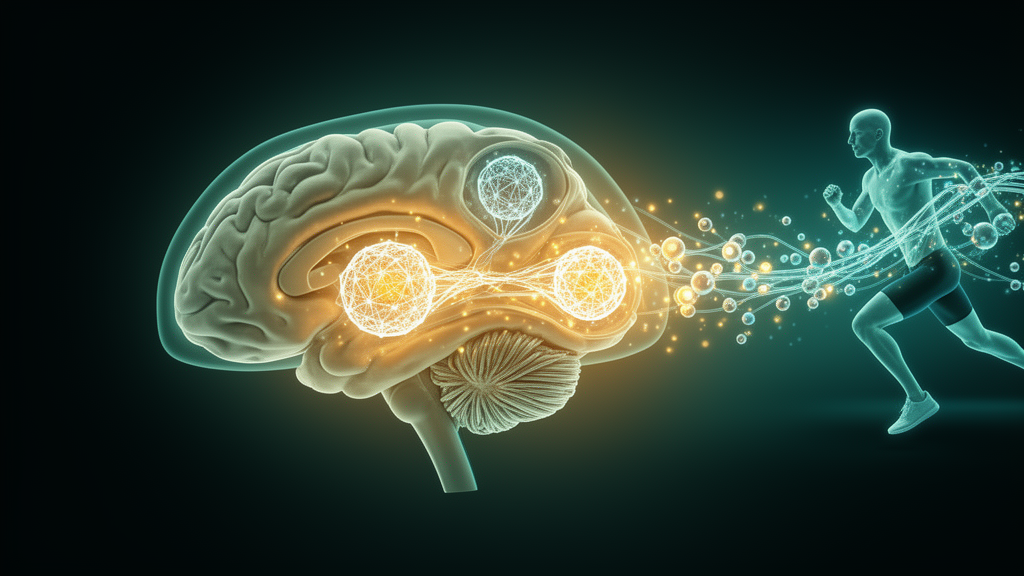
A new mini review published in Frontiers in Physiology argues that this exercise-associated lactate pulse may reach the injured brain after ischemic stroke and, by chemically modifying a structural protein called α-tubulin, help drive the neural remodeling that underlies functional recovery. The authors, Jing Guo and Hongxiao Wang of Hanshan Normal University in China, are careful to frame the idea as a candidate mechanism rather than a proven pathway. Their central message is that the pieces of the puzzle fit together plausibly, but the crucial causal link — showing that lactate-driven modification of tubulin is actually necessary for recovery — has not yet been demonstrated.
The proposal rests on a relatively recent discovery in molecular biology: lysine lactylation. First described in 2019, this is a post-translational modification in which a lactate-derived lactyl group is attached to lysine residues on proteins, altering their behavior. In 2024, researchers identified α-tubulin lysine 40 (K40) lactylation as a direct metabolic regulator of microtubule dynamics. Microtubules are the cylindrical protein filaments that give neurons their shape, power long-range intracellular transport, and enable the growth-cone exploration, branching, and neurite extension that allow axons and dendrites to remodel after injury. In cultured hippocampal neurons, increased K40 lactylation enhanced microtubule dynamics and promoted neurite outgrowth and branching, and mutating the K40 site attenuated these structural effects. Intriguingly, the enzyme HDAC6 — normally known as a cytosolic deacetylase that removes acetyl groups from tubulin — was shown to catalyze lactylation in a lactate-dependent manner, an unexpected dual role the review calls the HDAC6 paradox.
The exercise side of the equation comes from a 2026 mouse study that is the principal preclinical evidence for the hypothesis. In mice subjected to ischemic stroke, moderate treadmill exercise begun on poststroke day 6 — running at 10 meters per minute for 30 minutes daily over 14 days — increased circulating and brain lactate, raised global protein lactylation and α-tubulin K40 lactylation specifically, and was accompanied by increased neurogenesis, synaptic-plasticity markers, and functional recovery. Exogenous sodium L-lactate produced a related phenotype, while dichloroacetate, a drug that shifts pyruvate toward oxidation and lowers lactate-related readouts, attenuated several exercise-associated benefits. Notably, the timing mattered: when exercise began on day 3 instead of day 6, survival was poorer. The study used only male mice, and the authors of the review emphasize that this delayed, moderate regimen cannot be assumed feasible or safe for patients with acute or severe stroke disability.
Between the systemic lactate pulse and the neuronal tubulin lies a chain of transport physiology that is reasonably well established in humans. During sufficiently intense aerobic exercise, higher arterial lactate availability can drive net cerebral uptake and oxidation of lactate, as shown by human arteriovenous and isotope-tracer studies. Monocarboxylate transporters MCT1, MCT2, and MCT4 provide routes for lactate to cross the neurovascular unit and neuronal membranes. But the review stresses an important gap: these findings establish transport and oxidation, not the delivery of lactyl carbon to α-tubulin in the poststroke brain. The origin of the lactate pool that would modify tubulin remains uncertain, because ischemic tissue itself accumulates lactate and astrocytes can supply locally generated lactate to neurons. An exercise-associated rise in brain lactate therefore does not prove that the lactyl group on tubulin originated in exercising skeletal muscle; stable-isotope tracing will be needed to distinguish circulating lactate from ischemic or glial sources.
Lactate also has several well-documented routes to influence the brain that operate independently of tubulin, and the review is explicit that these parallel mechanisms could explain exercise benefits attributed to K40 lactylation. Lactate has been linked to exercise-responsive hippocampal BDNF signaling, acting through a SIRT1-PGC-1α-FNDC5 pathway; to HCAR1-dependent cerebrovascular adaptation and VEGF-mediated angiogenesis; to NMDA receptor-dependent plasticity-gene expression; and to astrocyte-neuron lactate transfer required for long-term memory formation. In mice, acute exercise increased cerebellar MCT2 mRNA without a corresponding protein increase, and pharmacological blockade of cerebellar lactate transport impaired motor performance. Exogenous L-lactate can also be neuroprotective in experimental focal cerebral ischemia, reducing neuronal injury after oxygen-glucose deprivation or transient middle cerebral artery occlusion in rodents — though those studies predate the discovery of protein lactylation and cannot distinguish among substrate oxidation, redox effects, receptor signaling, and protein modification.
The translational picture is further complicated by an incomplete human clinical record. The LacAVC trial (NCT04858139) was an exploratory randomized phase IIa study of a 20-minute intravenous lactate infusion after endovascular treatment for stroke, designed primarily to test brain entry and metabolic effects. The registry lists the study as terminated after 28 enrollments because recruitment was slow and a change in routine acute-stroke imaging and management risked selection bias — not for a prespecified futility result — and no trial results have been posted. A 2026 conference abstract reported preliminary safety and cerebral-bioavailability findings from 11 lactate-treated and 10 placebo-treated patients: lactate infusion increased the lactate-to-creatine ratio in healthy brain tissue, but no significant increase was reported in the ischemic core or penumbra. The review concludes that these findings neither prove absence of benefit nor support clinical use, and that lactate supplementation and lactylation-mimetic therapy remain premature.
For patients who cannot walk or produce purposeful limb movement, the review highlights a preclinical exercise-mimetic option. In a 2026 mouse study, electrically evoked skeletal-muscle contractions increased circulating lactate, attenuated neuroinflammation, and improved outcome after acute ischemic stroke, with increased brain Mct1 expression observed in stroke groups. Neuromuscular electrical stimulation and functional electrical stimulation are therefore described as candidate methods for generating a peripheral lactate signal without voluntary locomotion — but the study was preclinical, did not test α-tubulin K40 lactylation, and does not demonstrate benefit in bedridden patients. For medically stable patients, the authors suggest testable modalities such as seated or recumbent cycling, body-weight-supported treadmill or overground walking, arm ergometry, and adapted aerobic-resistance circuits, with workloads individualized for safety. Crucially, no human blood lactate concentration or exercise intensity has been shown to induce α-tubulin K40 lactylation in the poststroke brain, and the authors argue that acute exercise should never be initiated solely to generate lactate.
The review also warns against overgeneralizing lactylation itself as a uniformly beneficial modification. In ischemic stroke, biological effects vary dramatically with the modified protein, lysine site, cell type, and injury context. MeCP2 lactylation at K210/K249 reduces neuronal apoptosis and attenuates ischemic injury, and microglial H3K18 lactylation may promote an anti-inflammatory state. But other substrates show the opposite phenotype: PLBD1 K155 lactylation exacerbates experimental ischemic brain injury, microglial H4K5 lactylation drives a proinflammatory immunometabolic program, and SOD2 K114 lactylation decreases SOD2 activity and is associated with oxidative stress and ferroptotic injury during cerebral ischemia-reperfusion. Even for tubulin, more modification is not automatically better — reduced α-tubulin acetylation, for example, produces microtubule hyperdynamics and axonal overbranching — so K40 lactylation is best viewed as a metabolically responsive component of the tubulin code that may be beneficial only within specific spatial, temporal, and concentration ranges.
What would it take to turn this coherent hypothesis into a causal claim? The review lays out a stringent experimental program: stable-isotope tracing to quantify how much circulating exercise-associated lactate contributes to neuronal tubulin-bound lactyl groups in peri-infarct tissue; a temporally controlled, neuron-specific K40 perturbation to test necessity during exercise, with acetylation-matched controls because K40 is also an acetylation site; factorial blockade of monocarboxylate transport, HCAR1, BDNF/NMDAR signaling, and candidate lactylation machinery to compare parallel routes; and direct measurements of microtubule dynamics, axonal sprouting, and dendritic remodeling to establish the structural intermediate. Until such tests are done, the concurrent increases in lactate, K40 lactylation, and recovery in exercising mice demonstrate association and temporal convergence, not causal mediation, and the current evidence cannot quantify how much of the exercise benefit — if any — flows through this specific branch.
The significance of the review lies less in what has been proven than in the framework it offers. It connects a whole-body physiological perturbation — the lactate pulse of a workout — to a defined molecular substrate in neurons, and it does so while keeping the evidence hierarchy explicit: site-specific molecular mechanism in cultured neurons, increased abundance in poststroke mouse brain after exercise or lactate administration, and an untested functional role in vivo. If future studies confirm that K40 lactylation is necessary for exercise-driven recovery, the implications would extend from rehabilitation design to lactate-targeted therapies. For now, the authors’ conclusion is measured: α-tubulin K40 lactylation is one plausible branch within a pleiotropic lactate and exercise response, and defining feasible stage-specific interventions, tracing lactate provenance, and obtaining human target-engagement data are required before this mechanism can guide stroke rehabilitation or treatment.
Subject of Research: The proposed role of exercise-associated lactate and α-tubulin lactylation in neural remodeling after ischemic stroke
Article Title: From exercise-associated lactate to the tubulin code: α-tubulin lactylation as a candidate mechanism for poststroke neural remodeling
Article References: Guo, J., & Wang, H. (2026). From exercise-associated lactate to the tubulin code: α-tubulin lactylation as a candidate mechanism for poststroke neural remodeling. Frontiers in Physiology, 17, 1972705. https://doi.org/10.3389/fphys.2026.1972705
Image Credits: AI Generated
DOI: 10.3389/fphys.2026.1972705
Keywords: lactate, ischemic stroke, alpha-tubulin, lactylation, exercise, neuroplasticity, microtubules, HDAC6, rehabilitation, LacAVC trial, mouse model, Frontiers in Physiology
Cite Scienmag News
Cassandra Pierce. (October 28, 2026). Exercise-linked lactate may remodel the post-stroke brain through tubulin modification. Scienmag. https://scienmag.com/exercise-linked-lactate-may-remodel-the-post-stroke-brain-through-tubulin-modification/
Cassandra Pierce. "Exercise-linked lactate may remodel the post-stroke brain through tubulin modification." Scienmag, 28 October 2026, https://scienmag.com/exercise-linked-lactate-may-remodel-the-post-stroke-brain-through-tubulin-modification/. Accessed 28 October 2026.
Cassandra Pierce. "Exercise-linked lactate may remodel the post-stroke brain through tubulin modification." Scienmag. October 28, 2026. https://scienmag.com/exercise-linked-lactate-may-remodel-the-post-stroke-brain-through-tubulin-modification/