


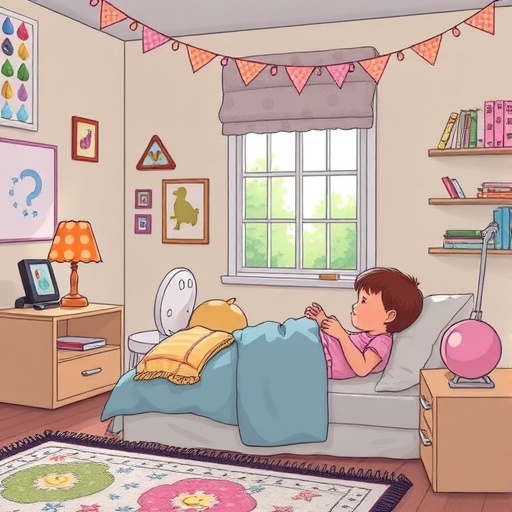
In a contemporary educational landscape, the significance of sleep in Early Childhood Education and Care (ECEC) cannot be understated. A compelling study conducted by J. Hilppö sheds light on this critical aspect, specifically focusing on the contrasting practices surrounding sleep time in two distinct Finnish kindergarten groups. The exploration reveals a tapestry woven with tensions and contradictions, ultimately inviting stakeholders to reconsider the existing paradigms of sleep management in early educational settings.
Sleep, an essential component for healthy child development, often becomes a source of contention among educators, parents, and policymakers. This study highlights that while some care providers advocate for structured nap times to ensure optimal rest, others perceive these practices as restrictive and contrary to children’s natural rhythms. The resulting dichotomy creates a complex environment where the needs of young children may sometimes clash with institutional expectations and parental preferences.
One of the critical findings from Hilppö’s analysis is the role of cultural nuances in shaping sleep practices. In Finland, a country known for its progressive education system, early childhood educators often adopt a holistic approach tailored to each child’s individual needs. However, this adaptability is not without its challenges. The study illustrates that while some educators strive to accommodate varied sleep patterns, others adhere strictly to scheduled nap times, reflecting broader societal beliefs about discipline and structure.
Moreover, the perceptions of sleep vary not only among educators but also between parents and teachers. For some parents, the idea of strictly enforced sleep is reassuring, providing a sense of order and predictability in their children’s day. Others, however, question the necessity of mandated nap times, arguing that children should be allowed to listen to their own bodies. This clash of ideologies emphasizes the need for open communication between home and educational settings.
In Finnish kindergartens, the discussion surrounding children’s sleep practices reveals deeply embedded cultural values that impact early education. Some educators advocate for a more relaxed, child-led approach, prioritizing personalized experiences over rigid schedules. This philosophy aligns with Finland’s educational principles, emphasizing the importance of play and exploration in early childhood. On the other hand, the adherence to schedules hints at a more structured framework that aims to instill discipline and routine, which are equally valued in many educational philosophies.
Importantly, the study delves into the psychological implications of sleep practices on children. When compelled to sleep against their natural instincts, children can experience stress and anxiety, leading to behavioral issues. This aspect highlights the delicate balance that early childhood educators must navigate — fulfilling institutional and parental expectations while prioritizing the children’s well-being and mental health. Understanding these dynamics is vital for fostering an environment where children can thrive both academically and emotionally.
Equally noteworthy is the influence of peer dynamics on sleep patterns. In group settings, children often mimic their peers’ behavior, leading to varying sleep outcomes. This phenomenon can either promote adherence to a group nap time or, conversely, encourage children to resist sleep altogether if their peers are awake. The study suggests that educators must be acutely aware of these social interactions, as they can significantly impact the effectiveness of sleep protocols.
The implications of Hilppö’s findings extend beyond Finnish kindergartens, resonating with early childhood education systems worldwide. As educators globally grapple with similar challenges regarding sleep management, this research invites a renewed discourse on best practices. The conversation should encompass a wider array of stakeholders, including educators, parents, and health professionals, all of whom contribute to shaping children’s experiences during their early developmental years.
The intersection of sleep practices and educational philosophy prompts a critical examination of existing frameworks. Should the focus be on enforcing a strictly structured routine, or should it reflect a more flexible model that accounts for individual children’s needs? In an era where the well-being of children is at the forefront of educational discussions, it is essential to cultivate environments that respect and nurture children’s biological needs.
As this research illustrates, recognizing the importance of sleep is integral to fostering healthy development in early childhood. The study advocates for a more nuanced understanding of sleep dynamics, encouraging educators to adopt practices that harmonize institutional guidelines with children’s innate needs. A collaborative effort among educators, parents, and policymakers is necessary to create sleep-friendly environments conducive to children’s growth and learning.
Hilppö’s exploration ultimately highlights the urgent need for ongoing dialogue about sleep in early education, breaking down barriers and promoting a collective understanding of children’s needs. By fostering an awareness of the tensions and contradictions inherent in sleep practices, stakeholders can work toward a more adaptable, holistic approach that prioritizes the well-being of children in educational settings across the globe.
In conclusion, the study of sleep practices within Finnish kindergartens serves as a microcosm for broader educational themes. As researchers and practitioners continue to explore the intricacies of early childhood education, the discourse around sleep must evolve, embracing a holistic perspective that champions both structure and flexibility. In this pursuit, the well-being of children must always remain at the heart of educational priorities, ensuring they receive the nurturing support vital for their emotional and cognitive development.
Hilppö, J. Troubled Sleep in ECEC: Exploring Tension and Contradictions in Two Finnish Kindergarten Groups’ Sleep Time Practices.
Early Childhood Educ J (2025). https://doi.org/10.1007/s10643-025-02070-y
Cite Scienmag News
Courtney Benton. (November 18, 2025). Examining Sleep Practices in Finnish Kindergartens. Scienmag. https://scienmag.com/examining-sleep-practices-in-finnish-kindergartens/
Courtney Benton. "Examining Sleep Practices in Finnish Kindergartens." Scienmag, 18 November 2025, https://scienmag.com/examining-sleep-practices-in-finnish-kindergartens/. Accessed 3 September 2026.
Courtney Benton. "Examining Sleep Practices in Finnish Kindergartens." Scienmag. November 18, 2025. https://scienmag.com/examining-sleep-practices-in-finnish-kindergartens/


