


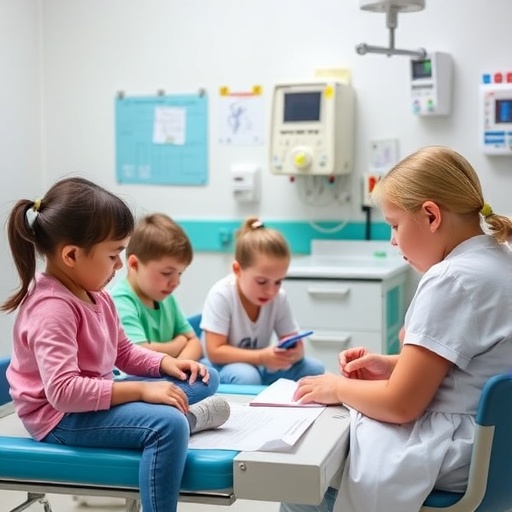
In recent years, the growing field of pediatric emergency care has drawn attention not only from healthcare professionals but also from researchers concerned with the psychological ramifications of medical emergencies. A new study by Yeşil and Butun, titled “Investigation of State Anxiety Levels of Parents Admitted to the Paediatric Emergency Department,” sheds light on a critical aspect of emergency healthcare that is often overlooked—the anxiety experienced by parents when their children require urgent medical attention.
The study, slated for publication in BMC Pediatrics in 2025, provides an in-depth analysis of the psychological state of parents in pediatric emergency scenarios. This research is particularly pertinent given the heightened emotional stress that accompanies any medical emergency, especially when involving children. The study utilizes a rigorous methodology to quantify state anxiety levels among parents, contributing significantly to the existing body of literature on parental anxiety in high-stress medical situations.
The authors employed a quantitative approach, gathering data through standardized anxiety measurement scales. This method allows for reliable assessments of state anxiety, providing a snapshot of parental emotions in the immediate aftermath of a child’s emergency medical needs. Such empirical data is crucial; it not only highlights the intense emotional strain parents face but also facilitates better understanding and integration of psychological support mechanisms into pediatric emergency care systems.
Additionally, the context of parental anxiety is increasingly critical in the modern healthcare landscape, where holistic approaches are gaining importance. Parents often act as advocates for their children during emergencies, and their emotional states can significantly influence the quality of care that medical staff can provide. The stress that comes with uncertainty and fear, coupled with the responsibility of making decisions for their child’s health, can be overwhelming. This study elucidates these nuances, emphasizing the need for hospitals to consider the emotional well-being of parents in their practice.
Furthermore, the findings from this study could pave the way for the development of supportive interventions targeted specifically at parents. Healthcare facilities could incorporate training for staff to recognize signs of emotional distress in family members and offer appropriate resources. Such interventions could include counseling services, information dissemination about the medical situation, or simply allowing space for parents to express their concerns and fears.
The implications of Yeşil and Butun’s research extend beyond the walls of hospitals; they speak to a societal awareness that must evolve alongside advancements in medical technology and procedural efficiency. As healthcare continues to progress, so too must our understanding of the psychological dimensions of care that involve not just the patient, but their entire family unit.
Clinical practitioners may find that understanding the dynamics of parental anxiety contributes positively to patient outcomes. When parents feel supported and informed, they may be more likely to engage in the care process, asking questions and making informed decisions that contribute to the child’s recovery. Thus, the emotional management of parents is not just a matter of empathy; it is an essential component of effective medical care.
Moreover, such studies present opportunities for collaboration among psychologists, emergency care professionals, and pediatric specialists. By working together, these professionals can create comprehensive strategies to address families’ emotional needs, integrating psychological services into routine pediatric emergency care. Mental health professionals can provide critical insights into managing anxiety through simple interventions that could be easily implemented in a fast-paced emergency environment.
As the researchers present their findings, a call to action emerges—a systematic inquiry into whether pediatric emergency departments across various healthcare systems are sufficiently equipped to manage the emotional demands of familial participation in care. Assessing current practices will be key to identifying gaps and opportunities for improvement.
Ultimately, by focusing on the emotional landscape that surrounds pediatric emergencies, we acknowledge a significant facet of healthcare that has been historically marginalized. Incorporating parent-centric strategies and support systems could vastly improve the overall experience of pediatric emergency care. Moving forward, we should embrace a model of care that doesn’t just focus on clinical outcomes, but also on the mental and emotional journeys of all who are involved in pediatric emergencies—a model that recognizes that in healthcare, emotional well-being is as essential as physical healing.
As the study continues to receive attention, it is likely to ignite discussions in a variety of circles, not just among healthcare professionals but also among policymakers and educators in the field of mental health. The conversation surrounding the importance of parental awareness and preparedness in emergency settings is gaining momentum, and Yeşil and Butun’s research stands at the forefront, signaling a move toward a more compassionate and holistic model of healthcare.
The discourse on parental anxiety during pediatric emergencies is far from a niche subject; it has implications for public health strategies, emergency preparedness programs, and overall healthcare delivery. This focus on the mental health of parents can lead to broader societal changes in how we perceive and support families in crisis situations.
By prioritizing research like this, we pave the way for a future where mental health is integrated into the very fabric of emergency care—acknowledging that the emotional health of families is just as critical as the physical treatment of children. The findings of this impactful research are set to encourage healthcare systems worldwide to rethink their policies and practices surrounding parental involvement in pediatric emergencies.
In conclusion, Yeşil and Butun’s investigation serves as a vital reminder that healthcare is not just about treating the body; it is also about nurturing the spirit. The emotional circuitry linking parents to pediatric treatment environments must be strengthened, ensuring that while we focus on the child’s health, we are equally attentive to the emotional states of those who care for them. This study adds to the growing body of evidence underscoring the need for a comprehensive view of health—one that recognizes and responds to the innermost feelings of parents in high-stress situations.
Yeşil, A., Butun, A. Investigation of state anxiety levels of parents admitted to the paediatric emergency department.
BMC Pediatr 25, 634 (2025). https://doi.org/10.1186/s12887-025-05976-z
Cite Scienmag News
Glenn Wilkins. (August 31, 2025). Examining Parental Anxiety in Pediatric Emergency Departments. Scienmag. https://scienmag.com/examining-parental-anxiety-in-pediatric-emergency-departments/
Glenn Wilkins. "Examining Parental Anxiety in Pediatric Emergency Departments." Scienmag, 31 August 2025, https://scienmag.com/examining-parental-anxiety-in-pediatric-emergency-departments/. Accessed 3 September 2026.
Glenn Wilkins. "Examining Parental Anxiety in Pediatric Emergency Departments." Scienmag. August 31, 2025. https://scienmag.com/examining-parental-anxiety-in-pediatric-emergency-departments/


