


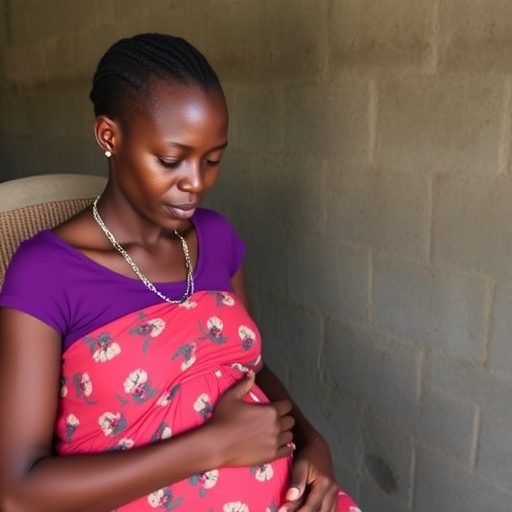
In the heart of Central Africa, the Democratic Republic of the Congo (DRC) grapples with one of the highest maternal and child mortality rates worldwide. Addressing this dire public health crisis has long been a priority for international aid organizations and the DRC government alike. Recently, a groundbreaking study has emerged from this challenging environment, promising a revolutionary approach to maternal and child health by leveraging financial incentives. The study, led by Zeng, Shapira, Gao, and colleagues, presents an in-depth economic evaluation of these incentives using sophisticated decision-tree modeling—an approach that intricately maps out possible outcomes based on real-world data collected through a cluster randomized controlled trial. The implications of their findings extend far beyond the DRC’s borders, hinting at a scalable model for transforming health behaviors in marginalized populations globally.
Financial incentives as a strategy to improve health outcomes are not new; however, their application within low-resource settings like the DRC merits renewed scrutiny, particularly regarding cost-effectiveness and long-term sustainability. This study meticulously explores the multi-dimensional effects of cash transfers to pregnant women and new mothers, designed to encourage the utilization of prenatal care, skilled birth attendance, and postnatal services. By embedding economic evaluation within a decision-tree framework, the authors offer a nuanced understanding of the pathways through which financial support can lead to improved health metrics, including reductions in maternal mortality and childhood illness.
At the core of this research lies an innovative decision-tree model that delineates potential trajectories for pregnant women following the introduction of financial incentives. This model incorporates various probabilities, such as attendance at antenatal clinics, uptake of vaccinations, institutional delivery rates, and postnatal consultation frequencies. Each branch of the decision tree captures a set of outcomes linked to specific behavioral changes induced by the incentives. By simulating these scenarios, the model allows policymakers and health economists to predict the cost-effectiveness of interventions prior to widescale implementation, targeting limited healthcare resources for maximal impact.
The study was embedded within a cluster randomized controlled trial across multiple sites in the DRC, where communities were randomly assigned to either receive the financial incentive program or continue with standard care. This rigorous trial design, combined with the decision-tree model, enables the comparison of health outcomes and economic metrics such as incremental cost-effectiveness ratios (ICERs). What makes this study particularly compelling is its ability to blend empirical trial data with advanced modeling techniques, bridging the gap between fieldwork realities and theoretical policy analysis.
One of the most striking outcomes of the research is the demonstration that modest financial incentives significantly increase the likelihood that women attend antenatal care visits and deliver in health facilities where skilled birth attendants are present. These behaviors directly correlate with substantial drops in neonatal mortality and maternal complications. Importantly, the study quantified not only health improvements but also the economic ramifications, demonstrating the incentives’ potential to reduce long-term healthcare costs by preventing severe health incidents that require costly emergency interventions.
Beyond clinical outcomes, the study addresses a critical challenge in global health interventions—sustainability and adaptability. The decision-tree model enables simulation of various funding scenarios and incentive structures, offering insights into how programs can be optimized within fiscal constraints. This adaptability is vital for countries like the DRC, where volatile economic environments and infrastructural challenges often thwart ongoing public health initiatives.
Moreover, the model shows promise in tailoring interventions to specific subpopulations, recognizing that cultural, geographic, and socioeconomic factors influence health behaviors differently within the DRC. By factoring in these variables, policymakers can craft incentive programs that are culturally sensitive and targeted, increasing the likelihood of community acceptance and sustained behavioral change.
The implications of this research stretch into global policy discourse on the role of conditional and unconditional cash transfers in health. Until now, much of the debate has centered on the social determinants of health, with limited empirical evidence elucidating these interventions’ direct cost-benefit balance. By integrating decision-tree modelling with randomized trial data, this study provides robust quantitative backing that can sway funding agencies and international bodies to invest more confidently in financial incentive-based health programs.
Another profound aspect of the study is its meticulous attention to ethical dimensions. Distributing financial incentives in impoverished settings raises questions about autonomy, dependency, and fairness. The authors navigate these considerations thoughtfully, advocating for transparency and community engagement to ensure incentives serve as empowerment tools rather than coercive devices. This balanced approach sets a precedent for future research and program implementation in vulnerable populations.
Importantly, the authors critique the current infrastructure limitations in the DRC that could impede effective deployment of these incentive schemes. Challenges include limited healthcare facility capacity, shortages of trained medical personnel, and logistical hurdles in cash distribution. The study calls for integrated strategies that couple financial incentives with improvements in healthcare delivery systems, emphasizing a multi-sectoral approach to maternal and child health.
From a methodological standpoint, the use of decision-tree modelling represents a significant advancement in economic evaluations within public health research. This approach enables the decomposition of complex healthcare processes into discrete, analyzable components, illuminating the causal chains through which financial incentives exert their effects. By quantifying uncertainties at each decision node, the model provides a transparent framework for understanding where interventions may succeed or falter.
Critically, the findings hold promise well beyond the DRC, potentially informing maternal and child health initiatives across sub-Saharan Africa and other low-income settings facing similar epidemiological and economic challenges. The study’s rigorous demonstration that targeted financial incentives can yield measurable health gains and economic efficiencies emboldens global efforts to fundamentally reimagine how health systems engage with vulnerable populations.
The timing of this publication is particularly relevant given ongoing debates about how best to achieve the United Nations Sustainable Development Goals (SDGs) related to maternal and child health. As governments and international agencies seek scalable, evidence-based interventions to reduce preventable deaths, this study furnishes a compelling blueprint guiding financial policy design within health programming.
Looking forward, the authors underscore the necessity for longitudinal studies to assess the durability of behavioral changes induced by financial incentives and the long-term impact on population health indicators. Furthermore, they advocate expanding decision-tree modelling applications to encompass additional health domains, such as infectious diseases and chronic conditions, to fully harness the potential of economic evaluation in public health decision-making.
In conclusion, this landmark study from the DRC epitomizes the synergistic power of empirical research, economic modelling, and ethical reflection in tackling one of the most pressing health crises of our time. By illuminating the pathways through which financial incentives can transform maternal and child health outcomes, it paves a translational research path poised to reshape global health strategies in the 21st century, offering renewed hope to millions of women and children vulnerable to preventable suffering.
Cite Scienmag News
Harold Sullivan. (November 27, 2025). Evaluating Financial Incentives for Maternal Health in DRC. Scienmag. https://scienmag.com/evaluating-financial-incentives-for-maternal-health-in-drc/
Harold Sullivan. "Evaluating Financial Incentives for Maternal Health in DRC." Scienmag, 27 November 2025, https://scienmag.com/evaluating-financial-incentives-for-maternal-health-in-drc/. Accessed 5 September 2026.
Harold Sullivan. "Evaluating Financial Incentives for Maternal Health in DRC." Scienmag. November 27, 2025. https://scienmag.com/evaluating-financial-incentives-for-maternal-health-in-drc/


