


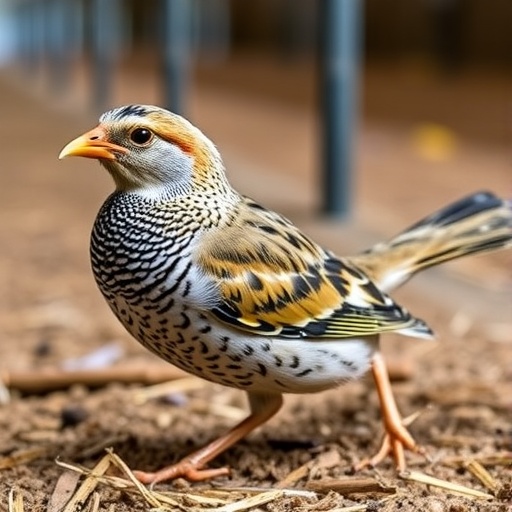
In a significant advancement in avian nutrition research, a group of scientists has embarked on a study aimed at quantifying the digestibility and energy content of two staple feed ingredients—corn and soybean meal—specifically for growing quails. This research is not merely an academic exercise; it holds profound implications for the poultry industry, particularly in enhancing feed efficiency and, ultimately, production sustainability. By measuring apparent ileal digestible energy and apparent metabolizable energy, the researchers hope to provide more precise nutritional recommendations that can lead to healthier, more productive birds.
The study conducted by Ghorbani, Ghazaghi, Khalil, and their co-authors delves into the intricate world of avian digestion. Understanding how quails metabolize different feed ingredients helps form a critical aspect of poultry nutrition. Unlike mammals, birds have unique digestive systems, making it crucial to tailor dietary formulations specifically for them. The research seeks to elucidate the digestibility of corn and soybean meal, two widely used components in poultry diets that contribute significantly to primary energy sources.
Corn is a highly digestible and energy-dense feed ingredient favored in animal nutrition. Its starch content serves as an excellent energy source; however, variations in digestibility can arise due to factors such as genetic strain, age of the birds, and even processing methods. The research focuses on deciphering how quails utilize corn, providing necessary insights into optimizing their diets. Through meticulous testing and analysis, the researchers aim to present findings that could redefine current practices in formulating quail diets.
Similarly, soybean meal, another favored ingredient in poultry formulations, is rich in protein but comes with its own digestibility challenges. Although it is widely recognized for its high nutritional value, the proteins in soybean meal can be complex for quails to break down, necessitating thorough investigation. The findings of this research will aim to clarify how much of the energy in soybean meal is actually accessible to quails, potentially refining the recommendations for its inclusion in feed.
The methodology employed in this research is comprehensive, involving systematic trials and rigorous analysis of quail digestion. The researchers utilized a variety of feeding regimens that included different compositions of the aforementioned feed ingredients. By measuring the apparent ileal digestible energy, they aim to determine how much of the energy content in both corn and soybean meal can be utilized by quails before it reaches the caeca, where fermentation alters its energy availability.
Moreover, measuring apparent metabolizable energy allows for a deeper understanding of how quails convert feed into usable energy for growth and maintenance. This measurement accounts for energy loss through feces and urine, thereby providing a more accurate reflection of the nutritional value of feed ingredients. By focusing on these two energy metrics, the researchers can offer insightful recommendations and nutritional guidelines specific to quail feed formulations.
The application of these findings is particularly important in the context of the ever-evolving poultry industry, where efficiency is paramount. With increasing global demand for poultry products, understanding nutritional requirements and utilizing feed ingredients effectively ensures that producers can meet market needs while also considering the welfare of the birds. Thus, this research contributes to the broader goal of sustainable poultry production.
Furthermore, the study’s results may also shed light on how modifying feed composition can enhance growth rates in quails. As farmers constantly seek to optimize their feeding strategies, the implications of enhanced digestibility and energy utilization could yield significant economic benefits through improved feed conversion ratios. The potential for increased profitability combined with lower environmental impact may serve as a driving force for producers to adopt new feeding practices based on these findings.
This research also marks a collective effort to broaden the body of knowledge concerning avian nutrition, particularly regarding lesser-studied species like quails. The results can lead to more evidence-based practices not only for quail rearing but for other poultry species as well. By establishing a foundation for understanding quail nutrition better, this work contributes to the overarching field of animal science and nutrition, which is vital to the sustenance of global food security.
In sum, Ghorbani et al. provide a comprehensive view of the digestibility and energy metrics associated with corn and soybean meal as feed ingredients for quails. Their findings will not only bring to light important aspects of avian nutrition but may also inspire future research avenues, prompting further exploration into optimizing diets for similar or other poultry species. These insights stand to pave the way for more informed dietary choices, ultimately benefiting both animal welfare and the poultry industry’s sustainability.
Through meticulous research and analysis, the advancements made by these scientists signal a turning point in fostering sustainable poultry production practices while ensuring optimal growth performance in quails. The study exemplifies how scientific inquiry can directly influence agricultural practices, highlighting the importance of ongoing research in shaping the future of animal nutrition.
As poultry production continues to face challenges posed by environmental concerns and food security pressures, research like this becomes increasingly vital. Comprehensive understanding and continuous innovation in the nutritional field are essential for meeting rising demands while sustaining animal health energetically. Thus, the insights derived from this study will serve as essential tools for farmers, nutritionists, and researchers alike, striving towards a sustainable and efficient poultry production system.
Ghorbani, A., Ghazaghi, M., Khalil, M. et al. Measurement of apparent ileal digestible and apparent metabolizable energy of corn and soybean meal for growing quails. Discov Anim 2, 41 (2025). https://doi.org/10.1007/s44338-025-00097-4
Cite Scienmag News
Daisy Hatcher. (September 12, 2025). Evaluating Energy Digestibility in Quail Feed Ingredients. Scienmag. https://scienmag.com/evaluating-energy-digestibility-in-quail-feed-ingredients/
Daisy Hatcher. "Evaluating Energy Digestibility in Quail Feed Ingredients." Scienmag, 12 September 2025, https://scienmag.com/evaluating-energy-digestibility-in-quail-feed-ingredients/. Accessed 4 September 2026.
Daisy Hatcher. "Evaluating Energy Digestibility in Quail Feed Ingredients." Scienmag. September 12, 2025. https://scienmag.com/evaluating-energy-digestibility-in-quail-feed-ingredients/


