


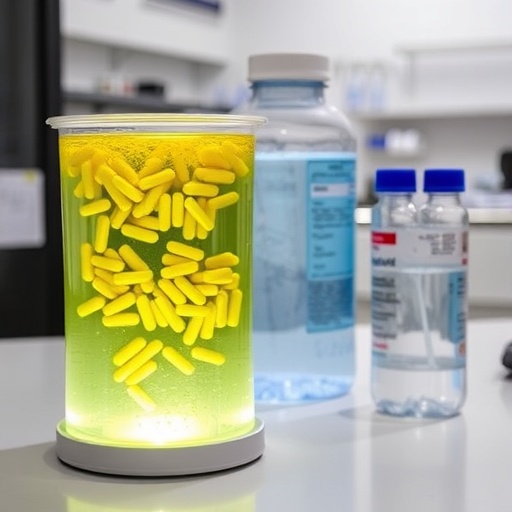
In recent years, the challenge of removing antibiotics from wastewater has become increasingly critical due to the growing prevalence of antibiotic-resistant bacteria. This urgent issue has piqued the interest of researchers in environmental science and engineering. A groundbreaking study, titled “Photocatalytic membrane treatment of antibiotics: combined chemical and toxicological evaluation of effectiveness,” has been published that explores an innovative solution to this problem. This research, led by Schmidt, Aulhorn, and Abdul Latif, has been recognized for its potential to mitigate one of the most pressing environmental concerns of our time.
The study presents a novel approach involving photocatalytic membranes designed to effectively degrade antibiotic compounds present in wastewater. Traditional methods of wastewater treatment, such as activated sludge, often fail to eliminate pharmaceutical contaminants fully. As a result, the utilization of photocatalysis, aided by specially engineered membranes, represents a promising alternative. This method leverages the power of light to activate photocatalytic materials, which then facilitate the breakdown of complex antibiotic molecules into less harmful substances.
Fundamentally, the research hinges on the efficiency of the photocatalytic membranes that are utilized. These membranes are embedded with photocatalysts, such as titanium dioxide, which have shown significant effectiveness in degrading pollutants when exposed to ultraviolet light. The key innovation presented in this study is the integration of these membranes into a cohesive treatment system that enables continuous water filtration and purification simultaneously. This dual function not only improves efficacy but also provides a sustainable, energy-efficient solution to wastewater treatment.
To assess the practical effectiveness of this treatment method, the researchers conducted extensive chemical evaluations of the treated water. They focused on the degradation rates of various antibiotics commonly found in wastewater, such as amoxicillin and ciprofloxacin. Their findings indicated that, under optimal conditions, these antibiotic compounds could be reduced to undetectable levels. Such results are pivotal in addressing concerns about the presence of pharmaceuticals in reclaimed water used for irrigation and other non-potable applications.
Beyond the chemical assessment, the study also delved into the toxicological implications of the treated water. The researchers employed a suite of biological tests to evaluate the ecotoxicity of the effluent post-treatment. This is particularly important as the breakdown products of pharmaceuticals can sometimes be more toxic than their parent compounds. By ensuring that the treatment method not only degrades antibiotics but also renders the byproducts harmless, the researchers significantly contribute to the overall safety of wastewater effluents.
Interestingly, the study also touches on the operational parameters necessary for optimizing the photocatalytic membrane system’s performance. Variables such as light intensity, temperature, and flow rate were meticulously controlled and adjusted throughout the research. This aspect of the study highlights the careful balance between operating conditions and degradation efficiency, which could be crucial for real-world applications where resources and operational capabilities vary greatly.
Moreover, one of the key takeaways from Schmidt and his colleagues’ research is the emphasis on scalability. The integration of photocatalytic technology into existing wastewater treatment frameworks could revolutionize how municipalities approach the daunting task of antibiotic removal. With many urban areas facing stringent regulations regarding water quality, this innovative treatment method could offer a pathway to compliance while also protecting public health.
The environmental impact of antibiotics in water systems has ramifications beyond human health; it extends to aquatic ecosystems and biodiversity. By reducing the prevalence of these harmful compounds, the photocatalytic membrane treatment has the potential to foster healthier waterways. Consequently, the implications of this research reach far into ecological conservation, complementing efforts to maintain the integrity of aquatic habitats.
Community engagement will play a crucial role in the practical application of these findings. As awareness of antibiotic resistance and its environmental implications grows, public support for advanced wastewater treatment technologies could lead to increased funding and research opportunities. The researchers advocate for broader dialogue on integrating these innovative technologies into community planning and environmental policy.
The authors of this study recognize the importance of collaboration in advancing the field of environmental science. By sharing knowledge and resources, researchers can accelerate the development of technologies that not only address current challenges but also anticipate future threats. This collaborative spirit is echoed in the call for multi-disciplinary partnerships to foster innovation in wastewater treatment solutions.
Ultimately, the significance of this research extends beyond academic circles. The work of Schmidt, Aulhorn, and Abdul Latif serves as a beacon of hope in the fight against antibiotic contamination in our water systems. As technologies like photocatalytic membranes evolve and become more accessible, we can expect a substantial shift in how society manages water resources, protecting ecosystems and public health alike.
In conclusion, the pioneering study on photocatalytic membrane treatment for antibiotics sheds light on a viable technical solution to an increasingly urgent environmental challenge. By merging cutting-edge photocatalysis with practical membrane technology, this research points to a future where wastewater can be treated sustainably and effectively. As we continue to explore the intersection of technology and environmental stewardship, findings like these remind us of our responsibility to protect our precious water resources for generations to come.
Schmidt, M., Aulhorn, S., Abdul Latif, A. et al. Photocatalytic membrane treatment of antibiotics: combined chemical and toxicological evaluation of effectiveness.
Front. Environ. Sci. Eng. 19, 163 (2025). https://doi.org/10.1007/s11783-025-2083-7
Cite Scienmag News
Violet Maxwell. (January 17, 2026). Evaluating Antibiotic Removal: Photocatalytic Membrane Methods. Scienmag. https://scienmag.com/evaluating-antibiotic-removal-photocatalytic-membrane-methods/
Violet Maxwell. "Evaluating Antibiotic Removal: Photocatalytic Membrane Methods." Scienmag, 17 January 2026, https://scienmag.com/evaluating-antibiotic-removal-photocatalytic-membrane-methods/. Accessed 5 September 2026.
Violet Maxwell. "Evaluating Antibiotic Removal: Photocatalytic Membrane Methods." Scienmag. January 17, 2026. https://scienmag.com/evaluating-antibiotic-removal-photocatalytic-membrane-methods/


