


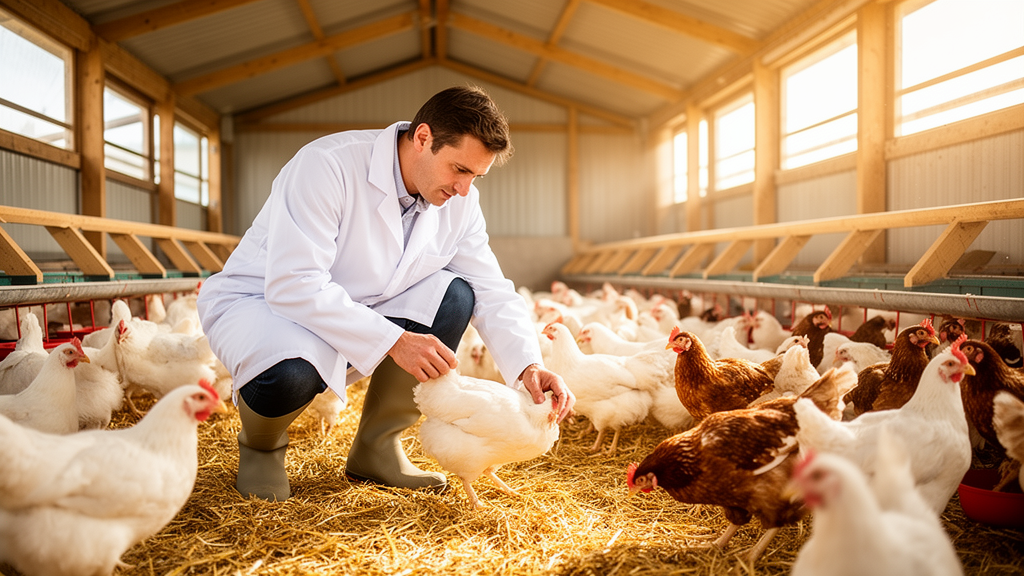
A comprehensive analysis of European Union surveillance data from 2012 to 2020 reveals that free-range and backyard poultry systems exhibit a higher incidence of viral infections compared to intensive farming models. The study, published in the journal BioRisk, examines the prevalence of Avian Influenza, specifically High Pathogenic Avian Influenza and Low Pathogenic Avian Influenza, across different production systems. While organic farming has seen significant growth in the EU over the last decade, driven by consumer demand for welfare-friendly and sustainable products, this expansion has introduced complex epidemiological challenges. The research highlights that the open-air nature of organic systems, which allows birds access to wild environments, creates a distinct vector for viral transmission that differs markedly from the controlled conditions of intensive farming.
The study utilized official data from EU Member States, adhering to unified criteria established by the European Commission to ensure statistical reliability. By aggregating data over a nine-year period, the researchers aimed to move beyond annual snapshots and identify long-term trends in viral disease occurrence. The analysis focused on two primary categories of farm systems: conventional intensive farming, which includes high-density housing of laying hens, broilers, and breeders, and free-range or backyard systems, where birds have access to open spaces. This distinction is critical because the regulatory frameworks for these systems differ significantly regarding drug use, stocking densities, and biosecurity measures.
During the study period, a total of 316,115 tests for Avian Influenza were conducted across the EU. Of these, 7,511 tests returned positive results, representing an overall positivity rate of 2.38 percent. The distribution of tests varied by system, with 139,821 tests performed on birds in intensive farming systems, 73,792 on birds in organic or backyard systems, and 102,502 on wild birds. The results indicated that while intensive systems accounted for the largest number of tests, the proportion of positive results in free-range and backyard systems was notably higher relative to the number of birds tested in those categories.
Specifically, birds in intensive farming systems tested positive in 1,008 cases, which constituted 13.42 percent of all positive results but only 0.78 percent of the total intensive samples. In contrast, birds in organic and backyard systems tested positive in 1,222 cases, representing 16.27 percent of all positive results and 1.65 percent of the total samples in that category. Wild birds emerged as the primary reservoir for the virus, with 5,281 positive cases, accounting for 70.31 percent of all positive results. This high prevalence in wild birds underscores their role as a vector for introducing viral strains into farm populations, particularly those with outdoor access.
The data revealed a concerning trend in the free-range and backyard sectors, where the number of positive cases increased significantly over the study period. In 2018, there was a notable spike in positive results for free-range and backyard birds, with 903 cases recorded, compared to single-digit or low double-digit numbers in previous years. This surge suggests that the interaction between farm birds and wild birds, facilitated by the outdoor access inherent in organic production, poses a substantial risk for viral introduction. The study notes that while organic systems limit the use of synthetic antibiotics and antiparasitic treatments, which may contribute to healthier animal populations in terms of bacterial infections, they do not provide immunity against viral pathogens.
Wild birds have consistently shown the highest positivity rates among all tested categories. From 2017 onwards, wild birds constituted the predominant part of the tested categories, increasing from 18.06 percent in 2012 to 48.23 percent in 2020. The positivity rate in wild birds reached a maximum of 92.21 percent in 2017, indicating a period of intense viral circulation in the wild population. This high level of infection in wild birds correlates with the increased risk to free-range poultry, as these birds spend most of their day in outdoor areas where contact with wild species is likely. The passive surveillance methods used for wild birds, combined with active surveillance for farm birds, provide a comprehensive picture of the viral landscape in the EU.
The study also highlights the limitations of current surveillance methods, particularly the variability in data reporting between different databases such as the European Food Safety Authority, the Animal Disease Information System, and national surveillance networks. Despite these challenges, the unified data collection criteria allowed for a robust comparison between farming systems. The findings suggest that the perceived safety of organic farming, often associated with lower chemical inputs and higher animal welfare, does not necessarily translate to lower viral infection risks. In fact, the open-range nature of these systems may exacerbate the risk of viral transmission from wild reservoirs to farm populations.
The implications of these findings are significant for public health and food safety policy. The study concludes that year-round surveillance is essential for monitoring viral diseases in poultry, particularly in free-range systems. The increasing number of incidences of viral diseases with high zoonotic potential in free-range production necessitates the implementation of additional criteria and requirements for these systems. This may include stricter biosecurity measures, enhanced monitoring of wild bird populations, and improved reporting mechanisms to ensure timely detection and response to outbreaks.
As the demand for organic products continues to grow, it is crucial to balance consumer preferences with public health safety. The study serves as a starting point for further research, emphasizing the need for continued data collection and analysis to track trends in viral disease occurrence. By understanding the dynamics of viral transmission in different farming systems, policymakers and farmers can develop more effective strategies to mitigate risks and ensure the sustainability of poultry production in the EU. The integration of data from subsequent years will be vital in confirming the observed trends and refining the surveillance frameworks in place.
Subject of Research: Evaluation of viral infection levels in intensive and organic poultry farming
Article Title: Evaluation of viral infection levels in intensive and organic poultry farming
Article References: Kirov, P. M., & Alexandrova, R. I. (2022). Evaluation of viral infection levels in intensive and organic poultry farming. BioRisk, 17, 287-296. https://doi.org/10.3897/biorisk.17.77398
Image Credits: AI Generated
Keywords: Evaluation, viral, infection, levels, intensive, organic, poultry, farming, scientific research
Cite Scienmag News
Kristina Jarvis. (October 18, 2026). EU Data Shows Organic Poultry Faces Higher Viral Infection Risks. Scienmag. https://scienmag.com/eu-data-shows-organic-poultry-faces-higher-viral-infection-risks/
Kristina Jarvis. "EU Data Shows Organic Poultry Faces Higher Viral Infection Risks." Scienmag, 18 October 2026, https://scienmag.com/eu-data-shows-organic-poultry-faces-higher-viral-infection-risks/. Accessed 18 October 2026.
Kristina Jarvis. "EU Data Shows Organic Poultry Faces Higher Viral Infection Risks." Scienmag. October 18, 2026. https://scienmag.com/eu-data-shows-organic-poultry-faces-higher-viral-infection-risks/


