


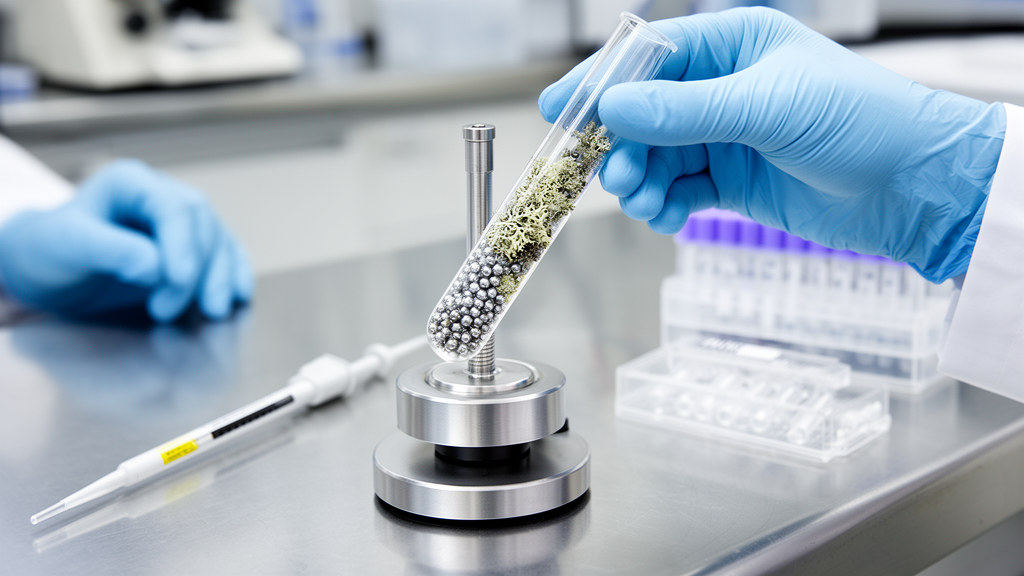
Environmental DNA metabarcoding has rapidly transformed biodiversity monitoring, offering a non-invasive alternative to traditional survey methods for aquatic and terrestrial organisms. While the technique has proven exceptionally effective for fish and other aquatic species, its application to terrestrial biodiversity, particularly lichens, requires careful optimization of laboratory protocols. A recent study published in Metabarcoding and Metagenomics investigates a critical step in this process: the homogenization of environmental samples prior to DNA extraction. The research demonstrates that mechanical disruption of sample matrices significantly enhances the recovery of lichen DNA, thereby improving the accuracy and reliability of species detection in complex ecological environments.
The study focused on stemflow, the water that runs down tree trunks, as a source of environmental DNA for arboreal biodiversity. Stemflow sampling captures biological material from the tree canopy and bark, providing a snapshot of the organisms associated with the tree. The researchers collected stemflow from a Japanese apricot tree in Aoba-no-Mori Park, Chiba City, Japan, during a rainy day in July 2023. This method allows for the passive collection of DNA shed by lichens, fungi, and other microorganisms living on the tree surface, offering a comprehensive view of the local biological community without the need for direct physical sampling of the organisms themselves.
To evaluate the impact of sample preparation, the team compared three distinct DNA extraction methods. The first method involved no homogenization, where lichen fragments trapped on filters were processed directly. The second method utilized bead-beating, a technique where zirconia beads are vortexed with the sample to mechanically break open cell walls. The third method combined bead-beating with freezing, where samples were soaked in liquid nitrogen before mechanical disruption. By comparing these approaches, the researchers aimed to determine whether the additional step of freezing provided any significant advantage over standard bead-beating in terms of DNA yield and species detection.
The results clearly indicated that homogenization plays a pivotal role in the success of eDNA metabarcoding for lichens. Samples processed without homogenization detected the fewest species, with an average of only 4.2 species per sample. In contrast, both bead-beating and frozen bead-beating methods detected significantly more species, with averages of 8.0 and 7.8 species per sample, respectively. Statistical analysis confirmed that the difference between the non-homogenized samples and the homogenized samples was significant, while no significant difference was observed between the two homogenization methods. This suggests that the mechanical action of bead-beating is the primary driver of improved DNA recovery.
Quantitative real-time PCR assays further supported these findings by measuring the concentration of extracted DNA. The non-homogenized samples yielded the lowest DNA concentrations, averaging 7.2 picograms per 2 microliters. Conversely, the bead-beating and frozen bead-beating samples produced substantially higher yields, averaging 53.5 and 53.1 picograms per 2 microliters, respectively. A strong positive correlation was observed between DNA concentration and the number of detected species, with a coefficient of determination of 0.707. This relationship underscores the importance of maximizing DNA extraction efficiency to ensure that rare or low-abundance species are not missed during sequencing.
The study also examined the consistency of species detection across different samples. The non-homogenized samples exhibited high dissimilarity in species composition, with an average Jaccard distance of 0.493. This variability is likely due to the low template DNA concentrations, which can lead to stochastic effects during PCR amplification. In contrast, the homogenized samples showed much lower dissimilarity, with averages ranging from 0.1 to 0.2. This consistency indicates that bead-beating not only increases the total amount of DNA but also stabilizes the detection of species, reducing the random fluctuations that can occur when working with low-concentration templates.
When comparing eDNA results with visual observations of lichens on the tree, the study found that metabarcoding successfully identified most of the visually observed foliose lichen species. However, detection rates varied depending on the extraction method. For instance, two common species, Parmotrema austrosinense and P. tinctorum, were detected more frequently in the homogenized samples than in the non-homogenized ones. The absence of some species, such as Flavoparmelia caperata, across all methods may be attributed to factors like DNA degradation or primer mismatches. Nevertheless, the eDNA approach also detected several non-target taxa, including additional foliose and crustose lichens, highlighting its potential to reveal hidden biodiversity that might be overlooked by visual surveys alone.
The researchers noted that the choice of reference database is crucial for accurate taxonomic assignment. In this study, a curated database of ITS sequences from known lichen species was used to minimize the risk of erroneous classifications. While the database was smaller than those typically used in large-scale eDNA studies, it was deemed sufficient for the specific context of the research, which focused on a single tree with a known set of lichen species. The use of a targeted reference library helped ensure that the taxonomic assignments were reliable, even in the presence of low-abundance sequences.
Despite the clear benefits of bead-beating, the study acknowledges several limitations. The research was conducted on a single tree, which limits the generalizability of the findings to other species or environments. Additionally, the low DNA concentrations in the samples made the PCR amplification process sensitive to random fluctuations and potential contamination. The researchers also noted that the intensity of bead-beating can influence microbial community composition, and further studies are needed to determine the optimal parameters for different types of organisms. These considerations highlight the need for standardized protocols in eDNA metabarcoding to ensure comparability across different studies and ecological contexts.
In conclusion, the study provides valuable insights into the optimization of eDNA metabarcoding for lichen biodiversity monitoring. The findings suggest that bead-beating is an effective and efficient pre-treatment for extracting lichen DNA from environmental samples, significantly improving both DNA yield and species detection. The additional step of freezing before bead-beating did not offer any significant advantage, making standard bead-beating the most cost-effective and practical option. As eDNA techniques continue to evolve, refining laboratory protocols like homogenization will be essential for unlocking the full potential of this powerful tool in biodiversity assessment and conservation efforts.
Subject of Research: Optimization of environmental DNA extraction methods for lichen biodiversity monitoring
Article Title: Influence of homogenization methods on lichen species detection from environmental DNA metabarcoding
Article References: Sakata, A., Minamoto, T., Sado, T., Gotoh, R. O., & Miya, M. (2025). Influence of homogenization methods on lichen species detection from environmental DNA metabarcoding. Metabarcoding and Metagenomics, 9, Article e144340. https://doi.org/10.3897/mbmg.9.144340
Image Credits: AI Generated
Keywords: environmental DNA, metabarcoding, lichens, biodiversity monitoring, DNA extraction, bead-beating, stemflow, qPCR, taxonomic assignment, ecology, Influence, homogenization
Cite Scienmag News
Gavin Prescott. (October 18, 2026). Bead-Beating Boosts Lichen Detection in eDNA Studies. Scienmag. https://scienmag.com/bead-beating-boosts-lichen-detection-in-edna-studies/
Gavin Prescott. "Bead-Beating Boosts Lichen Detection in eDNA Studies." Scienmag, 18 October 2026, https://scienmag.com/bead-beating-boosts-lichen-detection-in-edna-studies/. Accessed 18 October 2026.
Gavin Prescott. "Bead-Beating Boosts Lichen Detection in eDNA Studies." Scienmag. October 18, 2026. https://scienmag.com/bead-beating-boosts-lichen-detection-in-edna-studies/


