


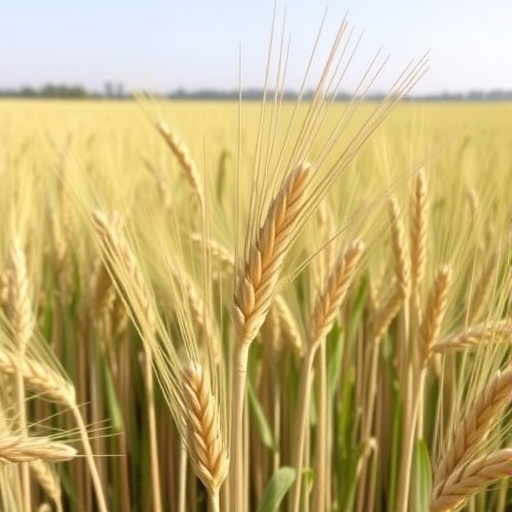
Recent advancements in agriculture are often tied to the urgent necessity of addressing environmental challenges. Among these, salinity poses a significant threat to crop production, particularly in regions facing increasing soil salinization caused by various anthropogenic activities. A riveting study led by Tola, D.G., Alemu, A.B., and Aduna, S.B. takes a profound step toward combating this issue. This research focuses on the in-vitro screening of improved durum wheat varieties, specifically derived from Ethiopia, to assess their salt tolerance. The findings could pave the way for developing resilient cultivars that thrive in saline conditions.
The importance of durum wheat cannot be overstated. Known scientifically as Triticum turgidum L., durum wheat serves as a key grain staple in numerous countries, contributing immensely to food security. However, the increasing salinity of arable land jeopardizes the productivity of this vital crop, particularly in regions such as Ethiopia where agricultural systems are already stressed. Salinity adversely impacts plant physiological processes, leading to reduced growth, yield, and quality. Thus, identifying and cultivating salt-tolerant varieties becomes crucial for sustaining durum wheat production.
The researchers employed meticulous in-vitro techniques to screen various Ethiopian durum wheat varieties for their ability to withstand salt stress. Utilizing controlled conditions allowed for an accurate assessment of each variety’s physiological and morphological responses to elevated salinity levels. This systematic approach not only ensures the reliability of the data but also serves as a model for similar studies aimed at increasing crop resilience under adverse environmental conditions.
One of the fundamental aspects evaluated in the in-vitro study was the measurement of growth parameters, including root length, shoot length, and biomass accumulation. These indicators provide substantial data regarding a plant’s overall health and ability to adapt to saline environments. Varieties that exhibit greater roots and shoots indicate a more robust physiological capability, reflecting their potential for improved survival under salinity stress.
Moreover, the study delved into biochemical analyses to uncover the physiological mechanisms behind salt tolerance. The accumulation of osmoprotectants, such as proline and glycine betaine, plays a vital role in enhancing plants’ ability to manage osmotic stress. Such compounds assist in maintaining cell turgor and protecting cellular structures from the detrimental effects of high salt concentrations. By quantifying these biochemical responses, the researchers can correlate specific traits with enhanced salt tolerance, providing critical insights for breeding programs.
The investigational study also highlights the significance of genetic diversity among Ethiopian durum wheat varieties. Ethiopia is often heralded as the cradle of wheat genetics, where a treasure trove of genetic resources exists. This inherent genetic variability can be harnessed to develop new cultivars equipped with superior salt tolerance. Breeding programs can utilize the identified varieties from Tola et al.’s research as a basis for further enhancement through traditional methods or biotechnological approaches.
Moreover, the researchers found intriguing patterns in how salt stress impacts the various growth stages of durum wheat. Understanding the timing of susceptibility to salinity can inform agronomic practices, enabling farmers to adopt strategic interventions that mitigate stress during critical periods. For instance, adjusting planting schedules or utilizing specific agronomic treatments may improve crop resilience directly aligned with the plant’s sensitivity to salt at designated growth phases.
In addition to physiological and biochemical assessments, the study also assessed the agronomic implications of salt-tolerant durum wheat cultivars. Farmers in saline-prone areas could benefit from the adoption of these improved varieties, ultimately leading to increased yields and enhanced food security. Thus, the research underscores the importance of translating laboratory findings into practical applications that can be readily adopted in the field.
With the results of this study, researchers hope to motivate further exploration into the genomic basis of salt tolerance in durum wheat. Advanced genomic techniques, such as genome sequencing and marker-assisted selection, could expedite the identification of key traits associated with salinity tolerance. Such innovations stand to revolutionize the breeding of crops that can withstand the vicissitudes of climate change, a pressing concern for global agriculture.
The collaborative nature of this research also epitomizes the power of interdisciplinary approaches in addressing complex agricultural challenges. Scientists, agronomists, and geneticists must work hand-in-hand to translate findings into commercially viable solutions. The journey from discovery to implementation requires a concerted effort across various domains – including education, extension services, and community engagement – to ensure farmers are equipped with the knowledge and resources needed to thrive.
Ultimately, the research conducted by Tola et al. significantly contributes to the growing body of knowledge addressing the intersection of crop genetics and environmental stressors. As salinity continues to challenge agricultural productivity worldwide, this study serves as a beacon of hope for developing sustainable solutions. By harnessing the natural genetic diversity of Ethiopian durum wheat, the agricultural community can potentially create robust crops vital for global food security.
In conclusion, the in-vitro screening of improved durum wheat varieties for salt tolerance marks a pivotal point in bridging the gap between scientific research and agricultural application. The findings from this study not only highlight the critical need for salt-tolerant crops but also represent a significant stride toward equipping agricultural systems with the tools necessary to combat rising salinity levels. As we embrace the future of agriculture, research such as this will be instrumental in fostering resilience and sustainability in food production systems around the world.
The road ahead remains challenging, yet it is filled with opportunities for innovation and collaboration. By implementing the insights gathered from this research, stakeholders across the agricultural spectrum can play a role in addressing one of the most pressing issues facing global food security today: the increasing threat of soil salinity.
Through awareness, adaptation, and advancement, the agricultural community can rise to the challenge, ensuring that food production remains viable as our climate continues to change.
Tola, D.G., Alemu, A.B., Aduna, S.B. et al. In-Vitro screening of Ethiopian improved durum wheat (Triticum turgidum L.) varieties for salt tolerance.
Discov Agric 3, 198 (2025). https://doi.org/10.1007/s44279-025-00369-3
Cite Scienmag News
Alan Morgan. (October 7, 2025). Ethiopian Durum Wheat Varieties Show Salt Tolerance. Scienmag. https://scienmag.com/ethiopian-durum-wheat-varieties-show-salt-tolerance/
Alan Morgan. "Ethiopian Durum Wheat Varieties Show Salt Tolerance." Scienmag, 7 October 2025, https://scienmag.com/ethiopian-durum-wheat-varieties-show-salt-tolerance/. Accessed 3 September 2026.
Alan Morgan. "Ethiopian Durum Wheat Varieties Show Salt Tolerance." Scienmag. October 7, 2025. https://scienmag.com/ethiopian-durum-wheat-varieties-show-salt-tolerance/


