


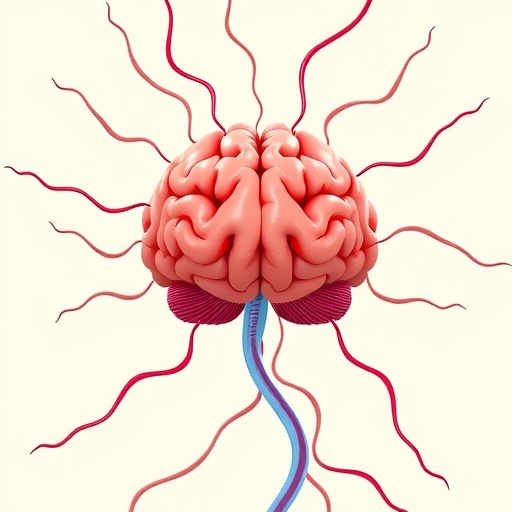
In a groundbreaking study published in Nature Neuroscience, researchers have unveiled how estrogen, a primary female sex hormone, plays a pivotal role not only in reproductive functions but also in modulating core processes of learning and reward in the brain. This discovery sheds new light on the neurobiological mechanisms underlying reinforcement learning and reward prediction errors, concepts that are fundamental to behavioral adaptation and decision-making. The implications of these findings promise to redefine our understanding of hormonal influences on cognition and neuropsychiatric disorders.
Reinforcement learning is a fundamental brain function wherein organisms learn to associate specific behaviors with rewarding or punishing outcomes. Central to this process is the computation of reward prediction errors—the difference between expected and actual outcomes—that guide future behavior adjustment. While dopamine has long been identified as a critical neurotransmitter in this domain, the precise modulatory roles of steroid hormones such as estrogen remained elusive until now.
The multidisciplinary team, led by Golden, Martin, and Kaur, leveraged state-of-the-art neuroimaging, molecular biology techniques, and computational modeling to detail how fluctuating estrogen levels dynamically influence neuronal circuits associated with reward processing. Their rigorous approach combined in vivo recordings of neural activity with behavioral assessments in animal models to capture the essence of how estrogen shapes learning paradigms.
One of the salient discoveries from the study is that estrogen alters the magnitude and timing of reward prediction error signals in key brain regions including the ventral tegmental area (VTA) and nucleus accumbens, hubs known for their involvement in motivation and reward. This modulation was found to enhance the sensitivity of neural responses to reward contingencies, fostering more efficient learning strategies when estrogen levels are elevated.
At the molecular level, the team identified that estrogen receptors, particularly ERα and ERβ subtypes, are densely expressed in dopamine-producing neurons. Activation of these receptors appears to fine-tune dopamine release, thereby recalibrating the neural computations underlying prediction errors. Such receptor-mediated modulation highlights a sophisticated hormonal influence that goes beyond the classical view of estrogen acts solely through genomic pathways.
Another intriguing aspect of the study concerns the sex-specific nuances revealed through comparative analyses. Female subjects exhibited more pronounced shifts in reinforcement learning efficiency correlated with fluctuating estrogen concentrations across their estrous cycles. This finding proposes that cognitive processes linked to learning and reward may exhibit intrinsic variability dependent on hormonal status, potentially explaining some differential susceptibilities to neuropsychiatric conditions between sexes.
Further behavioral testing demonstrated that estrogen replacement in estrogen-depleted subjects reinstated robust reward learning capabilities, indicating potential avenues for therapeutic interventions targeting cognitive deficits. This insight is particularly relevant in conditions like depression and addiction where reinforcement learning mechanisms are often impaired and hormonal dysregulation is prevalent.
Importantly, the researchers emphasize that estrogen’s role is not unidirectional. Their data suggest a nuanced, context-dependent modulation where estrogen may either amplify or attenuate reward signaling depending on the environmental contingencies and internal states of the organism. This dynamic interplay adds a layer of complexity to existing models of neuromodulation.
Computational simulations developed by the group provided a quantitative framework illustrating how hormonal fluctuations reshape neural reward landscapes, predicting behavioral outcomes with impressive accuracy. These models integrate known biochemical pathways with neurophysiological data, serving as a powerful tool for future experimental designs and potential drug discovery efforts.
The study also raises compelling questions regarding the influence of synthetic and environmental estrogenic compounds on cognitive functions. Given the sensitivity of reinforcement learning circuits to endogenous estrogen levels, exogenous modulation through pharmaceuticals or endocrine disruptors could have unintended cognitive repercussions that warrant further investigation.
In light of these findings, the researchers advocate for a paradigm shift in neuroscience research to incorporate sex hormones as vital modulators of brain function beyond reproductive contexts. This approach is expected to refine personalized medicine strategies for neuropsychiatric disorders by factoring in hormonal status alongside genetic and environmental variables.
Moreover, this research elucidates a biological basis for the observed fluctuations in mood, motivation, and decision-making often reported across menstrual cycles in women. Understanding these underlying mechanisms presents opportunities to optimize timing and strategies for behavioral therapies and learning-based interventions.
By bridging molecular endocrinology with systems neuroscience, this study establishes a new frontier in the exploration of how intrinsic biological rhythms intersect with complex cognitive phenomena. The integration of hormonal modulation into computational frameworks and neurobiological theories marks a significant advance in the field.
Golden and colleagues’ work paves the way for future studies to explore hormone-mediated modulation in other cognitive domains such as memory, attention, and executive function. It also stimulates interdisciplinary research efforts aiming to decode the interplay between endocrine signals and brain plasticity.
In conclusion, this seminal research compels the scientific community to reevaluate the role of estrogen as a key neuromodulator in reward processing and learning. By unraveling the intricate ways in which this hormone shapes neural prediction error signals and behavioral adaptation, the study opens new vistas for understanding brain function and treating cognitive disorders with a novel, hormone-centered perspective.
Cite Scienmag News
Ophelia Keating. (November 11, 2025). Estrogen Influences Reward Learning and Prediction Errors. Scienmag. https://scienmag.com/estrogen-influences-reward-learning-and-prediction-errors/
Ophelia Keating. "Estrogen Influences Reward Learning and Prediction Errors." Scienmag, 11 November 2025, https://scienmag.com/estrogen-influences-reward-learning-and-prediction-errors/. Accessed 6 September 2026.
Ophelia Keating. "Estrogen Influences Reward Learning and Prediction Errors." Scienmag. November 11, 2025. https://scienmag.com/estrogen-influences-reward-learning-and-prediction-errors/


