


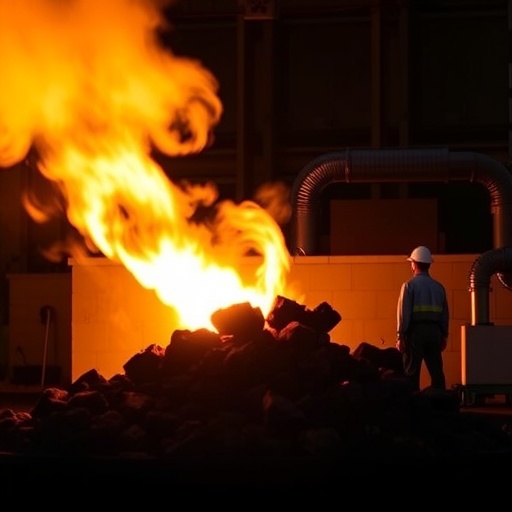
In recent years, the environmental impact of high-sulphur coal has garnered significant attention due to the pressing need for cleaner energy sources. The reliance on coal as an essential energy provider is undeniable; however, high-sulphur coal presents unique challenges. The research conducted by Banik and Kalita focuses on innovative techniques to mitigate these challenges, showcasing the potential of ultrasonic and microwave irradiation in the desulphurization of North-East Indian coal. Their findings hold promise not only for local communities but also for the global energy landscape.
The high sulphur content in coal is problematic due to its contribution to air pollution and acid rain when combusted. Traditional desulphurization methods often fall short of effectively reducing sulphur levels while maintaining coal quality. In this study, the researchers explored the applicability of two advanced physical methods—ultrasonic and microwave irradiation—to enhance the leaching process for coal desulphurization. Their innovative approach offers a more efficient and environmentally friendly alternative, making it a significant breakthrough in the field of coal utilization.
Ultrasonication, utilizing high-frequency sound waves, promotes chemical reactions by increasing the energy levels of molecules within a solution. This agitation can lead to smaller particle sizes and increased surface area, resulting in enhanced leaching efficiency. The researchers highlighted that through ultrasonic treatment, the dissolution of sulphur compounds from coal is significantly improved, leading to a much higher desulphurization rate.
Microwave irradiation, on the other hand, capitalizes on electromagnetic waves to interact with materials on a molecular level. This technology generates rapid heating, which can alter the physical properties of coal and facilitate the leaching of sulphur compounds. The researchers emphasized that the combination of microwave irradiation with traditional leaching agents can lead to unprecedented levels of sulphur removal, marking a noteworthy advancement in desulphurization protocols.
Banik and Kalita’s experiments involved treating samples of high-sulphur coal with various concentrations of leaching agents under ultrasonic and microwave conditions. The results demonstrated that the synergistic effect of these two methods significantly reduced sulphur content compared to conventional leaching processes alone. This breakthrough is particularly relevant in regions where high-sulphur coal is abundant but environmental regulations are becoming stricter.
Moreover, the study also investigated the economic implications of implementing ultrasonic and microwave-assisted techniques for coal desulphurization. The researchers found that while the initial costs of setting up such advanced systems may be higher than typical leaching methods, the long-term benefits of reduced emissions and improved coal quality could lead to substantial economic savings. This dynamic could incentivize mining operations to invest in greener technologies, aligning with global sustainability goals.
The significance of this research extends beyond the immediate environmental impact; it touches upon the social and political dimensions of energy production. With the rising awareness of climate change and pollution, the demand for cleaner coal technology is at an all-time high. Banik and Kalita’s work could position Indian coal producers as leaders in sustainable practices, enhancing their reputation on the international stage and potentially opening up new markets.
Furthermore, the potential applications of these findings are not restricted to Indian coal alone. The methodologies developed could be replicated in other regions facing similar challenges with high-sulphur coal. The research could serve as a blueprint for global coal markets, offering a feasible path toward cleaner fossil fuel usage while navigating the complex landscape of energy production and environmental stewardship.
As the global community grapples with the dual challenges of energy demands and environmental protection, studies like this play a crucial role in bridging the gap between technology and sustainability. The efforts of Banik and Kalita illuminate a way forward, showcasing how innovation can facilitate progress and help meet the needs of both industry and the environment.
In conclusion, the exploration of ultrasonic and microwave irradiation for coal desulphurization offers a cutting-edge solution to an age-old problem. Banik and Kalita’s findings represent a significant advancement in the quest for sustainable coal usage, with implications that could resonate throughout the energy industry for years to come. As we venture into an era of renewed commitment to reducing our environmental footprint, such innovative research is vital in navigating the complex interplay between energy production and ecological responsibility.
The scientific community eagerly anticipates further developments inspired by this research, hoping for widespread adoption of these technologies, which could redefine how high-sulphur coal is viewed globally. In transitioning towards cleaner energy practices, the lessons learned from studies like that of Banik and Kalita could indeed serve as guiding principles for future advancements in coal desulphurization methods.
Banik, R.K., Kalita, P. Ultrasonic and microwave irradiation-aided leaching for effective desulphurization of high sulphur North-East Indian coal.
Environ Sci Pollut Res (2025). https://doi.org/10.1007/s11356-025-36900-8
Cite Scienmag News
Violet Maxwell. (September 3, 2025). Enhanced Desulphurization of Coal via Ultrasound and Microwaves. Scienmag. https://scienmag.com/enhanced-desulphurization-of-coal-via-ultrasound-and-microwaves/
Violet Maxwell. "Enhanced Desulphurization of Coal via Ultrasound and Microwaves." Scienmag, 3 September 2025, https://scienmag.com/enhanced-desulphurization-of-coal-via-ultrasound-and-microwaves/. Accessed 6 September 2026.
Violet Maxwell. "Enhanced Desulphurization of Coal via Ultrasound and Microwaves." Scienmag. September 3, 2025. https://scienmag.com/enhanced-desulphurization-of-coal-via-ultrasound-and-microwaves/


