


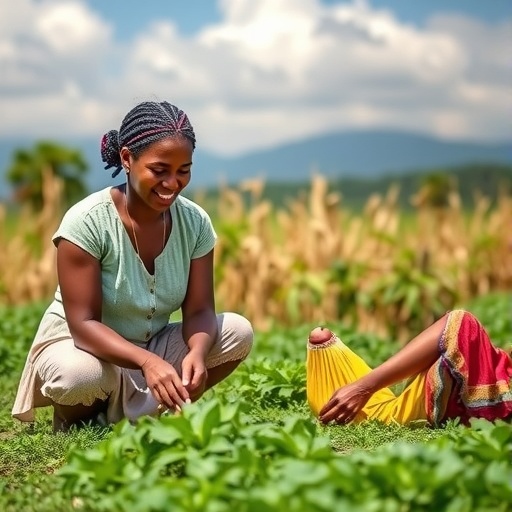
In recent years, the importance of agroecology has surged, particularly in the context of sustainable development and social equity. A groundbreaking study conducted in Chemba District, Tanzania, highlights the vital roles that women and youth play in advancing these goals through agroecological practices. The research, conducted by Gayo, Lwankomezi, and Katonge, illuminates the transformative potential of engaging marginalized groups in agricultural endeavors, showcasing how their contributions can lead to enhanced food security, environmental stewardship, and equitable resource distribution.
In Chemba District, the intersection of gender, age, and agricultural practices marks a critical pathway for change. Women, often the backbone of agricultural labor, are uniquely positioned to influence food production systems. The study reveals that when women engage in agroecological practices, they not only improve their household food security but also contribute to community-wide benefits. By implementing sustainable farming techniques, such as crop diversification and organic farming, women are making strides towards resilience against climate change while simultaneously fostering economic independence.
Youth involvement in agroecology offers a complementary perspective on sustainable development. The enthusiasm and innovative mindset that younger generations bring to agricultural practices are crucial for modernizing outdated methods. The Chemba District study outlines how these young individuals are not just passive participants but are actively transforming local agricultural landscapes. Through participation in community-based agroecological projects, youth are developing skills that enhance their employability and foster a sense of agency in their communities. This synergy of women’s and youth’s efforts is vital for breaking the cycle of poverty and creating a more equitable society.
The link between agroecology and social equity cannot be overstated. The research indicates that empowering women and youth in agricultural practices leads to more equitable resource distribution. As these groups gain access to training, resources, and decision-making processes, they challenge traditional power dynamics that have historically marginalized them. The study underscores that social equity is not merely a theoretical concept but an attainable outcome through targeted interventions in agricultural development. This realization is pivotal, as it suggests that fostering inclusivity within the agricultural sector can yield profound societal changes.
Data collected through the research illustrates significant improvements in both social and economic dimensions within the Chemba District as a result of agroecological practices. Economic benefits have been observed through increased income generation opportunities, enhanced market access for local produce, and improved resilience against market fluctuations. Furthermore, the promotion of sustainable agricultural methods contributes to environmental conservation, showcasing the multifaceted advantages of an inclusive approach to agroecology.
The challenges faced by women and youth in accessing resources for agroecological practices are significant. Barriers such as limited access to land, financial resources, and educational opportunities often hinder their participation. However, the researchers highlight various initiatives aimed at overcoming these barriers, including community-driven programs that provide access to training and resources. Notably, these initiatives are often initiated by women and youth themselves, demonstrating their capability to lead the charge towards sustainable practices.
In addition to addressing economic and environmental concerns, the gender dynamics within agroecology reveal another layer of complexity. Women’s engagement in agroecology is often driven by a desire to provide for their families and communities. The study’s findings emphasize their pivotal roles not only as agricultural producers but also as caretakers of traditional knowledge and practices that are essential for sustainable farming. By valuing and integrating indigenous knowledge systems, the study advocates for approaches that respect and acknowledge the contributions of local populations.
Moreover, the role of education in fostering agroecological practices among women and youth is a crucial takeaway from this research. Educational initiatives that incorporate agroecological principles have been shown to significantly enhance knowledge and skills in sustainable agriculture. By equipping these groups with the necessary tools, they can effectively advocate for themselves within their communities and beyond. The study argues for policy structures that support educational programs tailored specifically to meet the needs of women and youth in agriculture.
The research also highlights the impact of collaborative networks in enhancing the effectiveness of agroecological practices. The Chemba District study showcases how building networks among women and youth can lead to shared resources, knowledge exchange, and collective action. These networks not only foster a sense of community but also provide a platform for advocacy that can influence local and national policies in favor of inclusive agricultural practices. By standing united, these marginalized groups can amplify their voices and push for the systemic changes needed to ensure equitable access to agricultural resources.
Furthermore, the implications of this research extend beyond Chemba District. The findings serve as a blueprint for other regions grappling with similar socio-economic challenges. Policymakers and development practitioners are encouraged to adopt inclusive frameworks that recognize the essential contributions of women and youth to sustainable agricultural development. By replicating successful models identified in this study, stakeholders can catalyze positive change in diverse contexts, thereby widening the scope of agroecology’s reach.
Ultimately, the Chemba District study makes a compelling case for the integral roles that women and youth play in shaping the future of agroecology and sustainable development. It so vividly articulates the notion that social equity is intricately linked to agricultural practices, advocating for an inclusive approach that acknowledges and empowers marginalized groups. The call to action is clear: investing in women and youth is not just an ethical imperative but also a strategic necessity for achieving sustainable development goals.
This research serves as a reminder that real transformation in agricultural practices must involve everyone. By harnessing the collective knowledge and creativity of women and youth, we can foster a more sustainable and equitable agricultural future. The findings highlight the importance of recognizing the interconnectedness of gender, age, and social equity within the agricultural sector, paving the way for policies and practices that truly reflect the needs of all communities.
In conclusion, the Chemba District field study brings to light the undeniable fact that when women and youth are at the forefront of agroecological practices, the benefits reverberate throughout society. Their contributions lead not only to sustainable agricultural practices but also promote social equity, economic empowerment, and environmental stewardship. This research echoes a vital message: the path towards a sustainable future must be inclusive, ensuring that all voices are heard and valued in the pursuit of food security and social justice.
Gayo, L., Lwankomezi, E.B. & Katonge, J.H. Women and youth engagement in agroecology and its contribution to sustainable development and social equity: evidence from Chemba District, Tanzania.
Discov Agric 3, 252 (2025). https://doi.org/10.1007/s44279-025-00432-z
Cite Scienmag News
Sloane Callahan. (November 18, 2025). Empowering Women and Youth in Agroecology for Sustainability. Scienmag. https://scienmag.com/empowering-women-and-youth-in-agroecology-for-sustainability/
Sloane Callahan. "Empowering Women and Youth in Agroecology for Sustainability." Scienmag, 18 November 2025, https://scienmag.com/empowering-women-and-youth-in-agroecology-for-sustainability/. Accessed 4 September 2026.
Sloane Callahan. "Empowering Women and Youth in Agroecology for Sustainability." Scienmag. November 18, 2025. https://scienmag.com/empowering-women-and-youth-in-agroecology-for-sustainability/


