Two Italian scientists have published an opinion article in EMBO Reports arguing that the recent congressional hearing of Anthony Fauci echoes the trial of Galileo Galilei, warning that treating scientific advice given during an emergency as potential criminal conduct will deter experts from serving governments in future crises. The commentary, titled “Fauci in the jaws of a new inquisition,” was written by Roberto Battiston and Roberto Sitia and published on 21 October 2026.
The authors open with the historical parallel that gives the piece its title. In June 1633, the Holy Inquisition of the Catholic Church found Galileo suspect of heresy after he confirmed and taught the Copernican heliocentric model of the solar system, which challenged the Church’s dogma that the Earth sits at the center of the universe. Galileo was condemned to lifelong house arrest and banned from further teaching and publishing. The authors write that the Church won the legal battle, but Galileo won the future, as the truth eventually prevailed. They cite the episode, along with Lysenkoism in the USSR, as a reminder of the damage created when dogma and ideology impose themselves on evidence and truth, and they argue that the strength of Western societies since the Enlightenment has rested on preferring evidence to ideology, experiments to affiliations, and doubt to truth imposed by authority.
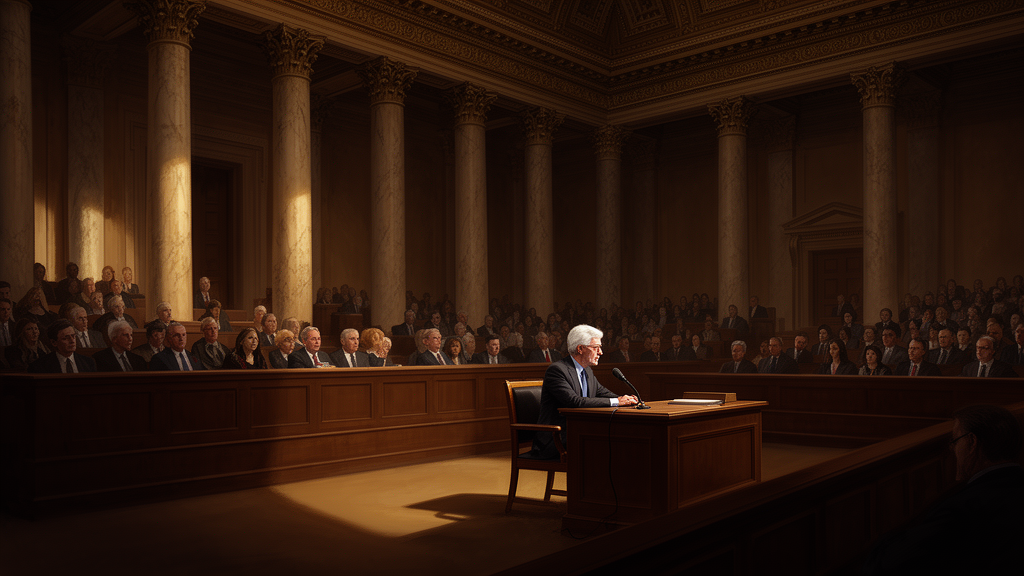
The article then turns to the facts of the Fauci case as the authors present them. On July 29 of this year, the immunologist, who for nearly forty years directed the US National Institute of Allergy and Infectious Diseases and was instrumental in the US government’s response to the COVID pandemic, appeared before a Senate Committee. After an initial statement, he repeatedly invoked the Fifth Amendment and, on the advice of his lawyers, refused to answer any questions. On August 6, the Committee’s Republican majority passed a resolution for Contempt of Congress, and Chairman Rand Paul referred the case to the US Department of Justice.
The authors are careful to note the legal status of the matter. Fauci has not been indicted, much less convicted. So far, a parliamentary committee has asked the Department of Justice to open a legal case, and it will ultimately be prosecutors and judges, not politicians, who determine whether Fauci’s repeated use of the Fifth Amendment was valid and did not violate any laws in the USA. The commentary stresses that a presidential pardon does not imply any illegal actions, nor can a witness’s silence be interpreted as evidence of a crime.
The legal situation is described as complex. Former US President Joseph Biden granted Fauci a preemptive pardon for any federal crimes related to his public service between 2014 and January 19, 2025. According to the authors, this greatly reduces the risk of self-incrimination but does not cover possible state crimes or any false conduct or false statements after that period. They write that it is therefore debatable whether Fauci’s repeated use of the Fifth Amendment, even when asked innocuous questions, helped to quell suspicions or conspiracy theories about his role as a scientific advisor and about the role of scientists more generally during the pandemic.
On the question of the pandemic’s origins, the authors take a position that distinguishes legitimate scrutiny from what they call ideologically driven accusation. They argue that it is right and prudent to investigate the origins of SARS-CoV-2, the funding of the Wuhan laboratory through the EcoHealth Alliance, the oversight of potentially risky research, the transparency of communication, and the government policies and inevitable misjudgments during the management of the pandemic. Science, they write, does not demand immunity from scrutiny. But they state that it is very difficult to create an argument that Fauci was directly responsible for funding research that could have led to the creation of the virus. They note that a zoonotic origin remains the hypothesis currently best supported by the available evidence, even if more recent information might suggest the alternative explanation of a laboratory accident, and they conclude that the accusation that Fauci facilitated the pandemic is not only unfounded but an ideologically driven allegation.
The commentary places the case in the context of how science has proceeded since the Enlightenment. A thousand white swans do not prove that all swans are white; one black swan is enough to disprove it. Following Karl Popper’s dictum of falsification, a hypothesis can never be proven to be true, but it can be falsified when new data contradict it. The authors point to the COVID pandemic as an example: new knowledge emerged, hypotheses were rejected or refined, models corrected, and public-health recommendations adapted in response. They acknowledge that sometimes this happened too late, or that judgment was passed with excessive confidence, but they insist that a model is not a decree and a hypothesis is not dogma. Judging decisions made under uncertainty in hindsight, based on new information that only became available later, is, in their words, a logical error even before it is a political ploy.
The authors also contest the scale of Fauci’s authority during the pandemic. In their account, Fauci was not the master of public-health policies: he advised the US President and the US administration, but the decisions on lockdowns, school closures, public-health mandates, vaccination recommendations, and other policies were made by elected officials, state governments, local authorities, and other institutions. Assigning this collective responsibility to a single scientist, they argue, means creating a scapegoat. They add that when the senator presiding over the investigation had already publicly requested that the witness be behind bars, the line between parliamentary oversight and political vengeance becomes dangerously thin.
The consequences, the authors warn, extend well beyond one individual. If those who agree to serve the state during an emergency know that, years later, every decision, statement, and correction of hypotheses or recommendations could be scrutinized and interpreted as evidence of crime, the best experts will no longer be incentivized to speak out or to join advisory committees and public-health institutions. They note that other scientists, such as Anders Tegnell in Sweden and Christian Drosten in Germany, also faced intense criticism during and after the pandemic for their interpretation of the available evidence and the advice they gave their governments, but that none of them has been publicly accused of crimes or dragged before what the authors call a kangaroo court. The damage done by this congressional hearing, they write, will emerge during the next crisis, when all the expertise and independent advice that science has to offer will again be needed.
The commentary closes by drawing a line between accountability and prosecution. Defending Fauci against politically motivated accusations, the authors argue, does not mean declaring him infallible or shielding him from questioning of his role during the pandemic. It means defending a fundamental tenet: error is not fraud, dissent is not a crime, and the evolution of knowledge is not a lie. Scientific controversies, they write, are resolved with data, transparent communication, and the testing, verification, or falsification of hypotheses, while criminal liability has to be proven with evidence before a court, upholding the principle of in dubio pro reo. When a political commission starts with an assumption of guilt and uses a hearing to obtain a confession, they conclude, it is not seeking the truth but teaching scientists that serving the state can turn them into political targets. Their final warning returns to Galileo: the inquisition can still win a political or legal battle, but a society that ignores the lessons of his trial risks losing its future.
Subject of Research: An opinion commentary on the congressional hearing of Anthony Fauci and its implications for scientific advice during public-health emergencies.
Article Title: Fauci in the jaws of a new inquisition
Article References: Battiston, R., & Sitia, R. (2026). Fauci in the jaws of a new inquisition. EMBO Reports. https://doi.org/10.1038/s44319-026-00967-2
Image Credits: AI Generated
DOI: 10.1038/s44319-026-00967-2
Keywords: Anthony Fauci, EMBO Reports, US Congress, SARS-CoV-2 origins, scientific advice, Galileo Galilei, fifth amendment, public health policy, COVID-19 pandemic, scientific freedom, opinion article, political scrutiny
Cite Scienmag News
Drew Townsend. (October 28, 2026). EMBO Reports commentary likens Fauci congressional hearing to a new inquisition. Scienmag. https://scienmag.com/embo-reports-commentary-likens-fauci-congressional-hearing-to-a-new-inquisition/
Drew Townsend. "EMBO Reports commentary likens Fauci congressional hearing to a new inquisition." Scienmag, 28 October 2026, https://scienmag.com/embo-reports-commentary-likens-fauci-congressional-hearing-to-a-new-inquisition/. Accessed 28 October 2026.
Drew Townsend. "EMBO Reports commentary likens Fauci congressional hearing to a new inquisition." Scienmag. October 28, 2026. https://scienmag.com/embo-reports-commentary-likens-fauci-congressional-hearing-to-a-new-inquisition/