

Sunday, July 26, 2026
Science
No Result
View All Result
  • Login
  • HOME
  • SCIENCE NEWS
  • CONTACT US
  • HOME
  • SCIENCE NEWS
  • CONTACT US
No Result
View All Result
Scienmag
No Result
View All Result
Home Science News Psychology & Psychiatry

Electroconvulsive Therapy Rewires Brain Structural and Functional Networks in Depression

July 26, 2026
in Psychology & Psychiatry
Reading Time: 2 mins read
0
Electroconvulsive Therapy Rewires Brain Structural and Functional Networks in Depression

Electroconvulsive Therapy Rewires Brain Structural and Functional Networks in Depression

65
SHARES
587
VIEWS
Share on FacebookShare on Twitter
ADVERTISEMENT

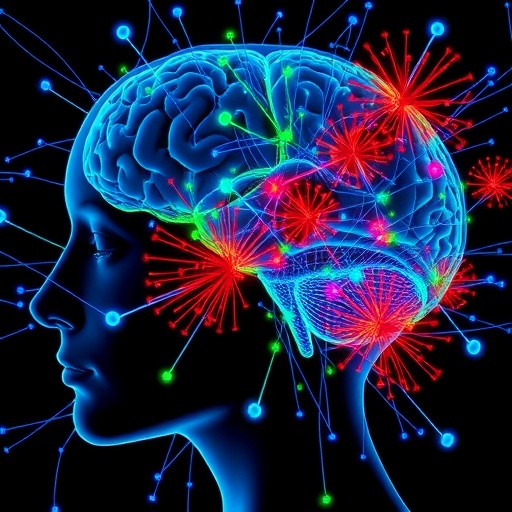
Electroconvulsive therapy (ECT) remains one of the most powerful interventions for severe depression, yet the brain pathways that reorganize after treatment have been difficult to map with precision. In a new study published in Translational Psychiatry, researchers led by Yao and colleagues report a network-focused analysis of how ECT reshapes both brain structure and brain activity in patients with depression.

Rather than treating changes as isolated region-by-region effects, the team used network localization to identify where structural and functional alterations tend to emerge within interconnected circuits. This approach frames the brain as a dynamic system, where symptoms and recovery may reflect coordinated shifts across networks rather than single “hot spots.”

The study integrates imaging-based measures of structural connectivity and functional patterns, allowing the investigators to localize ECT-related modifications within specific network neighborhoods. By aligning multiple modalities, the researchers aimed to determine whether structural reorganization and functional changes converge on shared circuit locations, potentially offering a more mechanistic account of clinical benefit.

Such multimodal convergence matters because depression involves widespread disruptions spanning large-scale networks, including systems associated with mood regulation, cognitive control, and self-referential processing. If ECT can repeatedly target the same circuit hubs or communication pathways, that would suggest a route from treatment dose to neural recalibration.

The authors describe network localization as a way to reduce ambiguity common in post-treatment neuroimaging. Instead of asking where the brain “changes,” the analysis asks where in the network topology those changes are most likely to concentrate—information that could improve interpretation across studies and patient variability.

Importantly, the work highlights that ECT-induced alterations may not be uniform across the brain. The findings suggest that specific network substructures could act as anchors for both structural remodeling and functional dynamics, which may relate to symptom improvement.

The study’s results also imply that monitoring therapeutic impact might benefit from circuit-level biomarkers. If reliable network signatures can be detected after treatment, they could support stratification of patients or guide optimization of stimulation parameters.

Finally, by linking structural and functional localization within the same network framework, the research advances a systems-level view of how ECT may “reset” dysregulated communication in depression. As clinical neuroimaging moves toward network neuroscience, these methods may sharpen how future trials evaluate mechanistic endpoints.

Subject of Research: Brain structural and functional alterations in depression induced by electroconvulsive therapy (ECT).

Article Title: Network localization of brain structural and functional alterations induced by electroconvulsive therapy for depression.

Article References: Yao, S., Zhu, DM., Zhu, H. et al. Network localization of brain structural and functional alterations induced by electroconvulsive therapy for depression. Transl Psychiatry (2026). https://doi.org/10.1038/s41398-026-04308-8

Image Credits: AI Generated

DOI: https://doi.org/10.1038/s41398-026-04308-8

Tags: brain circuit remodeling after ECTbrain connectivity and treatment responsebrain network reorganization in depressionbrain structural and functional convergenceElectroconvulsive therapylarge-scale brain networks in mood disordersmultimodal neuroimaging in depressionnetwork-based brain mappingneural circuit targets for depression therapyneural pathways of depression recoveryneurobiological mechanisms of ECTstructural and functional brain connectivity
Share26Tweet16
Previous Post

Fiber array reveals sharp structural variability in the Gorda slab

Next Post

Generative AI Enables Inverse Design of 3D Energetic Materials for Tailored Combustion

Related Posts

How Emotional Learning Biases Shape Everyday Food Choices
Psychology & Psychiatry

How Emotional Learning Biases Shape Everyday Food Choices

July 26, 2026
Children tailor curiosity to individuals when objects seem useful or special
Psychology & Psychiatry

Children tailor curiosity to individuals when objects seem useful or special

July 26, 2026
Coordinated Vascular and Glial Cell Response in Pig Sepsis Model
Psychology & Psychiatry

Coordinated Vascular and Glial Cell Response in Pig Sepsis Model

July 26, 2026
Rannasangpei crocin-1 improves valproate-induced autism-like behaviors by reducing oxidative stress
Psychology & Psychiatry

Rannasangpei crocin-1 improves valproate-induced autism-like behaviors by reducing oxidative stress

July 19, 2026
Gut Microbiome Metabolites Shape Development of Stress-Related Mental Disorders
Psychology & Psychiatry

Gut Microbiome Metabolites Shape Development of Stress-Related Mental Disorders

July 19, 2026
Two-week High-Frequency Aerobic Training Improves Depressive Symptoms and Frontal Function
Psychology & Psychiatry

Two-week High-Frequency Aerobic Training Improves Depressive Symptoms and Frontal Function

July 18, 2026
Next Post
Generative AI Enables Inverse Design of 3D Energetic Materials for Tailored Combustion

Generative AI Enables Inverse Design of 3D Energetic Materials for Tailored Combustion

  • Mothers who receive childcare support from maternal grandparents show more

    Mothers who receive childcare support from maternal grandparents show more parental warmth, finds NTU Singapore study

    27656 shares
    Share 11059 Tweet 6912
  • University of Seville Breaks 120-Year-Old Mystery, Revises a Key Einstein Concept

    1061 shares
    Share 424 Tweet 265
  • Bee body mass, pathogens and local climate influence heat tolerance

    682 shares
    Share 273 Tweet 171
  • Researchers record first-ever images and data of a shark experiencing a boat strike

    546 shares
    Share 218 Tweet 137
  • Groundbreaking Clinical Trial Reveals Lubiprostone Enhances Kidney Function

    531 shares
    Share 212 Tweet 133
Science

Embark on a thrilling journey of discovery with Scienmag.com—your ultimate source for cutting-edge breakthroughs. Immerse yourself in a world where curiosity knows no limits and tomorrow’s possibilities become today’s reality!

RECENT NEWS

  • SPF2 and SGO2/CTF18 limit centromere-near crossovers by regulating SUMOylation
  • Gene transfer between infecting bacteria drives extreme antibiotic resistance in lungs
  • Focal Astrocyte Loss Shows Nuclear Translocation During Lesion Repopulation
  • Substrate-Free Photosensitizer Radical Pairs Enable Hypoxia-Tolerant Multipath Photoredox Therapy

Categories

  • Agriculture
  • Anthropology
  • Archaeology
  • Athmospheric
  • Biology
  • Biotechnology
  • Blog
  • Bussines
  • Cancer
  • Chemistry
  • Climate
  • Earth Science
  • Editorial Policy
  • Marine
  • Mathematics
  • Medicine
  • Pediatry
  • Policy
  • Psychology & Psychiatry
  • Science Education
  • Social Science
  • Space
  • Technology and Engineering

Subscribe to Blog via Email

Enter your email address to subscribe to this blog and receive notifications of new posts by email.

Join 5,146 other subscribers

© 2025 Scienmag - Science Magazine

Welcome Back!

Login to your account below

Forgotten Password?

Retrieve your password

Please enter your username or email address to reset your password.

Log In
No Result
View All Result
  • HOME
  • SCIENCE NEWS
  • CONTACT US

© 2025 Scienmag - Science Magazine

Discover more from Science

Subscribe now to keep reading and get access to the full archive.

Continue reading
