


When ocean temperatures spike in the tropical Pacific, the consequences ripple across entire ocean basins, and few ecosystems feel those consequences as acutely as coral reefs. A new study of Sri Lanka’s fringing reef systems, published in the journal Coral Reefs, has pieced together the chain of oceanic and atmospheric processes that link the El Niño-Southern Oscillation, or ENSO, to episodes of mass coral bleaching on the island’s reefs. By examining five reef sites across three major bleaching years, 1998, 2016, and 2024, the research reveals how a combination of warming seas, altered radiation, and delayed monsoon winds conspires to push corals past their physiological limits.
Coral bleaching occurs when corals, stressed by sustained high temperatures, expel the microscopic symbiotic algae living in their tissues. These algae, called zooxanthellae, supply the corals with most of their energy through photosynthesis and give reefs their dazzling colors. Without them, the corals turn ghostly white and, if the stress persists, starve and die. Because bleaching thresholds depend on both the intensity and the duration of heat exposure, scientists typically track cumulative thermal stress using satellite-derived sea surface temperature products. But as the new study shows, translating global temperature data into accurate local predictions is far from straightforward, particularly around a monsoon-drenched tropical island sitting at the crossroads of competing climate systems.
Sri Lanka occupies a unique position in the Indian Ocean, a tropical island whose fringing reefs have grown increasingly degraded over recent decades under the combined weight of local human pressures and recurrent ENSO-driven heatwaves. The physical mechanisms connecting the great Pacific climate oscillation to bleaching on these particular reefs had remained insufficiently understood, a gap that has hampered both local conservation planning and the broader global effort to anticipate which reefs will suffer most in any given warming event. The study set out to close that gap by systematically examining the key oceanic and atmospheric drivers of bleaching across five reef sites during the three landmark bleaching episodes of 1998, 2016, and 2024.
The central finding is that ENSO-linked sea surface temperature anomalies in the Indian Ocean, acting on top of the long-term background of climate warming and reinforced by anomalies in radiative heat flux, intensified coral bleaching around Sri Lanka during all three events. In other words, bleaching did not stem from ocean warming alone. The energy balance at the sea surface, which includes how much solar radiation the water absorbs and how much heat is exchanged with the atmosphere, shifted in ways that compounded the underlying thermal anomaly. This layered picture helps explain why some bleaching episodes around the island exceeded what satellite temperature products alone would have predicted.
Perhaps the most intriguing discovery concerns the monsoon. Although the mechanism is not yet fully explored, the study found clear evidence of a positive feedback in which delayed monsoon winds worsened bleaching on shallow corals, primarily by triggering an anomaly in the latent heat flux, the transfer of heat away from the ocean surface through evaporation. When the monsoon winds that normally cool and mix the nearshore waters arrive late, the surface layer of the sea is left stagnant under the intense pre-monsoon sun, allowing heat to accumulate precisely where shallow corals live. This finding echoes earlier work from the Andaman Sea, where late monsoon onset has been shown to threaten coral refugia, and it identifies monsoon timing as a critical, and often overlooked, ingredient in Indian Ocean bleaching risk.
Timing proved to be everything in another sense as well. April emerged as the critical month for coral bleaching in Sri Lanka, the moment when ENSO impacts peaked and extended into May. This seasonal window makes physical sense: it falls between the northeast and southwest monsoons, when winds are weak, skies are relatively clear, and the intense inter-monsoon sun beats down on a stratified, poorly mixed ocean. Any ENSO-driven temperature anomaly superimposed on this already stressful seasonal backdrop pushes reefs to their limits. For reef managers, knowing that April is the danger month sharpens the focus of monitoring efforts and allows bleaching response plans, from diver surveys to temporary restrictions on reef activities, to be prepared well in advance.
The study also delivers a cautionary message about the limits of global data products. The analysis highlights occasional disparities that arise when global temperature datasets are used to predict bleaching at the local scale. Satellite products with coarse spatial resolution can miss the fine-grained nearshore conditions that determine whether a particular fringing reef bleaches, and the atmospheric contributions to heat stress, such as altered radiation and wind-driven evaporative cooling, are not always captured by sea surface temperature alone. Reefs that experience similar nominal thermal stress levels can show very different bleaching outcomes depending on these local factors, a phenomenon documented on the Great Barrier Reef, where atmospheric forcing has been shown to intensify reef-scale temperature anomalies during bleaching events.
These insights arrive at a sobering moment for coral reefs worldwide. Mass bleaching has expanded dramatically over the past half-century, and climate models project that extreme El Niño events will become more frequent under continued greenhouse warming. The 1998 event devastated reefs across the Indian Ocean, from the Seychelles to Southeast Asia, and the 2014-2017 global bleaching event damaged even remote, protected atolls. Sri Lanka’s reefs have absorbed repeated blows across successive ENSO cycles, and the 2024 episode examined in the study confirms that the pattern is not abating. Against this backdrop, understanding the precise physical triggers of bleaching is not an academic exercise; it is essential intelligence for the managers and communities whose livelihoods, fisheries, and coastal protection depend on living reefs.
The author of the study, Akila Harishchandra of Rajarata University of Sri Lanka, argues that the way forward requires a three-pronged approach. First, continuous in situ monitoring of oceanic and atmospheric conditions around Sri Lanka’s reefs is needed to capture the local processes that satellites miss. Second, long-term coral reef observation programs must be sustained so that bleaching responses can be tracked across successive events and across generations of corals, some of which may carry heat tolerance shaped by past exposure. Third, and perhaps most importantly, bleaching threshold assessments should incorporate the physiological responses of corals themselves, since thermal tolerance varies between species, between populations, and even between individual colonies with different symbiont communities and stress histories.
None of these recommendations is relevant to Sri Lanka alone. The study’s core lesson, that ENSO-driven bleaching emerges from the interaction of ocean warming, radiative flux anomalies, monsoon dynamics, and reef-scale environmental factors, applies to tropical coastlines throughout the Indian Ocean and beyond. As the planet continues to warm, the reefs that survive will be those for which scientists can anticipate stress early enough to act, and that anticipation depends on monitoring systems and predictive models grounded in local reality rather than global averages alone. Sri Lanka’s fringing reefs, battered but still biodiverse, have now provided a detailed case study of how the climate system attacks coral, and a blueprint for defending reefs wherever ENSO’s long arm reaches.
Subject of Research: ENSO-linked oceanic and atmospheric drivers of coral bleaching on Sri Lanka's fringing reefs
Article Title: Revealing ENSO-linked oceanic and atmospheric controls driving coral bleaching: lessons from Sri Lanka’s fringing reef systems
Article References: Revealing ENSO-linked oceanic and atmospheric controls driving coral bleaching: lessons from Sri Lanka’s fringing reef systems. (n.d.). https://doi.org/10.1007/s00338-026-02964-2
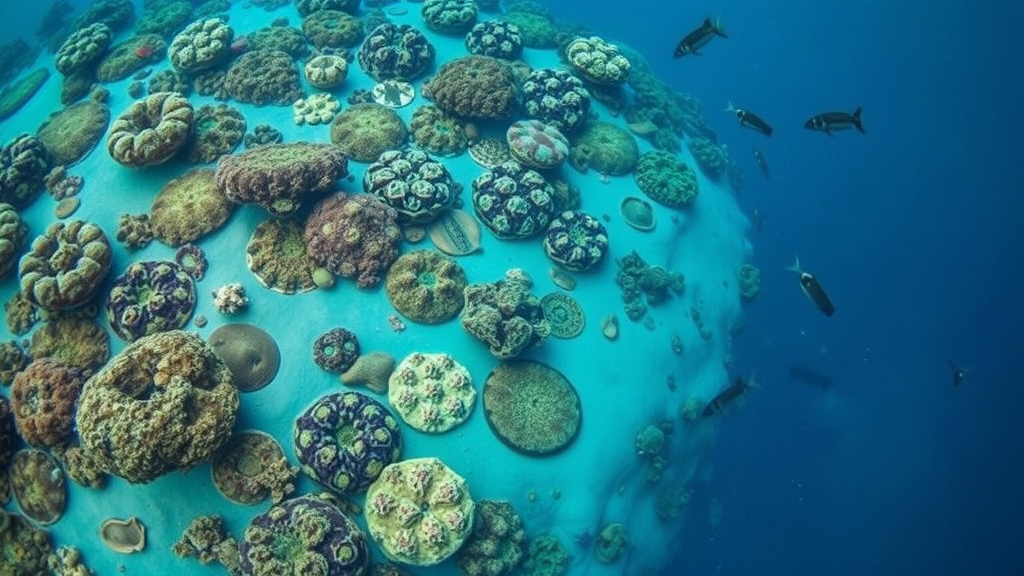
Image Credits: AI Generated
DOI: 10.1007/s00338-026-02964-2
Keywords: coral bleaching, ENSO, El Niño, Sri Lanka, Indian Ocean, sea surface temperature, monsoon, climate change, latent heat flux, fringing reefs, radiative flux, coral reef monitoring
Cite Scienmag News
Violet Maxwell. (September 23, 2026). El Niño Heatwaves and Delayed Monsoons Combine to Bleach Sri Lanka’s Coral Reefs. Scienmag. https://scienmag.com/el-nino-heatwaves-and-delayed-monsoons-combine-to-bleach-sri-lankas-coral-reefs/
Violet Maxwell. "El Niño Heatwaves and Delayed Monsoons Combine to Bleach Sri Lanka’s Coral Reefs." Scienmag, 23 September 2026, https://scienmag.com/el-nino-heatwaves-and-delayed-monsoons-combine-to-bleach-sri-lankas-coral-reefs/. Accessed 4 October 2026.
Violet Maxwell. "El Niño Heatwaves and Delayed Monsoons Combine to Bleach Sri Lanka’s Coral Reefs." Scienmag. September 23, 2026. https://scienmag.com/el-nino-heatwaves-and-delayed-monsoons-combine-to-bleach-sri-lankas-coral-reefs/


