


Decade-Long Study Finds Fossil Fuels Dominate Ambient Black Carbon Over Bhubaneswar
A decade-long atmospheric study in Bhubaneswar found black carbon averaged nearly 6 percent of fine particulate mass, driven primarily by ...
A decade-long atmospheric study in Bhubaneswar found black carbon averaged nearly 6 percent of fine particulate mass, driven primarily by ...

A 34-year analysis of the Ganga River Valley shows a significant increase in strong heat stress days, with rapid intensification ...

A new study reveals that monsoon rainfall in the downstream Bagmati River, India, improves overall water quality through dilution while ...

A 2021 study of four monitoring sites in Bilaspur district, central India, found that seasonal meteorology, not location, governed air ...

A 38-year analysis of Indian weather simulations and observations shows the atmospheric boundary layer has thinned by 30 to 40 ...
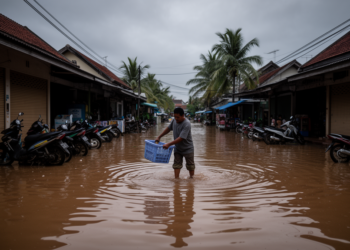
A systematic review of eight studies published between 2020 and 2025 finds that leptospirosis outbreaks across Southeast Asia consistently follow ...
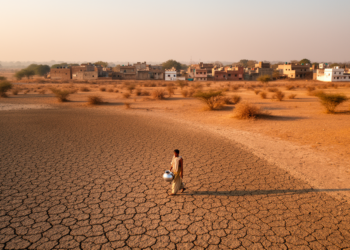
A CMIP6-based model study finds that 56 to 60 percent of India's land area shifts to higher drought hazard grades ...
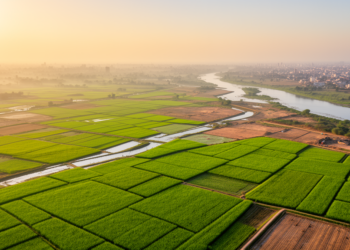
A CLM4.5 modeling study of India in 2020 shows that a season-specific irrigation map raises the pre-monsoon transpiration-to-evapotranspiration ratio by ...

Year-long monitoring on Everest's northern slope shows atmospheric microplastics and nanoplastics arriving continuously through both short-range and long-range transport.

A twelve-year study of Odisha's Baitarani River combined water quality indices, multivariate statistics and machine learning to identify monsoon-season pollution ...


Embark on a thrilling journey of discovery with Scienmag.com—your ultimate source for cutting-edge breakthroughs. Immerse yourself in a world where curiosity knows no limits and tomorrow’s possibilities become today’s reality!