


Deep inside every plant-pathogenic fungus lies a molecular toolkit that determines whether it will infect a crop or fail at the first barrier. Among the most intriguing components of that toolkit are proteins carrying the CFEM domain — short for Common in the Fungal Extracellular Membrane. A comprehensive review published in Frontiers in Fungal Biology by Carrillo-Hernández and colleagues now brings together more than two decades of evidence on these fungal-exclusive proteins, revealing how eight conserved cysteine residues define a domain that has become essential for fungal physiology and virulence in plant host interactions. The review, which spans phylogenetic distribution, structural classification and functional diversity, arrives at a moment when fungal diseases are major contributors to global economic losses across agriculture, forestry and human health.
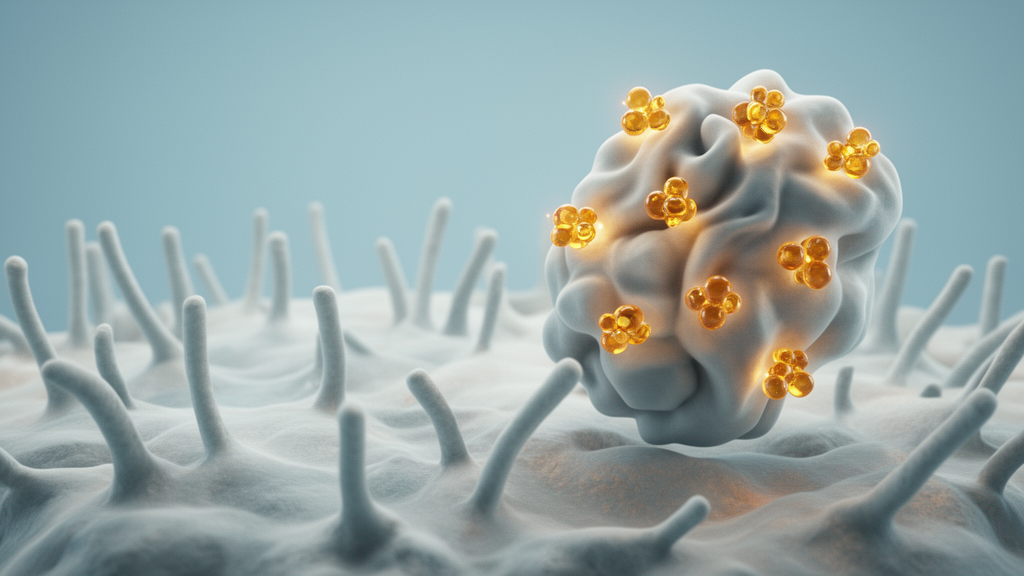
The CFEM domain was first identified in 2003 by Kulkarni and co-workers in the extracellular protein ACI1, produced by the rice blast fungus Magnaporthe grisea during appressorium development. Through a yeast two-hybrid assay, they found that ACI1 interacts with the adenylate cyclase MAC1, a key regulator of appressorium formation. The domain itself consists of approximately 60 amino acids defined by a specific consensus sequence rich in cysteine. Structurally, it adopts a unique and highly conserved helical-basket fold composed of six alpha-helices stabilized by four disulfide bonds formed between the eight conserved cysteine residues. This architecture, first crystallized in the Candida albicans protein Csa2, provides a flat hydrophobic platform that can display a heme molecule, with an axial iron ligand at a conserved aspartate residue and a stacking interaction with a nearby tyrosine.
What makes CFEM proteins particularly remarkable is their phylogenetic restriction. Genomic analyses across animals, plants and fungi have determined that the CFEM domain is unique to fungi, and phylogenetic evidence reveals that it evolved from a common ancestor within a single large family. The domain is restricted to the phyla Ascomycota and Basidiomycota, suggesting its origin in the most recent common ancestor of these lineages. The review’s authors performed a CLANS cluster analysis on 10,000 CFEM domain-containing sequences retrieved from the InterPro database, confirming that all sequences are globally connected by the conserved motif. However, approximately 1,400 sequences remained unclustered, indicating that sequence-based subdivision requires further refinement and reinforcing the rationale for a functional classification approach.
That functional classification divides CFEM proteins into three groups. Type I proteins carry a secretory signal peptide and lack transmembrane domains, functioning as effectors that modulate plant immunity. Type II proteins are anchored to the plasma membrane or cell wall through glycosylphosphatidylinositol (GPI) modifications. Type III proteins are Pth11-like membrane receptors with seven transmembrane domains involved in host signal perception. The review identified over 350 genes encoding CFEM proteins across 27 studied species, with approximately 60 proteins functionally characterized through transient expression assays, mutant generation, biochemical analysis and protein–protein interaction studies. A robust positive correlation was found between the number of CFEM genes and total gene count across 25 Ascomycota species (Pearson’s r = 0.7451, p < 0.001), suggesting that species with greater overall genetic content tend to carry more CFEM genes.
Type I CFEM effectors have emerged as adaptive virulence agents that operate at multiple levels of plant defense. In Fusarium graminearum, the causal agent of Fusarium Head Blight in wheat, several apoplastic CFEM proteins interact with key immune-related proteins in maize. The effector FgCFEM11 binds to ZmWAK17ET, an alternatively spliced isoform of the maize Wall-Associated Kinase ZmWAK17, suppressing the hypersensitive cell death response that the full-length kinase would otherwise trigger. In Fusarium verticillioides, FvCFEM12 acts as a dual-function effector that drives virulence by suppressing plant immunity and maintaining fungal cell wall integrity. The stripe rust fungus Puccinia striiformis secretes PstCFEM2, which competitively binds to the C-terminal domain of the wheat plasma membrane H+-ATPase TaHA2, preventing its phosphorylation by the kinase TaCIPK9. This manipulation causes apoplastic acidification and increased stomatal opening, facilitating fungal colonization. In Colletotrichum fructicola, the effector CfEC12 interacts with MdNIMIN2, a positive regulator of plant immunity, blocking its interaction with MdNPR1 and weakening salicylic acid-dependent defense responses in apple.
Type II GPI-anchored CFEM proteins display the greatest functional diversity within the family. In Aspergillus fumigatus, triple deletion mutants of the GPI-anchored proteins CfmA, CfmB and CfmC show increased sensitivity to cell wall stress agents Congo Red and Calcofluor White, indicating their role in stabilizing cell wall integrity. In Candida albicans, the relay network of Rbt5, Pga7 and Csa2 drives heme acquisition from hemoglobin, with a conserved aspartate residue acting as the axial ligand for the iron atom. This capacity extends beyond yeasts: in the phytopathogen Colletotrichum gloeosporioides, the protein CgCsa binds ferric iron through its conserved aspartate site, and deletion mutants show reduced intracellular iron levels, downregulated iron transport genes and impaired mycelial growth and conidial production. In the entomopathogenic fungus Beauveria bassiana, BbCFEM7 competes for iron with the bacterium Enterococcus mundtii in the hemolymph of moth larvae, and its deletion significantly increases bacterial abundance while reducing fungal virulence. BbCFEM7 also contributes to plasma membrane curvature, with mutant strains exhibiting defects in germ tube curvature and reduced penetration of the insect cuticle.
Type III Pth11-like proteins represent a novel subclass of non-canonical G protein-coupled receptors specific to ascomycetes. These receptors sense extracellular signals such as surface hydrophobicity, rigidity and the presence of cutin, triggering intracellular signaling cascades including the cAMP/PKA pathway and the MAPK cascade that promote appressorium formation. In Magnaporthe oryzae, the WISH protein — named for Water Wettability, Infection, Surface Sensing and Hyper-conidiation — participates in mycelial growth, cell autolysis, cell wall integrity, conidiogenesis and appressorium development. Infection assays on rice leaves revealed that WISH deletion mutants were unable to produce typical rice blast lesions, a loss of virulence attributed to impaired detection of hydrophobic surfaces. Notably, the review found that species within the Eurotiomycetes and Saccharomycetes classes lacked CFEM Type III proteins entirely, while Sordariomycetes — which include numerous aggressive phytopathogens — showed the highest average number of CFEM proteins at 21.69 per species.
The distribution of CFEM proteins across fungal classes suggests significant diversity and possible adaptive strategies tailored to specific ecological niches. Species within Sordariomycetes, Leotiomycetes and Dothideomycetes include numerous highly aggressive phytopathogens, which may account for their higher CFEM protein counts. In Sordariomycetes pathogens such as Colletotrichum gloeosporioides, Fusarium graminearum and Fusarium sacchari, the average number of Pth11-like proteins is 9.53 per species, compared to just 3 in Dothideomycetes. The review also documented a non-canonical CFEM protein in Verticillium dahliae that contains only six cysteine residues instead of the usual eight, yet still adopts a three-alpha-helix conformation. This protein, designated VdTRP for its tetrapeptide tandem repeat structure, anchors to cotton membranes through interaction with phosphatidylserine and induces host cell death — demonstrating that even deviations from the canonical domain architecture can support virulence functions.
Targeted mutagenesis experiments have revealed the critical importance of the conserved cysteine residues themselves. When researchers substituted cysteine with alanine in the Verticillium dahliae proteins VdSCP76 and VdSCP77, the mutant proteins lost their ability to suppress cell death induced by the fungal enzyme VdEG1, highlighting the role of disulfide bridges in regulating immunity. Similarly, in Fusarium graminearum, replacing cysteine with alanine in the GPI-anchored protein CFEM1 disrupted its binding with ZmWAK17ET, confirming that the CFEM domain is crucial for mediating protein–protein interactions with host targets. In Fusarium sacchari, virulence is closely associated with two specific residues in the CFEM domain — aspartic acid and phenylalanine — demonstrating that even non-cysteine positions within the domain can determine pathogenic outcomes.
The review concludes that CFEM domain-containing proteins serve as key links between host interaction and cellular maintenance, with significant knowledge gaps remaining. It is still unclear whether CFEM effectors undergo post-translational modifications, proteolytic cleavage or redox changes to become active after secretion. The non-canonical secretion mechanisms and vesicle-trafficking networks that deliver these proteins to specialized infection structures such as haustoria and appressoria remain undefined. For the least-studied group — the Pth11-like receptors — it is unknown whether they perceive the same stimuli as other putative fungal GPCRs, and functional characterization has focused primarily on the genus Magnaporthe. As the authors emphasize, future studies on the structural diversity and novel mechanisms of CFEM proteins will be crucial for developing targeted agricultural control strategies against the fungal pathogens that continue to threaten global food security.
Subject of Research: CFEM proteins: unique to fungi with essential roles in plant host interactions
Article Title: CFEM proteins: unique to fungi with essential roles in plant host interactions
Article References: Carrillo-Hernández, E. D., Carreras-Villaseñor, N., Plasencia, J., Hernández-Dominguez, E. E., & Sánchez-Rangel, D. (2026). CFEM proteins: unique to fungi with essential roles in plant host interactions. Frontiers in Fungal Biology, 7, Article 1866984. https://doi.org/10.3389/ffunb.2026.1866984
Image Credits: AI Generated
DOI: 10.3389/ffunb.2026.1866984
Keywords: CFEM, proteins, unique, fungi, essential, roles, plant, host, interactions, scientific research
Cite Scienmag News
Drew Townsend. (October 17, 2026). Eight cysteines that rule fungal invasions: the CFEM domain exposed. Scienmag. https://scienmag.com/eight-cysteines-that-rule-fungal-invasions-the-cfem-domain-exposed/
Drew Townsend. "Eight cysteines that rule fungal invasions: the CFEM domain exposed." Scienmag, 17 October 2026, https://scienmag.com/eight-cysteines-that-rule-fungal-invasions-the-cfem-domain-exposed/. Accessed 17 October 2026.
Drew Townsend. "Eight cysteines that rule fungal invasions: the CFEM domain exposed." Scienmag. October 17, 2026. https://scienmag.com/eight-cysteines-that-rule-fungal-invasions-the-cfem-domain-exposed/


