


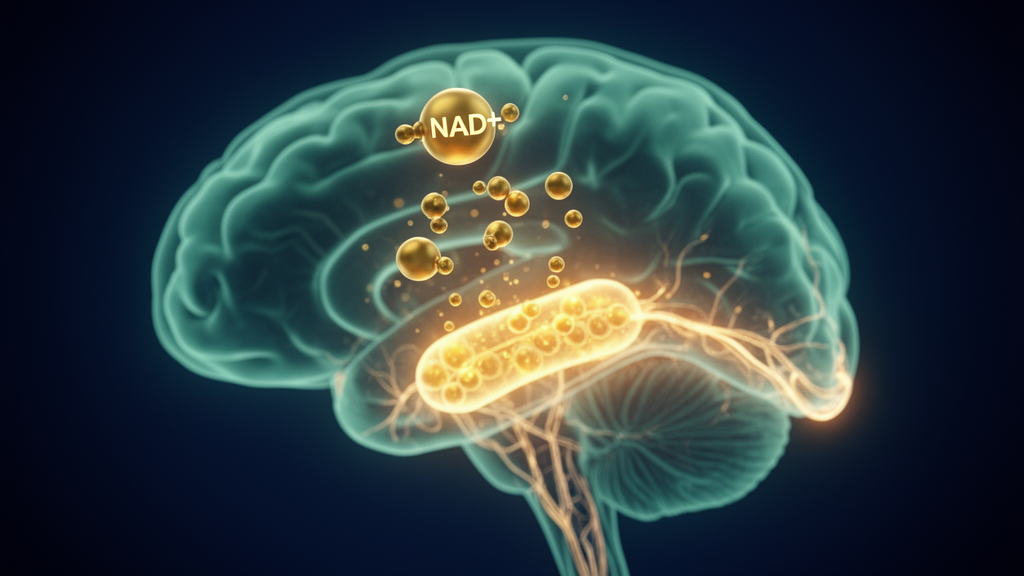
A single short course of a popular anti-aging supplement, given during a narrow window of childhood brain development, has been linked to measurable improvements in learning and memory in a mouse model of schizophrenia. The study, published in Translational Psychiatry by a team at Ningxia Medical University in China, examined nicotinamide mononucleotide, or NMN, a molecule that sits one biochemical step away from NAD+, the coenzyme that powers countless reactions in every living cell. NMN has become one of the most talked-about compounds in the longevity world, but this new work shifts the spotlight away from aging and toward a far more delicate question: whether boosting cellular metabolism during a critical developmental window can reshape the trajectory of a neurodevelopmental disorder. The findings are intriguing, the biological story is coherent, and the researchers themselves are careful to frame the results as associations rather than proof of causation.
Schizophrenia remains one of psychiatry’s most stubborn challenges. While antipsychotic medications can dampen hallucinations and delusions, cognitive impairment, spanning problems with memory, attention, and executive function, is a core determinant of long-term disability, and existing treatments offer limited benefit for these deficits. Because schizophrenia is understood as a neurodevelopmental disorder, its roots stretch back into childhood, long before the first psychotic episode typically appears in late adolescence or early adulthood. That timing creates both a problem and an opportunity. The prepubertal period, the researchers argue, represents a critical window for early intervention, because the metabolic and neuroplastic abnormalities that accumulate during development may still be potentially reversible. Intervening early, before the brain’s circuits have been permanently shaped by years of dysfunction, could in principle change the course of the illness rather than merely manage its symptoms.
To test this idea, the team used what is known as a two-hit mouse model, an experimental design that mirrors the multi-layered origins of schizophrenia in humans. The first hit was maternal immune activation: pregnant mothers had their immune systems provoked, mimicking the well-documented epidemiological link between infection during pregnancy and elevated schizophrenia risk in offspring. The second hit was chronic unpredictable stress applied to the male offspring later in development, reproducing the environmental adversity that many people who go on to develop psychosis experience during childhood and adolescence. Male mice exposed to both hits received NMN at a concentration of 2 grams per liter in their drinking water, starting at postnatal day 21 and continuing through postnatal day 30. In mouse development, this corresponds to the prepubertal and juvenile phase, roughly analogous to late childhood in humans, and it is precisely the window the researchers wanted to target.
The behavioral results were the first signal that something had changed. In the Morris water maze, a classic test in which mice must learn the location of a hidden platform using spatial cues, the NMN-treated animals showed improved spatial learning compared with their untreated two-hit counterparts. In the novel object recognition test, which exploits a mouse’s natural preference for exploring things it has never seen before, the treated animals displayed enhanced exploratory and cognitive performance, suggesting better recognition memory. These were not subtle, isolated effects confined to a single task. The improvements spanned two distinct domains of cognition, spatial navigation and object memory, both of which depend heavily on the hippocampus, the seahorse-shaped structure deep in the brain that is essential for forming new memories and that has long been implicated in schizophrenia.
When the researchers looked inside the dentate gyrus, the hippocampal subregion where new neurons are born throughout life, they found a striking pattern of changes in markers of neurogenesis. Using immunofluorescence staining, they documented increased densities of radial glia-like cells, identified as cells positive for the EdU proliferation label, the stem cell marker SOX2, and the glial marker GFAP. They also saw more proliferative progenitors marked by Ki67 and DCX, the latter a protein expressed by immature newborn neurons, and ultimately more mature NeuN-positive neurons in the region. In other words, the full pipeline of adult neurogenesis, from resident stem cells through dividing progenitors to newly integrated neurons, appeared to be running at a higher level in the NMN-treated animals. Critically, these changes in neurogenesis-related markers were positively correlated with the animals’ behavioral performance, hinting that the cellular and cognitive effects might be two sides of the same coin.
The second major thread of the study concerned mitochondria, the organelles that generate most of a cell’s chemical energy. Mitochondrial dysfunction has emerged as a recurring theme in schizophrenia research, and the hippocampus, with its high energy demands, is particularly vulnerable. Using transmission electron microscopy, the team examined the ultrastructure of hippocampal mitochondria and observed patterns consistent with improved mitochondrial health in the treated mice. Biochemical assays told a parallel story: levels of ATP, the cell’s energy currency, and NAD+, the coenzyme that NMN replenishes, were higher, as was the copy number of mitochondrial DNA, a proxy for mitochondrial abundance. Citrate synthase activity, a standard enzymatic readout of mitochondrial content, and coenzyme Q10 levels, a measure of the electron transport chain’s cargo, both shifted in directions consistent with improved mitochondrial content and homeostasis. Taken together, the data suggest that NMN did not merely tweak a single metabolic parameter but appeared to restore a broader energetic equilibrium in the hippocampus.
To probe the mechanisms more directly, the researchers turned to in vitro experiments with neural stem cells cultured under neuroinflammatory conditions, which simulate the hostile, inflammation-laden environment that brain cells face in the two-hit model. Under these conditions, NMN treatment was associated with increased neural stem cell viability and reduced apoptosis, the programmed cell death that can prune away precious newborn neurons. The treatment also altered the balance of lineage commitment, changing the expression of neuronal versus glial lineage markers, a shift that could influence the composition of the cells ultimately produced. This cell-culture arm of the study allowed the team to manipulate the signaling pathway they suspected was at work, something that is far harder to do cleanly in a living brain.
That suspected pathway runs through SIRT1, an NAD+-dependent deacetylase that has become one of the most intensively studied links between cellular metabolism and longevity. In the in vitro experiments, NMN treatment was associated with increased SIRT1 expression and decreased levels of p53 acetylation, a modification that normally destabilizes the genome and promotes cell death when p53 is active. At the same time, the researchers observed increased phosphorylation of components of the PI3K/AKT/mTOR pathway, a central signaling cascade that promotes cell survival, growth, and proliferation. The decisive experiment came when the team added EX527, a pharmacological inhibitor of SIRT1, to the cultures. The protective effects of NMN were attenuated, meaning the benefits largely disappeared when SIRT1 was blocked. This loss-of-function result provides the strongest mechanistic evidence in the paper that the SIRT1–p53–PI3K/AKT/mTOR axis is the conduit through which NMN exerts its influence on neural stem cells under inflammatory stress.
The authors are appropriately measured about what their data do and do not establish. They describe their findings as experimental evidence that prepubertal NMN administration in the combined two-hit schizophrenia model is associated with concurrent improvements in neurogenesis-related markers, mitochondrial homeostasis indices, and cognitive-related behavioral performance, potentially involving the SIRT1–p53–PI3K/AKT/mTOR signaling pathway. The word associated appears deliberately throughout the abstract, and the researchers explicitly flag two open questions: whether the changes in neurogenesis-related markers are causally required for the cognitive improvement, and which component of the two-hit model, the maternal immune activation or the chronic stress, NMN primarily acts upon. These are not trivial gaps. Correlation between newborn neurons and better maze performance does not prove the former drives the latter, and knowing which developmental insult the compound counteracts would shape how such an intervention might eventually be timed and targeted in humans.
Even with those caveats, the study lands at a compelling intersection of several fast-moving fields. The longevity community has long been fascinated by NAD+ restoration, but rigorous evidence for cognitive benefits in a neurodevelopmental context is rare. The schizophrenia field has been searching for treatments that address cognition, the domain where current drugs fail most visibly, and for interventions that can be deployed during the long prodromal window before illness onset. And the broader neuroscience of critical periods suggests that the developing brain may be uniquely responsive to metabolic interventions in ways the adult brain is not. The work, supported by the National Natural Science Foundation of China and conducted under approved animal ethics protocols, is a mouse study with in vitro mechanistic support, not a clinical trial, and no one should rush to give NMN to children based on these results alone. But as a proof of concept, it makes a vivid case that the window between childhood and adolescence may be a genuine therapeutic opportunity, and that the machinery of brain repair, from stem cell niches to mitochondrial power plants, may be more amenable to intervention during development than anyone dared to hope.
Subject of Research: Effects of prepubertal nicotinamide mononucleotide administration on hippocampal neurogenesis, mitochondrial function, and cognition in a mouse model of schizophrenia
Article Title: Prepubertal NMN Administration is associated with changes in hippocampal neurogenesis-related markers and amelioration of cognitive deficits
Article References: Yang, Z.-L., Li, J.-J., Feng, Z.-Q., Guo, C., Liu, Y.-B., Shao, Y., Lv, H.-W., Wu, K., & Liu, J. (2026). Prepubertal NMN Administration is associated with changes in hippocampal neurogenesis-related markers and amelioration of cognitive deficits. Translational Psychiatry. https://doi.org/10.1038/s41398-026-04516-2
Image Credits: AI Generated
DOI: 10.1038/s41398-026-04516-2
Keywords: NMN, NAD+, schizophrenia, hippocampal neurogenesis, mitochondria, SIRT1, p53, PI3K/AKT/mTOR, cognitive deficits, two-hit model, maternal immune activation, neural stem cells
Cite Scienmag News
Glenn Wilkins. (October 8, 2026). Early-Life NAD+ Booster Shows Promise for Cognitive Deficits in Schizophrenia Model. Scienmag. https://scienmag.com/early-life-nad-booster-shows-promise-for-cognitive-deficits-in-schizophrenia-model/
Glenn Wilkins. "Early-Life NAD+ Booster Shows Promise for Cognitive Deficits in Schizophrenia Model." Scienmag, 8 October 2026, https://scienmag.com/early-life-nad-booster-shows-promise-for-cognitive-deficits-in-schizophrenia-model/. Accessed 8 October 2026.
Glenn Wilkins. "Early-Life NAD+ Booster Shows Promise for Cognitive Deficits in Schizophrenia Model." Scienmag. October 8, 2026. https://scienmag.com/early-life-nad-booster-shows-promise-for-cognitive-deficits-in-schizophrenia-model/


