


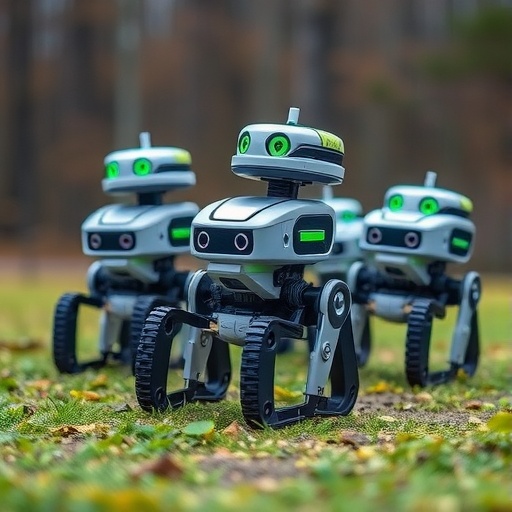
In a world where autonomous systems are increasingly prevalent, the advent of heterogeneous multi-robot teams represents a significant leap forward in the field of robotics. This new paradigm enables teams composed of different types of robots to tackle complex tasks that would be challenging or even impossible for a single robot to manage alone. The research conducted by Coffey and Pierson, published in the journal “Autonomous Robots,” delves into the aspects of multi-resource coverage, shedding light on how these robotic teams can work harmoniously to monitor and manage various resources simultaneously.
Imagine a large-scale agricultural operation where multiple types of robots need to coordinate their efforts to cover fields efficiently. One robot might be responsible for planting seeds, while another monitors soil health, and yet another focuses on pest control. The successful deployment of these heterogeneous robots can lead to higher productivity and optimized resource usage. The study outlines methods through which these teams can be organized, enabling robots to communicate in real-time and adapt their strategies based on environmental feedback.
As the complexity of tasks increases, so does the requirement for effective communication and coordination among robots. The study emphasizes the role of advanced algorithms in enabling these functionalities. Algorithms that facilitate efficient data sharing among team members ensure that each robot is informed of the positions and tasks of its peers. This inter-robot communication allows for the dynamic reallocation of responsibilities based on changing conditions and individual robot capabilities, paving the way for a new era in robotic collaboration.
One of the compelling aspects of this research is its implication for real-world applications. For instance, in search and rescue missions following natural disasters, heterogeneous robots can be deployed to survey affected areas, locate survivors, and assess damage to infrastructure. Each robot can leverage its unique strengths—whether that be maneuverability, sensor capabilities, or processing power—to maximize the effectiveness of the mission. This flexibility highlights the promise of using diverse robotic teams in scenarios that require rapid adaptability.
Coffey and Pierson’s work also touches upon the challenges associated with multi-robot systems, particularly in terms of resource allocation. Each robot in a heterogeneous team often comes equipped with different sensors and capabilities, which necessitates strategic planning to ensure that these resources are utilized optimally. The authors propose innovative frameworks to address these challenges, including resource prioritization algorithms and adaptive control strategies that allow the robotic teams to function cohesively under various environmental constraints.
Additionally, the research incorporates simulations that validate their proposed approaches. These simulations provide insightful data about the performance of heterogeneous teams versus homogeneous teams—those composed of identical robots. Results indicate that heterogeneous teams consistently exhibit superior coverage and resource management due to their ability to exploit individual robot strengths.
Furthermore, the paper discusses the importance of adaptability in robotic systems. Environmental conditions can change rapidly, which may impact the efficiency of robotic operations. The authors suggest that incorporating machine learning techniques can enhance the adaptability of the robots, allowing them to learn from previous experiences and adjust their operations for improved outcomes.
The implications of this research are significant not only for industries that employ robotic systems but also for the future generation of robotic applications. From healthcare delivery systems that use drones for transporting medical supplies to environmental monitoring systems that utilize various robots to track wildlife populations, the possibilities appear limitless. As heterogeneous robotic teams become increasingly sophisticated, their potential to address pressing global challenges grows.
In addition to their practical applications, Coffey and Pierson highlight the ethical considerations of deploying robotic systems in sensitive environments. The authors advocate for responsible development, emphasizing the necessity of integrating ethical frameworks into the design process. This involves ensuring that autonomous systems operate transparently and are designed to minimize any potential negative impact on the communities they serve.
As autonomous technologies continue to advance, researchers and engineers face the important task of bridging the gap between theoretical research and practical implementation. The findings presented by Coffey and Pierson not only contribute to academic discourse but also offer valuable insights for practitioners seeking to leverage the capabilities of heterogeneous multi-robot teams.
Looking ahead, the future of robotics is bound to be shaped by the collaboration between different robots, each contributing uniquely to collective objectives. As we stand at the forefront of this rapidly evolving field, it becomes essential to explore the intricate dynamics involved in robot teamwork and to develop robust frameworks that ensure their effective integration into various sectors.
In conclusion, the research by Coffey and Pierson serves as a cornerstone for understanding the complexities of multi-resource coverage through heterogeneous teams of robots. Their innovative approaches not only hold promise for efficiency in resource management but also pave the way for creating more intelligent and adaptive autonomous systems. The journey of robotic technology is just beginning, and as we embrace these advancements, we are likely to witness transformative changes in how tasks are approached across numerous industries.
Cite Scienmag News
Denise Maddox. (January 16, 2026). Dynamic Multi-Robot Teams for Ongoing Resource Coverage. Scienmag. https://scienmag.com/dynamic-multi-robot-teams-for-ongoing-resource-coverage/
Denise Maddox. "Dynamic Multi-Robot Teams for Ongoing Resource Coverage." Scienmag, 16 January 2026, https://scienmag.com/dynamic-multi-robot-teams-for-ongoing-resource-coverage/. Accessed 5 September 2026.
Denise Maddox. "Dynamic Multi-Robot Teams for Ongoing Resource Coverage." Scienmag. January 16, 2026. https://scienmag.com/dynamic-multi-robot-teams-for-ongoing-resource-coverage/


