


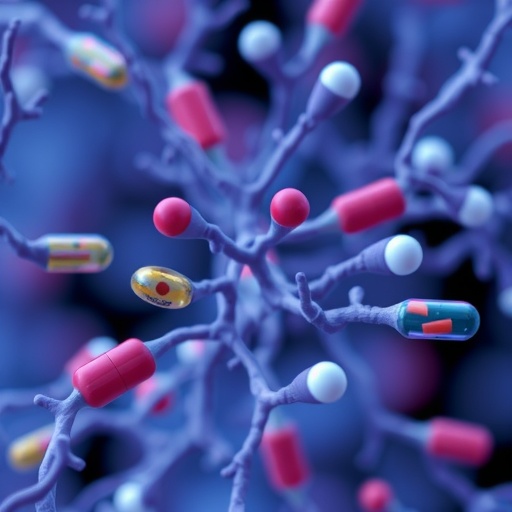
In a groundbreaking revelation that could transform the therapeutic landscape for Parkinson’s disease (PD), a team of researchers led by Verdegaal et al. has elucidated a complex interaction between the human microbiome and co-prescribed medications. Their study, recently published in Nature Microbiology, sheds light on how the gut microbiota can modulate drug efficacy and safety through a hitherto unrecognized drug–microbiome–drug interaction. This discovery has sweeping implications for personalized medicine and polypharmacy management in neurodegenerative diseases, particularly Parkinson’s, where patients often require intricate drug regimens.
Parkinson’s disease is primarily characterized by the progressive loss of dopaminergic neurons in the brain, leading to debilitating motor and non-motor symptoms. Pharmacotherapy for PD typically involves multiple drugs, including levodopa and various adjuncts, which aim to replenish or mimic dopamine signaling. However, treatment complications emerge due to adverse drug reactions and inconsistent therapeutic responses, a problem compounded by the presence of additional medications prescribed to manage comorbidities frequently observed in this patient population.
Central to the study conducted by Verdegaal and colleagues is the revelation that specific microbial species in the gut can metabolize certain drugs prescribed for PD and its associated conditions. This microbial drug biotransformation alters the chemical structure and potency of medications, influencing their systemic availability and therapeutic outcomes. Intriguingly, the study identifies that when patients are co-administered multiple drugs, the gut microbiome mediates interactions that can either amplify or mitigate the pharmacological effects, creating a web of intricate dependencies.
By employing comprehensive metagenomic sequencing combined with advanced metabolomic profiling, the researchers mapped the enzymatic capabilities of gut bacteria against a panel of Parkinson’s-related drugs. Their analysis revealed that certain bacterial taxa possess unique enzymes capable of metabolizing compounds like levodopa and entacapone, common in PD treatment protocols. These microbial transformations yielded metabolites with distinct biological activities, some of which competed with the drugs for receptor binding, thus modulating their clinical efficacy.
Furthermore, the study highlights that these microbial activities are not static but can be influenced by the presence of other drugs concurrently administered. For instance, drugs introduced to treat cardiovascular comorbidities were found to inhibit or enhance specific bacterial enzymatic pathways, thereby indirectly altering the metabolism of Parkinson’s medications. This phenomenon underscores a fascinating triad interaction—drug A affects microbiome enzyme activity, which modifies drug B’s metabolism and pharmacodynamics.
Importantly, the researchers demonstrated that the gut flora composition varies significantly between individuals, suggesting a personalized dimension to how these drug–microbiome–drug interactions manifest clinically. They proposed that differences in microbial community structure could partially explain the wide variability observed in drug responses among Parkinson’s patients. This insight presents a compelling argument for integrating microbiome profiling into clinical decision-making frameworks to optimize medication regimens tailored to individual microbial signatures.
To validate their findings, Verdegaal et al. utilized in vitro bacterial culture models and in vivo murine systems colonized with human gut microbiota. These experimental platforms recapitulated the microbial metabolism of Parkinson’s drugs, confirming the biochemical pathways involved and their modulation by co-administered medications. The in vivo models also unveiled unforeseen effects on drug pharmacokinetics, including alterations in absorption rates and systemic circulation half-lives, driven by microbial metabolism.
Notably, the study’s implications extend beyond Parkinson’s disease, resonating with broader themes in pharmacology and microbiome research. The concept that the microbiome acts as a dynamic enzymatic reservoir capable of altering drug fate adds a new dimension to understanding adverse drug reactions, polypharmacy complications, and therapeutic failures across many clinical contexts. It prompts a reevaluation of drug development paradigms to consider microbial influences during preclinical and clinical testing phases.
The practical impact of these findings could be transformative. Clinicians may soon have to incorporate microbiome assessments into routine care, especially for patients on complex medication regimens. Tools such as microbiome sequencing and personalized metabolomic profiling could guide drug selection and dosing, minimizing harmful drug–microbiome interactions. Moreover, therapeutic strategies might evolve to include microbiome modulation—using prebiotics, probiotics, or targeted antibiotics—to steer microbial communities toward favorable drug metabolism profiles.
From a molecular perspective, the identification of specific microbial enzymes responsible for drug biotransformations opens new avenues for drug design. Pharmaceutical research could aim to create compounds that evade detrimental microbial metabolism or even harness microbiome-mediated transformations to produce beneficial drug metabolites in situ. This represents an exciting frontier where medicinal chemistry converges with microbiome science to engineer next-generation therapeutics.
While the study is pioneering, it also raises crucial questions that warrant further investigation. The temporal dynamics of microbiome-mediated drug metabolism, the impact of diet and lifestyle factors on these interactions, and the potential role of host genetics remain to be thoroughly elucidated. Additionally, clinical trials designed to integrate microbial variables as stratification factors are needed to translate these insights into practice and assess their effects on patient outcomes.
In summary, Verdegaal and colleagues have unveiled a complex, multifaceted interaction between drugs and the gut microbiome that significantly impacts the therapeutic landscape for Parkinson’s disease. Their discovery challenges traditional views of pharmacokinetics and pharmacodynamics by introducing the microbiome as a pivotal player in medication response variability. This paradigm shift holds enormous promise for enhancing the precision and effectiveness of medical treatments, not only in neurology but across all fields where polypharmacy is prevalent.
As this research gains traction, it could trigger a shift in clinical practice guidelines, encouraging the development of integrated drug-microbiome interaction monitoring and management protocols. Such advancements would represent a major leap forward in precision medicine, reducing adverse effects and improving quality of life for millions of Parkinson’s patients worldwide.
Ultimately, this study underscores the imperative of viewing the human body not in isolation but as a supraorganism, deeply intertwined with its microbial inhabitants. Embracing this holistic perspective will be critical as science strives to unlock the full potential of personalized therapeutics and redefine how we approach drug therapy in complex diseases like Parkinson’s.
Cite Scienmag News
Morgan Morrow. (April 6, 2026). Drug–Microbiome Interactions Affect Parkinson’s Medications. Scienmag. https://scienmag.com/drug-microbiome-interactions-affect-parkinsons-medications/
Morgan Morrow. "Drug–Microbiome Interactions Affect Parkinson’s Medications." Scienmag, 6 April 2026, https://scienmag.com/drug-microbiome-interactions-affect-parkinsons-medications/. Accessed 7 September 2026.
Morgan Morrow. "Drug–Microbiome Interactions Affect Parkinson’s Medications." Scienmag. April 6, 2026. https://scienmag.com/drug-microbiome-interactions-affect-parkinsons-medications/


