


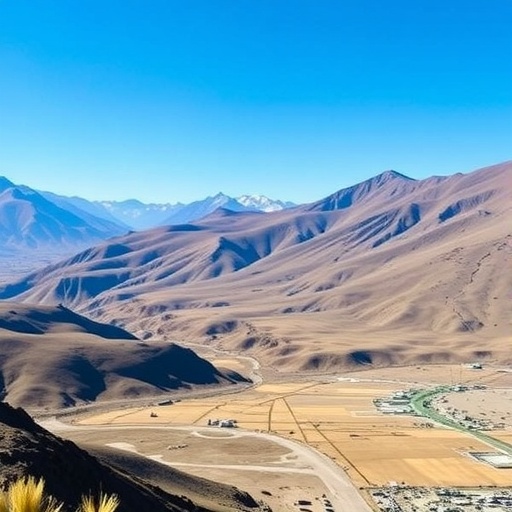
In a groundbreaking new study, researchers have unveiled compelling evidence that prolonged drought conditions coupled with subsequent social unrest on the Tibetan Plateau significantly contributed to the origin and dissemination of the Third Plague Pandemic. This interdisciplinary investigation blends climate science, historical epidemiology, and social dynamics to illuminate the environmental and societal factors that set the stage for one of the deadliest pandemics in human history. By integrating paleoclimatic data with archival records and pathogen evolution models, the team has reconstructed a vivid picture of how ecological stressors intersected with human conflict to catalyze this devastating outbreak.
The Tibetan Plateau, often referred to as the “Third Pole” due to its vast ice fields and climatic influence, has historically been a region of fragile ecosystems highly sensitive to climatic fluctuations. The research, published in Communications Earth & Environment, carefully analyzed tree ring records, sediment cores, and ice core samples to identify an extended period of extreme drought during the late 19th century. This dry spell severely disrupted regional water availability and pasture productivity, which aggravated food shortages and economic stress for local communities dependent on agropastoral livelihoods.
Historical accounts are central to the investigation, providing detailed descriptions of rising social tensions during this period. As drought conditions persisted, competition for scarce resources intensified, leading to widespread social unrest that manifested in violent conflicts and massive population displacements. This turmoil profoundly affected trade routes and population movements across the plateau and adjoining regions, creating pathways for the transmission of infectious agents. The researchers argue that this nexus of environmental scarcity and social instability created ideal conditions for the emergence and rapid spread of Yersinia pestis, the bacterium responsible for plague.
High-resolution genomic analyses of Yersinia pestis strains recovered from both historical and modern sources allowed scientists to trace the evolutionary trajectory of the pathogen. Their findings show a clear genetic signature linking the strains involved in the Third Plague Pandemic back to those endemic to the Tibetan Plateau region. This molecular evidence corroborates the hypothesis that the pathogen reservoir was disturbed by climatic and anthropogenic pressures, facilitating a spillover event that triggered one of the deadliest human diseases outbreaks ever recorded.
The Third Plague Pandemic, which began in the mid-19th century and extended well into the 20th century, caused tens of millions of deaths globally. While previous studies have focused primarily on urban centers and maritime trade as key factors in the pandemic’s spread, this research highlights the often-overlooked contributions of inland ecological and social dynamics. In particular, it underscores the pivotal role of high-altitude environmental stressors that set in motion a chain of events eventually impacting global health on an unprecedented scale.
Climate variability is increasingly recognized as a major driver of infectious disease dynamics. This study reinforces that understanding by demonstrating how prolonged drought acts as a catalyst not only through direct ecological disruption but also by exacerbating human conflicts and mobility patterns that facilitate pathogen transmission. The interplay of abiotic stress and adaptive human behavior emerges as a powerful framework for examining historical and future disease outbreaks.
The social dimensions uncovered are equally striking. The authors document how drought-induced scarcity undermined social cohesion and governance structures within indigenous Tibetan communities. Local leadership crumbled under pressure, and communities fragmented, inhibiting coordinated responses to disease threats. Such weakening of societal resilience is a recurrent theme in pandemic genesis, providing fertile ground for uncontrolled epidemic expansion.
Importantly, the study draws attention to the interconnected nature of environmental, social, and biological systems. By framing the Third Plague Pandemic as not merely a medical or epidemiological event but a socio-environmental catastrophe, it advances new paradigms for pandemic preparedness and response. Understanding that pandemics may stem from complex feedback loops involving climate shocks and social destabilization informs comprehensive risk assessments.
The Tibetan Plateau as a focal region offers unique insights given its geographical and cultural particularities. Its remoteness and harsh conditions create natural ecological barriers that typically constrain pathogen spread. Thus, significant disruptions in this region are especially potent signals of systemic environmental and social breakdowns requiring urgent scrutiny. The modern implications for similar high-altitude and vulnerable areas coping with climate change are profound.
Furthermore, the research adds to the growing body of evidence linking global warming and climate extremes with increased risks of zoonotic spillovers. As ecosystems are pushed beyond their tipping points, wildlife reservoirs and human populations experience increased contact and pathogen exchanges. The Tibetan Plateau serves as a natural laboratory emphasizing the urgent need to monitor fragile, climatically sensitive zones in the context of emerging infectious diseases.
By leveraging a multidisciplinary methodological approach, the study pioneers a holistic investigation model combining environmental reconstructions, historical analysis, and pathogen genomics. This integrative framework is particularly powerful for dissecting events that unfold over extended periods and across multiple domains. It offers a template for future inquiries into other pandemic events shaped by similar socio-ecological complexities.
The societal ramifications discussed extend beyond retrospective understanding, highlighting actionable lessons for contemporary public health strategy. For instance, the importance of maintaining social stability and resource equity during environmental crises is paramount in mitigating disease vulnerabilities. The Tibetan case study serves as a cautionary tale urging investment in early warning systems that integrate climatic and social indicators.
This research is also a call to broaden our conceptualization of pandemic sources beyond traditional nodes such as ports or metropolitan hubs, exploring instead the critical influence of remote hinterlands where ecological shifts occur silently but with profound consequences. It challenges the predominantly urban-centric perspective on infectious disease emergence.
In conclusion, the findings of Tang, Fang, Zhou, and colleagues provide a compelling narrative linking prolonged drought and social upheaval on the Tibetan Plateau to the Third Plague Pandemic. By unraveling the environmental and human factors driving this historic outbreak, the study not only enriches our understanding of past pandemics but also equips us with analytical tools and cautionary insights relevant to confronting future global health challenges in a warming world. The Tibetan Plateau reminds us that far-flung and environmentally sensitive regions can hold the key to understanding and preventing the next pandemic.
Tang, W., Fang, K., Zhou, F. et al. Prolonged drought and associated social unrest on the Tibetan Plateau played a role in the emergence and spread of the Third Plague Pandemic.
Commun Earth Environ (2026). https://doi.org/10.1038/s43247-026-03526-8
Cite Scienmag News
Kristina Jarvis. (April 22, 2026). Drought Fueled Third Plague Pandemic on Tibetan Plateau. Scienmag. https://scienmag.com/drought-fueled-third-plague-pandemic-on-tibetan-plateau/
Kristina Jarvis. "Drought Fueled Third Plague Pandemic on Tibetan Plateau." Scienmag, 22 April 2026, https://scienmag.com/drought-fueled-third-plague-pandemic-on-tibetan-plateau/. Accessed 4 September 2026.
Kristina Jarvis. "Drought Fueled Third Plague Pandemic on Tibetan Plateau." Scienmag. April 22, 2026. https://scienmag.com/drought-fueled-third-plague-pandemic-on-tibetan-plateau/


