


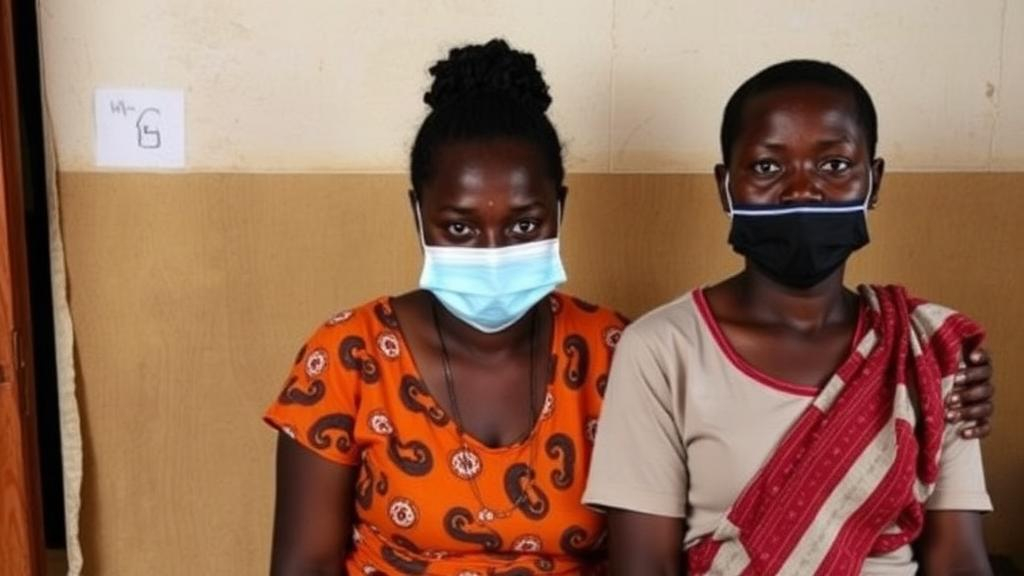
In Uganda, where an estimated 1.4 million people live with HIV and where the COVID-19 pandemic disrupted health systems already stretched thin, pregnant and breastfeeding women face a uniquely punishing set of obstacles when they try to obtain care. A qualitative study published in BMC Public Health by Adelline Twimukye of the University of Nairobi and Makerere University’s Infectious Diseases Institute, together with colleagues in Uganda and the United Kingdom, has documented how HIV-related stigma and COVID-19-related fear interlock to discourage women from attending antenatal clinics, adhering to antiretroviral therapy (ART), and maintaining the household relationships that sustain them through pregnancy and early motherhood. The research, published on 10 October 2026, offers a granular account of the social machinery that transforms disease into isolation.
The study team conducted fieldwork in selected districts of Uganda between March and July 2025, deliberately sampling three distinct perspectives: the women themselves, the healthcare workers who serve them, and community stakeholders who shape local norms. Data collection was structured around 12 focus group discussions, 24 in-depth interviews, and 21 key informant interviews, all selected purposively to capture the widest relevant range of experience. Interviews were audio-recorded, transcribed verbatim, and analyzed using reflexive thematic analysis with NVivo version 12 software, a workflow that allows researchers to code and re-code text iteratively while remaining alert to how their own assumptions shape interpretation.
A crucial methodological choice was the analytic framing. Rather than treating stigma as an individual psychological burden, the researchers organized their analysis through the Social Ecological Model, a framework widely used in public health that situates health behavior at nested levels: individual, interpersonal, community, institutional, and policy. This lens proved essential, because the barriers the team identified did not operate in isolation. A woman’s fear of gossip in her village interacts with her husband’s reaction to her diagnosis, which in turn interacts with clinic layout, staffing confidentiality, and national pandemic restrictions, each layer compounding the next.
What emerged was a portrait of HIV stigma as pervasive and finely textured. Participants described stigma expressed through gossip, discrimination, enforced secrecy, and moral judgment, forms of social policing that directly shaped whether women disclosed their status and whether they felt safe entering care. In communities where an HIV diagnosis is read as a verdict on character rather than a manageable chronic infection, the cost of visibility can be catastrophic: loss of marital support, exclusion from social networks, and the constant vigilance of managing who knows and who does not. For pregnant and breastfeeding women, whose frequent clinic visits make their health status unusually public, these costs are amplified at precisely the moment when consistent care matters most for preventing mother-to-child transmission.
The arrival of COVID-19 did not simply add a second burden; it interacted with the first. The study found that pandemic-related fear intensified social isolation, movement restrictions, and, most insidiously, the risk of unintended disclosure of HIV status. Lockdowns and curbs on movement meant that a woman traveling to an ART clinic could be flagged as HIV-positive by neighbors who assumed only certain people needed to move during restrictions. Pandemic-era health measures, designed for population protection, inadvertently became disclosure mechanisms, exposing women to the very stigma the HIV response has spent decades trying to dismantle.
The researchers describe the result as layered stigma: the coexistence of HIV and COVID-19 created compounding social pressures that disrupted antenatal care attendance, undermined ART adherence, and strained household relationships. A woman might skip a clinic visit to avoid scrutiny, then miss her medication schedule to conceal the trip, then face conflict at home when her health falters. Each link in that chain is individually understandable; together they constitute a cascade that can jeopardize both maternal health and the prevention of vertical HIV transmission during pregnancy and breastfeeding, the window when adherence is most consequential for the child.
Yet the study is not a catalogue of despair. Participants, the authors report, demonstrated resilience driven by child protection and survival, the powerful motivator of safeguarding an unborn or nursing infant. Women developed workarounds: timing clinic visits to minimize observation, carefully choosing which relatives to confide in, and drawing on peer support from other women living with HIV who understood the stakes. Healthcare workers, too, adapted, developing discreet ART delivery approaches, using telehealth communication to maintain contact when in-person visits were risky or impossible, and conducting community sensitization to normalize care-seeking. These coping strategies emerged organically from within the system, often without formal support, and represent an evidence base for what works when stigma-sensitive design is taken seriously.
Trust in healthcare workers and confidence in confidentiality emerged as central determinants of whether women used services at all. Where providers were perceived as discreet and respectful, women attended; where they feared breaches of privacy, whether through overheard conversations, visible clinic sections, or informal information flow within communities, they stayed away. This finding carries a technical implication for health system design: confidentiality is not merely an ethical nicety but an operational variable that measurably shapes service uptake. Clinic architecture, appointment scheduling, data handling, and staff training all feed into a woman’s calculus of exposure.
The authors conclude that intersecting HIV and COVID-19 stigma and fear appeared to contribute to barriers in maternal health-seeking among women in Uganda, and they propose that these influences may be reduced through targeted approaches: confidential service delivery, peer-led support, and community education. They argue for integrating stigma-sensitive practices into maternal and HIV care services, a measure they suggest could strengthen trust, support service use, and improve maternal health outcomes during concurrent public health challenges. The recommendation is forward-looking: as climate shocks, new epidemics, and other crises continue to collide with endemic HIV, health systems will repeatedly face situations in which emergency measures and chronic-disease care interact in ways that penalize the most vulnerable.
The study’s rigor rests on its ethics and its breadth. Approval was obtained from the Makerere University School of Public Health Research and Ethics Committee and the Uganda National Council for Science and Technology, with conduct consistent with the Declaration of Helsinki. Written informed consent was taken from all participants, using signatures or witnessed thumbprints, and confidentiality was maintained through anonymized identifiers, pseudonyms in group discussions, and secure data storage. Funded by the Royal Society of Tropical Medicine and Hygiene, with additional support from the NIHR, the research exemplifies how qualitative social science can translate lived experience into actionable public health evidence, revealing that the fight against infectious disease is won not only in laboratories and pharmacies, but in the quiet negotiations women make every day between their health and their standing in the community.
Subject of Research: HIV- and COVID-19-related stigma and health-seeking barriers among pregnant and breastfeeding women in Uganda
Article Title: Community and healthcare provider perspectives on HIV- and COVID-19–related stigma, fear and health-seeking barriers among pregnant and breastfeeding women in Uganda
Article References: Twimukye, A., Waitt, C., Gonza, P., & Olungah, C. O. (2026). Community and healthcare provider perspectives on HIV- and COVID-19–related stigma, fear and health-seeking barriers among pregnant and breastfeeding women in Uganda. BMC Public Health. https://doi.org/10.1186/s12889-026-29779-8
Image Credits: AI Generated
DOI: 10.1186/s12889-026-29779-8
Keywords: HIV, COVID-19, stigma, Uganda, maternal health, antenatal care, antiretroviral therapy, pregnancy, breastfeeding, qualitative research, public health, health-seeking behavior
Cite Scienmag News
Harold Sullivan. (October 10, 2026). Double Stigma: How HIV and COVID-19 Fears Keep Ugandan Mothers From Care. Scienmag. https://scienmag.com/double-stigma-how-hiv-and-covid-19-fears-keep-ugandan-mothers-from-care/
Harold Sullivan. "Double Stigma: How HIV and COVID-19 Fears Keep Ugandan Mothers From Care." Scienmag, 10 October 2026, https://scienmag.com/double-stigma-how-hiv-and-covid-19-fears-keep-ugandan-mothers-from-care/. Accessed 10 October 2026.
Harold Sullivan. "Double Stigma: How HIV and COVID-19 Fears Keep Ugandan Mothers From Care." Scienmag. October 10, 2026. https://scienmag.com/double-stigma-how-hiv-and-covid-19-fears-keep-ugandan-mothers-from-care/


