

Friday, September 4, 2026
Science
No Result
View All Result
  • Login
  • HOME
  • SCIENCE NEWS
  • CONTACT US
  • HOME
  • SCIENCE NEWS
  • CONTACT US
No Result
View All Result
Scienmag
No Result
View All Result
Home Science News Medicine

Dopamine-Linked Brain Network Reconfiguration Dynamics Altered in Parkinson’s Disease

July 27, 2026
in Medicine
Cassandra Pierce
By Cassandra Pierce Scienmag Editorial Profile - Systems Neuroscience
Reading Time: 2 mins read
0
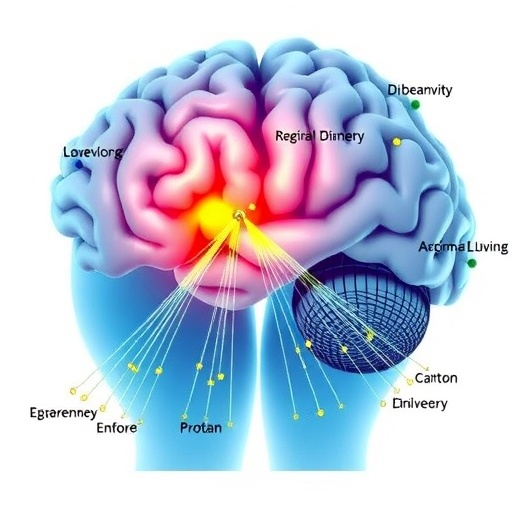
Dopamine-Linked Brain Network Reconfiguration Dynamics Altered in Parkinson’s Disease

Dopamine-Linked Brain Network Reconfiguration Dynamics Altered in Parkinson’s Disease

65
SHARES
587
VIEWS
Share on FacebookShare on Twitter
ADVERTISEMENT

Functional brain networks constantly reshuffle as the brain shifts between cognitive and motor demands. In Parkinson’s disease, however, this dynamic reconfiguration can be disrupted—potentially helping explain why symptoms emerge and fluctuate. A new study published in npj Parkinson’s Disease now links these network dynamics to dopamine-related changes, offering a fresh systems-level view of how the illness affects brain communication.

Using resting-state functional MRI, researchers analyzed how brain regions synchronize over time in participants with Parkinson’s disease. Instead of treating brain connectivity as a static map, they focused on the temporal “grammar” of network switching—how strongly different communities of brain areas form, dissolve, and reform. This approach targets the brain’s capacity to rapidly reconfigure its functional architecture.

The team observed dopamine-related alterations that shifted the patterns of network reconfiguration. In Parkinson’s disease, the transitions between network states appeared less flexible, suggesting that the brain may struggle to explore alternative configurations that would normally support adaptive behavior. Such rigidity can mean that neural resources become locked into inefficient coordination modes.

Crucially, the findings indicate that dopamine—central to the disorder’s biology—may influence not only local signaling but also large-scale coordination. By tying dopamine-related changes to whole-network dynamics, the study bridges molecular and circuit-level explanations, a connection that has often been inferred indirectly.

The results highlight that functional brain networks exhibit distinct dynamic signatures in Parkinson’s disease compared with healthy controls. These signatures included differences in the timing and stability of network states, which may reflect disrupted communication among cortico-striatal and other distributed systems. Because these pathways underpin movement and learning, altered reconfiguration could contribute to motor impairment.

From a clinical perspective, the work suggests that dynamic connectivity measures could serve as biomarkers. If network-state behavior reliably tracks disease mechanisms and dopamine effects, it could improve monitoring beyond conventional static connectivity metrics.

More broadly, the study supports a model in which Parkinson’s disease perturbs the brain’s capacity for rapid reconfiguration. Rather than a single damaged pathway, the illness may represent a network-level problem in which the timing and transitions of brain coordination become maladaptive.

As therapies continue to evolve, quantifying how dopamine shapes network dynamics may help identify which patients benefit most from dopamine-targeted strategies. Future studies may combine longitudinal imaging with clinical outcomes to test whether dynamic reconfiguration metrics track symptom progression.

Finally, the research positions brain dynamics as a key intermediate phenotype—connecting dopamine biology to emergent behavior through time-varying network organization. In doing so, it opens the door to more mechanistic and potentially personalized interpretations of Parkinson’s disease brain changes.

Subject of Research: Parkinson’s disease; dopamine-related functional brain network dynamics
Article Title: Dopamine-related alterations in functional brain network dynamic reconfiguration in Parkinson’s disease.
Article References: Abdolalizadeh, A., Burkhardt, M., Jahansa, P. et al. Dopamine-related alterations in functional brain network dynamic reconfiguration in Parkinson’s disease. npj Parkinsons Dis. 12, 175 (2026). https://doi.org/10.1038/s41531-026-01466-w
Image Credits: AI Generated
DOI: https://doi.org/10.1038/s41531-026-01466-w
Keywords:

Article Title: Dopamine-Linked Brain Network Reconfiguration Dynamics Altered in Parkinson’s Disease

Article References: Abdolalizadeh, A., Burkhardt, M., Jahansa, P., Gießing, C., Witt, K., & Thiel, C. M. (2026). Dopamine-related alterations in functional brain network dynamic reconfiguration in Parkinson’s disease. npj Parkinson's Disease, 12(1), Article 175. https://doi.org/10.1038/s41531-026-01466-w

Image Credits: AI Generated

DOI: 10.1038/s41531-026-01466-w

Keywords: adaptive behavior and neural resource allocation, brain connectivity temporal dynamics, brain network reconfiguration, dopamine influence on brain connectivity, dynamic brain network analysis, functional MRI in Parkinson’s, molecular and circuit-level brain interactions, neural circuit dysfunction in Parkinson’s, neural flexibility and rigidity, Parkinson's disease, resting-state brain networks, systems-level brain communication

Cite Scienmag News

Cassandra Pierce. (July 27, 2026). Dopamine-Linked Brain Network Reconfiguration Dynamics Altered in Parkinson’s Disease. Scienmag. https://scienmag.com/dopamine-linked-brain-network-reconfiguration-dynamics-altered-in-parkinsons-disease/


Cassandra Pierce. "Dopamine-Linked Brain Network Reconfiguration Dynamics Altered in Parkinson’s Disease." Scienmag, 27 July 2026, https://scienmag.com/dopamine-linked-brain-network-reconfiguration-dynamics-altered-in-parkinsons-disease/. Accessed 4 September 2026.

Cassandra Pierce. "Dopamine-Linked Brain Network Reconfiguration Dynamics Altered in Parkinson’s Disease." Scienmag. July 27, 2026. https://scienmag.com/dopamine-linked-brain-network-reconfiguration-dynamics-altered-in-parkinsons-disease/

Tags: adaptive behavior and neural resource allocationbrain connectivity temporal dynamicsbrain network reconfigurationdopamine influence on brain connectivitydynamic brain network analysisfunctional MRI in Parkinson’smolecular and circuit-level brain interactionsneural circuit dysfunction in Parkinson’sneural flexibility and rigidityParkinson's diseaseresting-state brain networkssystems-level brain communication
Share26Tweet16
Previous Post

Davemaoite Shows Limited Water Incorporation Under Lower-Mantle Conditions

Next Post

Cytokine-Expanded Memory NK Cells Show Metabolic and Epigenetic Reprogramming and Persistence

Related Posts

Unattended automated blood pressure readings prove accurate in rural Africa
Medicine

Unattended automated blood pressure readings prove accurate in rural Africa

September 4, 2026
Mpox prevention practices and factors among adults in Southern Sarawak, Malaysia
Medicine

Mpox prevention practices and factors among adults in Southern Sarawak, Malaysia

September 4, 2026
Rare aggressive fungal infection strikes healthy patient after trauma
Medicine

Rare aggressive fungal infection strikes healthy patient after trauma

September 4, 2026
Denmark launches national injury cohort with detailed design features
Medicine

Denmark launches national injury cohort with detailed design features

September 4, 2026
Building trust: advancing clinical autonomy in ESICM training
Medicine

Building trust: advancing clinical autonomy in ESICM training

September 4, 2026
Symptomatic, Incidental DWI Lesions Show Distinct Risk Factors in Cerebral Amyloid Angiopathy
Medicine

Symptomatic, Incidental DWI Lesions Show Distinct Risk Factors in Cerebral Amyloid Angiopathy

September 4, 2026
Next Post
Cytokine-Expanded Memory NK Cells Show Metabolic and Epigenetic Reprogramming and Persistence

Cytokine-Expanded Memory NK Cells Show Metabolic and Epigenetic Reprogramming and Persistence

  • Mothers who receive childcare support from maternal grandparents show more optimized

    Mothers who receive childcare support from maternal grandparents show more parental warmth, finds NTU Singapore study

    27656 shares
    Share 11059 Tweet 6912
  • University of Seville Breaks 120-Year-Old Mystery, Revises a Key Einstein Concept

    1061 shares
    Share 424 Tweet 265
  • Bee body mass, pathogens and local climate influence heat tolerance

    682 shares
    Share 273 Tweet 171
  • Researchers record first-ever images and data of a shark experiencing a boat strike

    546 shares
    Share 218 Tweet 137
  • Groundbreaking Clinical Trial Reveals Lubiprostone Enhances Kidney Function

    531 shares
    Share 212 Tweet 133
Science

Embark on a thrilling journey of discovery with Scienmag.com—your ultimate source for cutting-edge breakthroughs. Immerse yourself in a world where curiosity knows no limits and tomorrow’s possibilities become today’s reality!

RECENT NEWS

  • New R package Geneslator simplifies gene ID conversion and annotation
  • Fragmented gut and airway microbes mark preschool wheeze, driven by Moraxella clustering
  • Unattended automated blood pressure readings prove accurate in rural Africa
  • Mpox prevention practices and factors among adults in Southern Sarawak, Malaysia

Categories

  • Agriculture
  • Anthropology
  • Archaeology
  • Athmospheric
  • Biology
  • Biotechnology
  • Blog
  • Bussines
  • Cancer
  • Chemistry
  • Climate
  • Earth Science
  • Editorial Policy
  • Marine
  • Mathematics
  • Medicine
  • Pediatry
  • Policy
  • Psychology & Psychiatry
  • Science Education
  • Social Science
  • Space
  • Technology and Engineering

Subscribe to Blog via Email

Enter your email address to subscribe to this blog and receive notifications of new posts by email.

Join 5,151 other subscribers

© 2025 Scienmag - Science Magazine

Welcome Back!

Login to your account below

Forgotten Password?

Retrieve your password

Please enter your username or email address to reset your password.

Log In
No Result
View All Result
  • HOME
  • SCIENCE NEWS
  • CONTACT US

© 2025 Scienmag - Science Magazine

Discover more from Science

Subscribe now to keep reading and get access to the full archive.

Continue reading